

Taylor Swift is inescapable. Those who hate her find constant fuel for their rage within her cultural and media overexposure, and those who love her have more to latch on to than ever. People who might find themselves middling on the issue—casual fans of the music who are indifferent to her personal life or the zeitgeist that surrounds her—find themselves being forced to pick a side. The result of Swift’s 11th studio album, The Tortured Poets Department? The music is tainted by the audience’s voyeuristic obsession with the singer herself.
To be clear, I am a perpetrator of this phenomenon, so I don’t necessarily disparage anyone who might conflate the quality of the music with value judgments about Taylor Swift. The cultural consensus of the album seems to dislike the way that Swift writes about this time in her life—the end of her relationship with longtime partner Joe Alwyn, a brief relationship with The 1975 lead singer Matty Healy, and the beginning of her relationship with NFL tight end Travis Kelce—with messy, often immature emotional melodrama. At times, it feels difficult to enjoy the depth of emotion and experience that Swift attempts to convey without thinking about the position of privilege from which the singer stands.
When listening to “Who’s Afraid of Little Old Me,” I found myself pulled between my awed appreciation for the song (the haunting vocals, submission exploding into rage) and my belief that Swift has always had a bit of an overblown victim complex. Lyrics in the song like “I wanna snarl and show you just how disturbed this has made me/You wouldn’t last an hour in the asylum where they raised me” have inspired a litany of memes acknowledging that Swift was raised on a literal Christmas Tree Farm and an idyllic large family home in Pennsylvania. Of course, Swift is not implying that she was literally raised in an asylum, and is likely rather conveying her experience with fame at a young age, but even the metaphor falls a little flat coming from the mouth of a billionaire.

At this crossroads, I think it is worth considering Swift’s own words in her Instagram caption announcing the album release: “This period of the author’s life is now over,” she says, “the chapter closed and boarded up. There is nothing to avenge, no scores to settle once wounds have healed. And upon further reflection, a good number of them turned out to be self-inflicted.” I interpret this preamble in a few ways. First, she is discouraging her rabid fanbase from harassing the people that they believe to be the subjects of her songs. Second, she is admitting the very thing that the collective has accused her of since the album’s release: these songs are massively dramatic, immature, and overblown. But she knows it.
Swift’s long career of autobiographical songwriting has opened the doors for people to think that they know her personally from the contents of her music, and the reception of this album has suffered under that precedent. This is not to say that this album is beyond criticism (we’ll get there in a minute), but rather that it has been judged in conjunction with Swift as a person, which seems slightly unfair. Swift has reached the point that her massive celebrity has prevented a more down-to-earth appreciation of her music, especially when attempting the literary, confessional style that she does on TTPD.
That being said, acknowledging Swift’s massive celebrity comes with admitting that she had all the resources available to make the album a bit better than it ended up being…and she did not use them. For many people, the album feels overwhelmingly same-y, with many of the tracks blending into each other and hiding (often brilliant lyrics) in a monotony that lacks distinct melodies. As someone who has listened to the album many times now, I am able to think of the songs more distinctly, but there are still several tracks that lack anything tangible enough for me to remember. Swift’s lightning-in-a-bottle success with folklore and evermore in 2020 (and the creative chemistry that she has cultivated with producers Jack Antanoff and Aaron Dessner) have made her slightly untouchable: if she were a smaller artist, the tracklist on TTPD would be slimmed down significantly, with more focus put on perfecting each song and giving the lyrics a melody and production that they can stick to.
As it currently stands, though, there is no monetary incentive on the part of her label or team to encourage this honing, because the album will sell massively as long as her name is attached. The lyrics, too, while often being beautifully poetic and complex, at times feel clunky and too stream-of-conscious/spoken-word to land easily on a listener’s ear. The title track of the album, “The Tortured Poets Department,” a song that I otherwise really enjoy, is significantly brought down by the verse: “You smokеd, then ate seven bars of chocolate/We declared Charlie Puth should be a bigger artist/I scratch your head, you fall asleep/Like a tattooed golden retriever”.
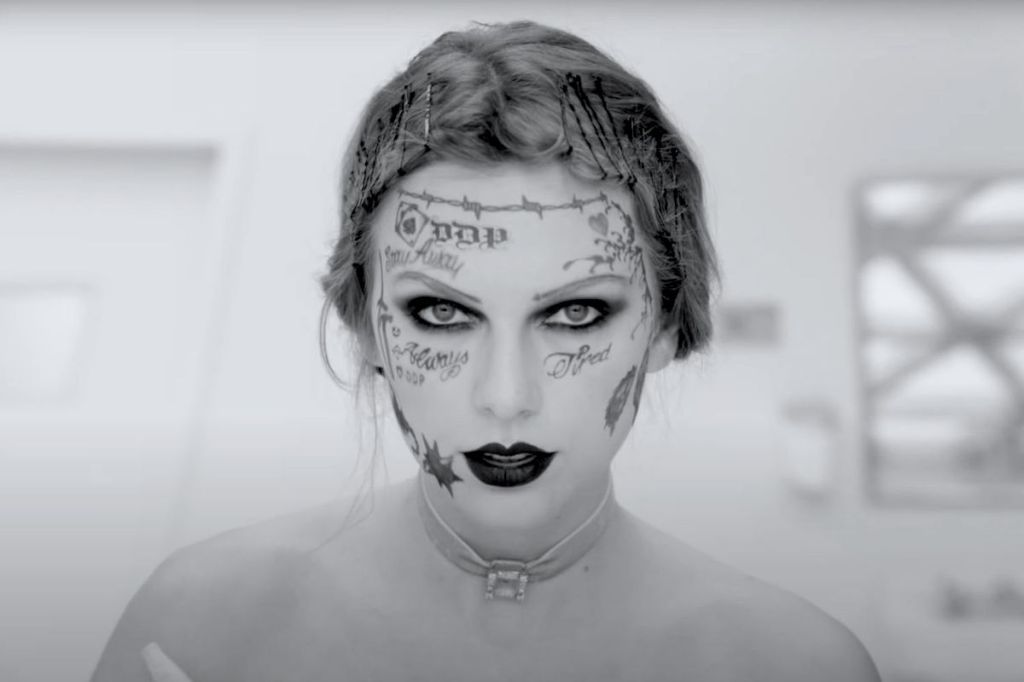
Beyond this initial criticism of the album, however, I think that Taylor Swift has created something excellent with The Tortured Poet’s Department. The majority of the lyricism of the album combines artfully done metaphor with a surprising amount of frankness: In the album’s closing track “The Manuscript,” the line “He said that if the sex was half as good as the conversation was/Soon they’d be pushin’ strollers” marks the first time Swift says the word “sex” in the entirety of her discography, opting to allow the style of casual conversation to carry the power of something the artist usually only describes in analogy. Additionally, the downbeat style of the majority of the songs on the album is something that grows on the listener, getting more interesting and meaningful with each listen. Songs like “Fortnight (ft. Post Malone),” “Fresh out the Slammer,” and “Clara Bow,” which originally underwhelmed me, are the ones I find myself returning to.
And in response to the charges of being monotonous, I would argue (I guess against myself?) that there are a number of songs on the album that have a unique and interesting production and sound. “So Long, London,” “Down Bad,” “Florida!!! (ft. Florence + The Machine),” and “I Can Do It With A Broken Heart” all feature a beat that helps to carry the song along significantly. (“I Can Do It With A Broken Heart” is another example of Swift’s self-awareness coming into the album. The lyrics aren’t groundbreaking, but they’re delivered in a way that’s funny which is undoubtedly purposeful). “The Smallest Man Who Ever Lived” begins with somber, slow singing with only a piano accompaniment that grows into an explosive and scathing second half in a way that is partially reminiscent of Billie Eilish’s explosive “Happier than Ever.” “Who’s Afraid of Little Old Me?,” which is potentially my favorite from the album, features a vocal choice by Swift in the first chorus that gives me chills every time I hear it, and the overall dark, angry, ghostly tone of the song is reminiscent of some of Swift’s biggest successes from 2017’s reputation. Other personal favorites include “The Prophecy” and “The Black Dog.”
For all of these highs, there are also many lows, as a result of the previously discussed lack of quality control. Songs like “Robin,” “The Manuscript,” and “Chloe or Sam or Sophia or Marcus” rely too heavily on poetic lyricism without any sort of distinct sound to support them, resulting in some tracks that fall flat. Other songs that have a better melody and even well-written lyrics suffer from songwriting choices that taint the perception of the song. “But Daddy I Love Him” (widely believed to be addressed to her fanbase after the massive backlash following the news of her relationship with Matty Healy) works so hard to push the analogy that it is difficult to appreciate, which is unfortunate considering it is one of the most catchy and upbeat songs on the album. “I Hate It Here” is a song that I do personally love, but is greatly diminished by a mention of wishing to go back to the 1830s “without all the racists.” It makes sense in the context of the verse, but it’s still baffling how anyone involved in the production and release of this album thought that it was a good idea to include, considering that it is not an impressive or important lyric and it massively detracts from the quality of the rest of the song.
“thanK you aIMee” is the biggest miss on the album by a mile. To me, this song is an exception to the argument I made in the opening of this article: releasing this song reflects poorly on Swift herself. The choice to call out Kim Kardashian via cheeky capitalization and rehashing drama to write another self-congratulating song about the situation feels unnecessary and immature, especially since the song is not very good. It also fully departs from the theme of the album, sticking out like a sore thumb amongst raw, poetic feeling and woe.

Ultimately, The Tortured Poets Department (including The Anthology) is a 122-minute-long exploration of a time of great upheaval and resettling in Swift’s life, resulting in a chaotic, sexy, and somber experience. As a massive and long-time fan of Taylor Swift, I expect to return to this album time and time again, but I recognize that others don’t have the loyalty to keep them listening. My advice to you is this: If you don’t take it too seriously (as Swift asks you not to) and give it more than one listen, you might find some songs that reach you in a way that you need to hear. After all, who amongst us hasn’t had a Matty Healy at one point in our lives?
The Tortured Poets Department is available now on music streaming platforms, CD, and vinyl.

 Knock on Wood
Leave a comment