
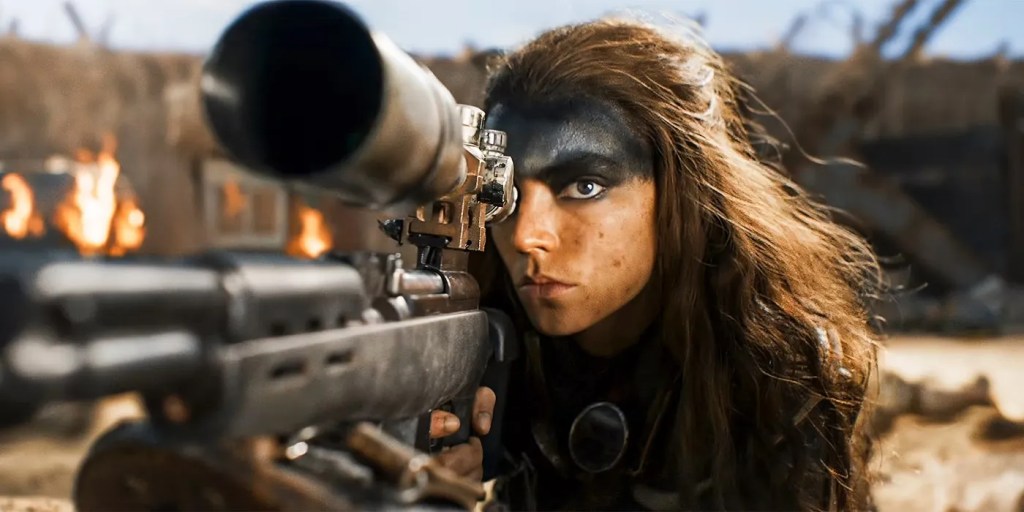
This is it: the prequel that proves why prequels should exist. A film that both complements and aggrandizes the original while being functionally independent and standing on its own. It’s telling that amidst a sea of sequels, prequels, and spinoffs, the release of Furiosa is being treated as an event in and of itself and that George Miller’s madcap action extravaganza Mad Max: Fury Road has only grown in the estimation of the public zeitgeist (which is less than kind more often than not). It only made me more excited to return to the wasteland.
Furiosa was originally intended to shoot back-to-back with Fury Road – though it’s probably for the best that cooler heads prevailed, given the wealth of production issues with Fury Road and the strength of the eventual cast of Furiosa. It’s not a surprise that this is the prequel that Miller wanted to make, given that the eponymous character (played by Charlize Theron in Fury Road and Anya Taylor-Joy in her self-titled solo film) is the most interesting addition to the post-apocalyptic world presented in Fury Road: a stoic warrior of the wasteland, level-headed enough to keep calm during intense battle but passionate and patient enough to work towards her goals for decades.
Furiosa is not just the story of how Furiosa came to work for the cruel warlord Immortan Joe, as a Fury Road fan might expect – it’s an odyssey, taking place over fifteen years, charting her initial abduction from the green haven she first called home, all the way to her rise through the ranks of Immortan Joe’s hodge-podge military.
Alyla Browne, an Australian-Estonian actress who starred in this year’s Sting as well as the forthcoming Sonic the Hedgehog 3, is the first to play Furiosa in the film – for the first half-hour, she portrays the young Imperator as she is abducted from her home, “the Green Place,” and falls into the hands of the aptly-named Dementus (Chris Hemsworth), a warlord who leads a Biker Horde. Browne plays Furiosa as both grief-stricken (as her home and family are snatched away from her) and extremely capable, able to survive and navigate the harsh conditions and bizarre social dynamics of the wasteland as her world is turned upside down.
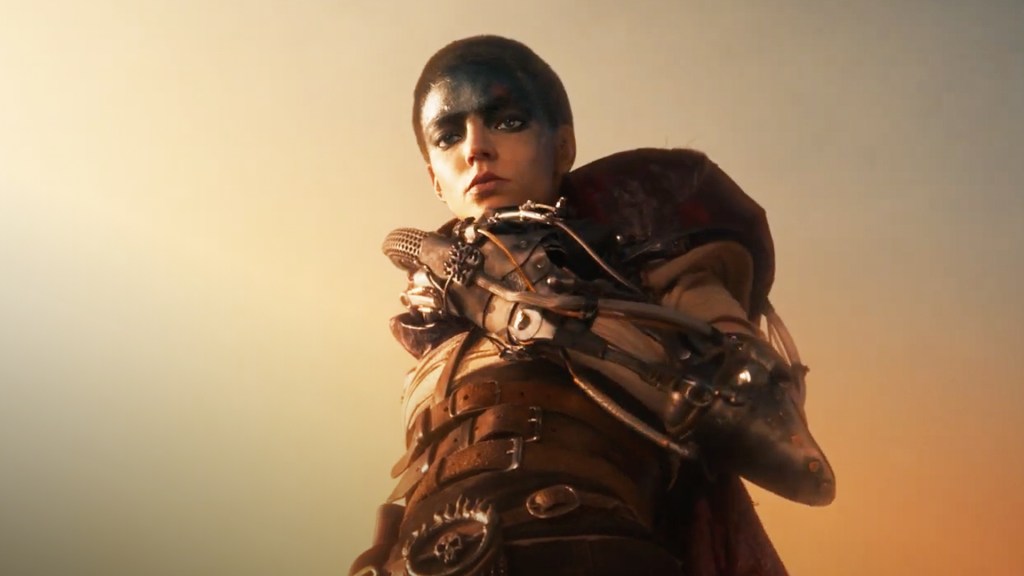
By the time she comes into her own (and is played by The Witch and Last Night in Soho star Anya Taylor-Joy), Furiosa – yes, that’s her real name – has changed irreparably, and is now far closer to the hardened warrior that Theron familiarized us with. Taylor-Joy has less than fifty lines of dialogue in the entire film, but the amount of ferocity and determination she can exert with facial expression alone is nothing short of breathtaking. With her action-focused turn as Furiosa, she has once again proven she can excel in any genre.
Furiosa continues Fury Road’s trend of throwing the audience into the world headfirst, without needlessly expounding on details that don’t as much progress the story but add to the overall atmosphere and tone of the world. Just as Fury Road is set entirely after the mysterious apocalypse that ended the world and forced humanity to resort to its barest impulses to survive, Furiosa does not give an explanation, but does play around with the idea of everything horrible and awful happening to humanity all at once. That concept feeds into the world of Mad Max – there is no moral high ground. There are no more “good guys” and no more “bad guys.” The desert is a place to find yourself, an endless well of potential for the nebulous constructs that are good and evil. It truly is worldbuilding at its absolute finest.
What is perhaps the film’s biggest victory is that it acts as a two-and-a-half-hour answer to the question posed over the final ‘cut to black’ in Fury Road: “Where must we go…we who wander this Wasteland in search of our better selves?” Furiosa’s journey acts as a foil to Max’s – while Tom Hardy’s Fury Road protagonist has been scarred and actively chooses to run away from the horrors of his world, Furiosa embraces them and spends years learning how to use them to her advantage. Just as we learn everything we need about her character through her actions (as stories should be told), she learns who she is through knee-jerk reactions that eventually become instinct.
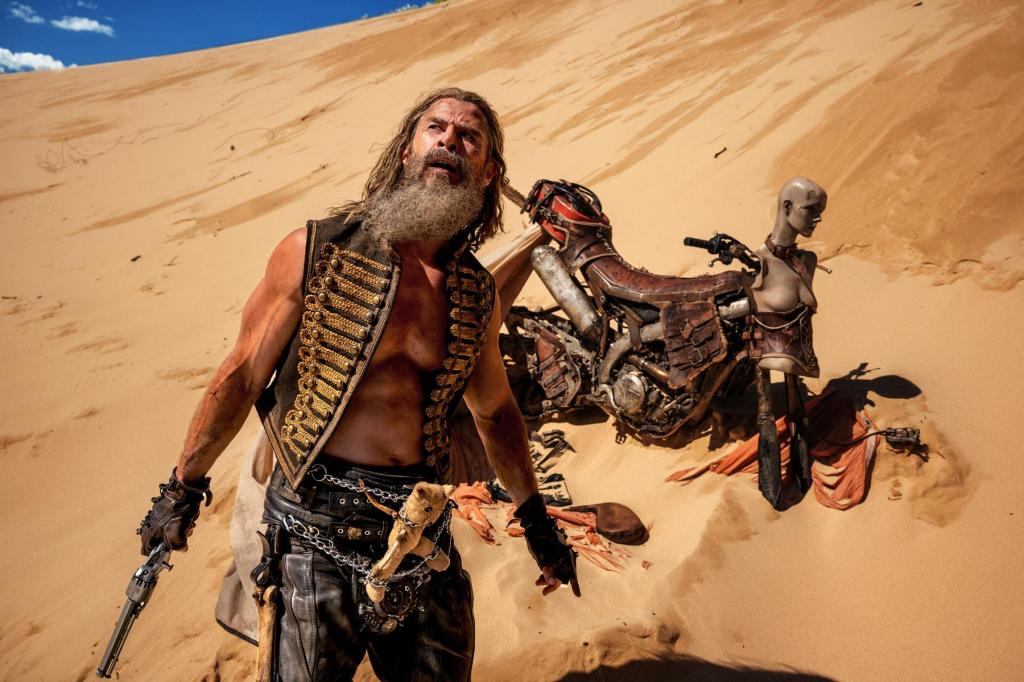
Despite the complex moral ambiguity in Mad Max’s acrid future, every action movie needs a good villain. Furiosa finds its own in Dementus, a cruel warlord who revels in the chaos and control he can exert. Hemsworth is having the most fun out of anyone, and between this and Bad Times at the El Royale, he seems to have found his niche in playing manipulative baddies who do what they do for the thrill of it. It’s almost like he’s leveraging his role as Thor, the comedic, lovable doofus – a darker turn like this seems out of left field, but those familiar with Hemsworth’s range know that even though this is a side seldom shown, it’s one he’s unexpectedly well acquainted with. He’s one of the film’s clear standouts.
Throw in some returning characters from Fury Road, all played by the same performers (which is good – they’re already indoctrinated with the Mad Max vibe, and their recognizable appearances help bridge the gap between the film’s timelines) and a plethora of insanely cool stunts and chases, and you have yourself a prequel for the ages. It’s hardly a hot take to say that George Miller is an excellent filmmaker. But it’s worth pointing out that he’s almost 80 years old, and is still making action spectaculars that rival 99% of what Hollywood churns out. Given that, it should be no surprise that the action filmmaking in Furiosa is as kinetic and electrifying as ever. While it’s not a patch on Fury Road, which is a masterclass in simple yet effective storytelling and implicit character work, Furiosa forges its own path as a quasi-biblical take on morality and divinity. Miller says he has at least two Fury Road sequels planned, and if he approached any other projects in the same vein as Furiosa, we have two more certified masterpieces on our hands.
Furiosa: A Mad Max Saga is playing in theaters now.

 Knock on Wood
Leave a comment