

Three years after the pandemic finally allowed A Quiet Place Part II to stealthily land in theaters (a modest success compared to director John Krasinski’s original 2018 hit), the duology has become a true franchise. While the sequel opened with a flashback to the time before the invasion and desolation of our planet, A Quiet Place: Day One is set entirely within the first few days of the apocalypse.
Worries about “prequel-itis” and the unnecessary additions to an already-developed world are warranted and understandable, but Day One instantly distinguishes itself with a self-sufficient narrative and character development that properly takes advantage of the series’ intentional visual storytelling. If anything, it’s more of a spin-off, but I’d even hesitate to call it that. Instead, it’s simply another film that just so happens to take place in the same world as Krasinski’s films, with the only connectivity being the nameless, faceless monsters that stalk the planet and a brief appearance by Djimon Hounsou, who also appeared in Part II. (He’s shortchanged again here, unfortunately, but he’s still giving a hell of a performance)
A Quiet Place: Day One is written and directed by Michael Sarnoski, who was brought on board by Krasinski after he saw Sarnoski’s debut feature Pig. On paper, Sarnoski might seem like an odd choice for a PG-13 horror movie with a dash of sci-fi thrown in, but I’d argue he was the perfect pick – not only is he able to craft an eerie and unnerving atmosphere, but Sarnoski knows how to effectively portray character drama amidst tense situations, and more importantly, how to shoot both one-on-one conversations and fast-paced action with the same value. Once we understand and care about the characters on a deeper level, the stakes feel a lot more real, and the primal terror for their safety is far more effective.
This isn’t to say that Day One is just a weighty character drama – far from it. It’s much bigger in scale than the previous two films, taking full advantage of the New York City landscape for maximum chaos and destruction, all while maintaining a crucial intimacy when it comes to the core two characters. The film begins with Sam (Oscar winner Lupita Nyong’o), a terminally ill patient stuck in the city when meteors strike, and everything falls silent. Even the slightest sound is answered with death as blind creatures with hyper-sensitive hearing prowl the streets and scale buildings (quite literally, in one epic visual sequence, as helicopters fly overhead), and Sam must survive with her cat, Frodo, and anxious law student Eric (Stranger Things breakout star Joseph Quinn).
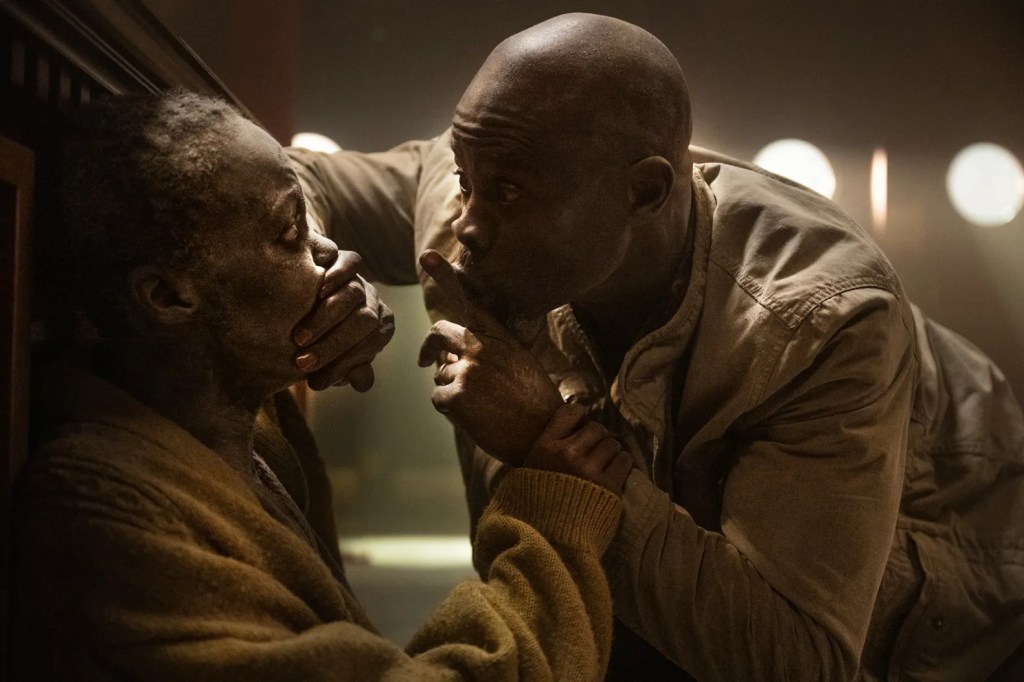
Throughout the evocative images of an apocalyptic New York, not far off from a dismal vision of the worst outcome for our future, death and destruction are palpable and real. The sound design is (expectedly) incredible because that’s what films in this series must rely on – the inability to speak stops being a gimmick when characters we know and care about are in mortal danger. That’s when instinct kicks in, and the rules of the world are not only drilled into the characters’ heads – they’re inextricably hammered into our own brains too, so much so that for most of the film, every noise makes you flinch. At any moment, a creature could appear, and all sounds, even breathing, must instantly cease. Even when you think you’re safe, you never are. That’s not necessarily exclusive to Day One, but when you’re learning the rules at the same time as the characters, it feels different. There’s a connection there that you don’t necessarily have with the Abbott family (the protagonists of Krasinski’s films), who we mostly see over a year after the original invasion.
A Quiet Place: Day One is a rare sort of prequel, one that acts as a standalone entry and not one designed purely for the sake of exposition. It doesn’t matter why the creatures arrived or what exactly they are – this is a story of unorthodox friendship in a strange world that begins in the name of mutual survival, but becomes more than that. Their relationship (a platonic one, I promise) develops over the course of the film through the fantastic visual storytelling that a largely dialogue-free series must rely on. The camera work, especially the way the characters interact with the invisible fourth wall, is stellar (shoutout cinematographer Pat Scola), and Nyong’o and Quinn deliver two incredibly different performances that both work within the context of the chaotic new world.
A theatrical performance in the film’s cold open and a scene set in a jazz club in the later half, where Sam and Eric connect through music and dance, perfectly exhibit the thesis of this movie – why is survival even worth it in a world overrun by murderous monsters? The connections made through the natural state of the world is all that’s needed; their lives before don’t matter, it’s all about what happens afterward. There’s still hope, even if that takes the form of a pizza slice or an old photograph. Hope is all they have now.
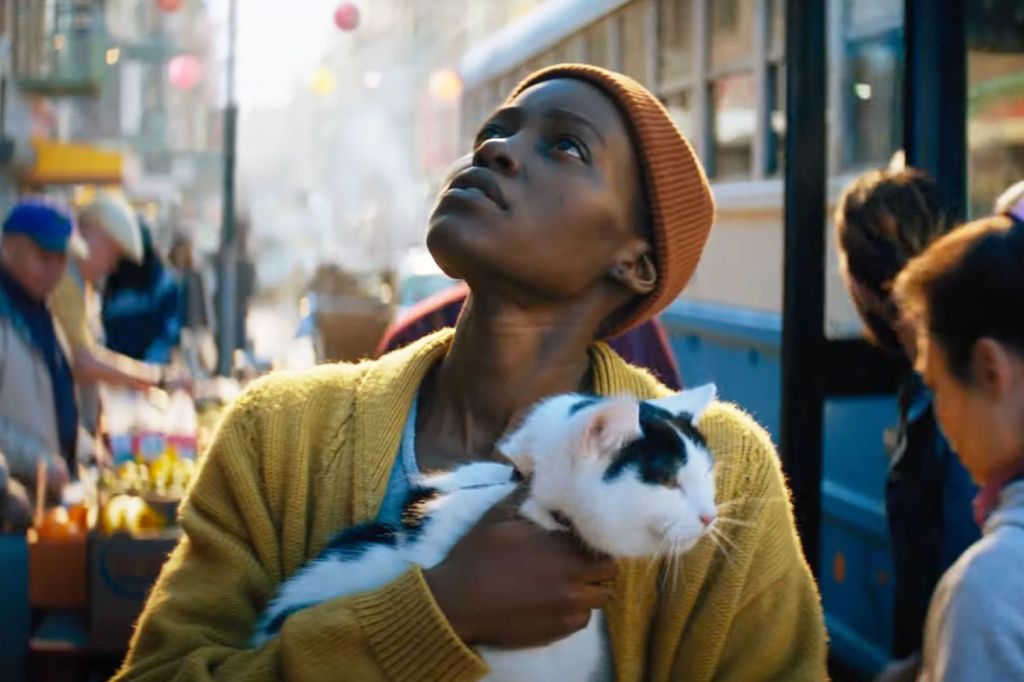
A Quiet Place: Day One is the first film in the franchise where I understood what the series should be. Krasinski’s film proved the worth of the premise, but going forward, we need characters to ground us. The premise isn’t enough anymore, and this method of exploring human psychology and emotion is what the series should specialize in. Hug your loved ones, appreciate the world around you, and do whatever you can to make the world a happy place, a place where we don’t have to fear for our lives every day. There is hope. There always is, and always will be.
A Quiet Place: Day One is playing in theaters now.

 Knock on Wood
Leave a comment