

“I will not accept a life I do not deserve,” Maxine (Mia Goth) repeats, recalling the mantra her father instilled in her when she was a young girl. “Her faith will be tested. Her soul will be tormented,” reads the logline of The Puritan II, the horror film in which Maxine finally gets her big break outside the sex work industry. These two quotes are emblematic of everything MaXXXine is: Much like its 2022 predecessors, X and Pearl, it explores the pursuit of stardom and the deconstruction of religious ideas while playing in the third genre of the trilogy.
MaXXXine succeeds on the first two counts, and on the third, like with the previous entries, I find myself wondering if writer/director Ti West has anything to say about the different styles of horror (or, more generally, periods in film) that he iterates on. Where Brian De Palma took the filmic stylings of Alfred Hitchcock and retrofitted them to his time period (well, from the ’70s until the ’90s), West adds another degree of separation, with MaXXXine having heavy hints of Body Double (namely the voyeurism inherent in movies, and of course, a gondola which carries its passengers up to an elaborately rich house in the Hollywood Hills) and Carrie (parents foisting religious repression upon their children, who then go to drastic lengths to break out), while also going back to the source and directly referencing Psycho (Maxine literally visits the Bates Motel and the house on the technically unnamed Universal backlot). There’s also some Paul Schrader sprinkled in — particularly Hardcore — with a daughter leaving home to pursue a career in pornography, and the degradation of a character’s soul through the lens of religion being the driving plot developer.
It’s these extra degrees of separation that have me wary of West’s homages. But despite some very clunky plotting, they’re so well done — at least in how they pastiche their influences on a surface level — that I ultimately find myself coming down in their favor. Where X is a love letter to ’70s slashers and Pearl is a twist on a Wizard of Oz-type fairytale, MaXXXine takes on the stylings of said exploitation movies. Partially based on the true events, there’s a mysterious serial killer, the Night Stalker, murdering people close to Maxine and marking them with a pentagram. As the victims become closer and closer to home, Maxine must find a way to stay safe, while not letting her past (the events of X) come to light. So simply telling a story using the trappings of a tried and true genre is one thing, and has the chance to not be particularly effective (West’s own The House of the Devil is evidence of this), but this trilogy has always had something on its mind, and between the gore and nudity, it doesn’t forget to return to its heart.
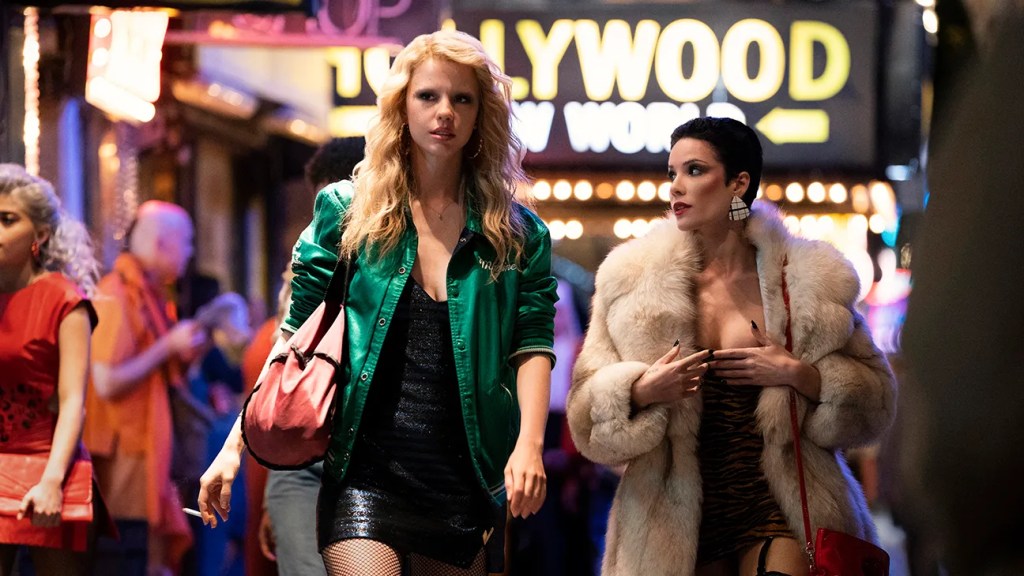
Because another aphorism that repeatedly came to mind during MaXXXine was, “There’s no hate like Christian love.” Hence the Hardcore comparison, Maxine’s father, though never physically interacting with the story of the trilogy, has hovered over them since the beginning. A preacher who tells his congregation that his daughter is lost due to the life she’s chosen, he’s representative of the kind of talking head you’ll see on Fox News or The Daily Wire. In addition, every time Maxine arrives at the studio to shoot The Puritan II, there are dozens of people angrily protesting the violence of the horror genre, as well as the open sexuality of pornography. With these, West closes the book on the idea he introduces on X: It’s rarely actually about love and freedom for Christians — it’s about exerting control, especially over women. Living out their own warped idea of faith isn’t enough. They need to make sure that everyone else does too. It’s an idea that’s frustratingly lasted well past the ’80s, when MaXXXine is set, all the way to the present day, with absolutely no signs of it slowing down.
All this makes sense when it comes to Maxine snapping and turning into a classic scream queen, like she does at the end of X. And that kind of snap is one that can only be put back together with gum and tape. Based on how Maxine operates in this movie, she’s still deeply holding on to the trauma of what’s happened to her, both at the hands of her father and the old couple on the farm. Thus, Goth is the best she’s been in the trilogy outside the final shot of Pearl, despite a somewhat tired trope of the dangerous trappings of pursuing fame. She has a confidence that has built upon itself in each movie, and this time around, she’s buttressed by some certified Hollywood stars. Kevin Bacon plays a private detective hired by a mysterious client to track down Maxine, and with his mustache, gold teeth, and accent, he really hams it up. Giancarlo Esposito is finally given a chance to play someone other than Gus Fring, and while he still has ever so slightly the hints of the cold, disaffected criminal, he’s a lot of fun as Maxine’s eccentric agent who got her into a real Hollywood movie. Elizabeth Debicki is the director of The Puritan II, and her character takes herself very seriously (but you have to in her position) — she gives the best performance in the movie outside Goth. Though, the duo of Bobby Cannavale and Michelle Monaghan sure give Debicki a run for her money, as the police detectives investigating the Night Stalker. Cannavale’s cop, a former wannabe actor himself, brings a good bit of lightheartedness that adds to the already apparent sense of fun and joy, despite the film’s grim backdrop.
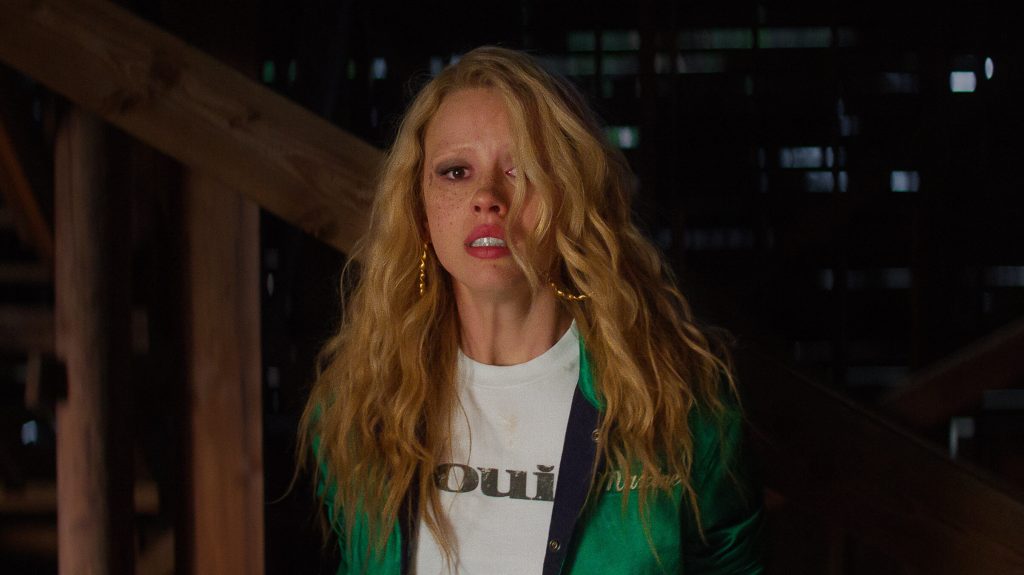
Debicki’s Elizabeth Bender calls The Puritan II, “A B movie with A ideas,” and it’s no secret that’s how West treats MaXXXine as well. Where it can be quite clumsy in its narrative execution, the film has a true conviction in the ideas that have been set up for three movies now, and the final payoff proves Maxine just might have been right for not accepting a life she didn’t deserve.
MaXXXine is playing in theaters now.

 Knock on Wood
Leave a comment