

Star Wars must get over itself. Since 1977, the main franchise films (and episodic television series) have been very concerned with the dogmatic depiction of Good vs. Evil, usually embodied in the Light and Dark Sides of the Force. Expanded universe material has attempted to fill in the gaps, but the series has largely taken a black-and-white approach to depicting this struggle.
George Lucas’ Prequel Trilogy took great pains to emphasize that the Jedi Order has a systematically flawed point of view regarding using the Force; attachment is forbidden, love is frowned upon, and emotions are suppressed. Their Code is a distorted concept, a limited way of using the Force, and it’s about time that’s directly addressed instead of implied.
Since Disney took the reins in producing live-action Star Wars TV series, they’ve been very safe, bar the unexpected political soundness of Andor, a series that involved neither the Jedi nor any mention of the Force. That was refreshing, but surely there had to be a way to center a series around the Jedi without reverting to a layman’s perspective on their unabashed goodness.
Enter The Acolyte, an eight-episode series set a century before The Phantom Menace. A serialized story that can be mainly viewed independently from any other Star Wars property, The Acolyte styles itself as a murder mystery, beginning with the death of Master Indara (The Matrix’s Carrie-Anne Moss), an instant stakes-setter, as now any Jedi could be a target. A respected Jedi Master, Sol (Squid Games’ Lee Jung-jae, who learned the English language for this role), reconnects with his former Padawan, Osha (The Hate U Give’s Amandla Stenberg) to investigate the attacks.
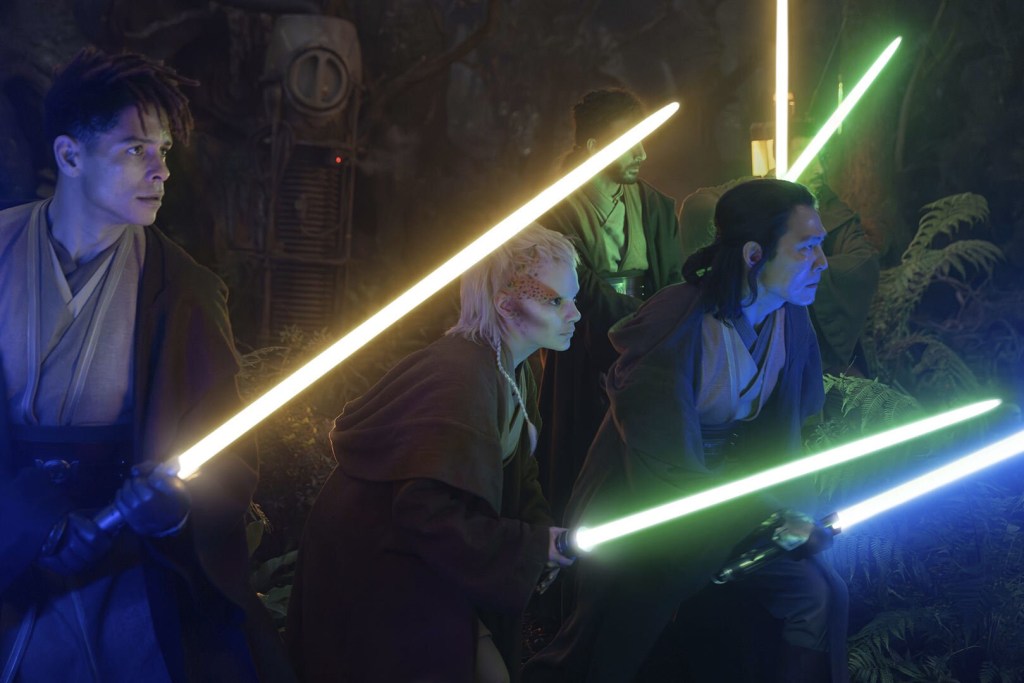
The Acolyte threads the needle in tone, balancing the hamminess of the Prequels while maintaining a genuine earnestness and love for the world that’s vital when it comes to telling a new Star Wars story. The fanbase is as volatile as ever, and showrunner Leslye Headland broadcasts a clear message with The Acolyte: the Star Wars fandom is not a place where hatred for the sake of hatred will be tolerated. The new series seems to be designed to intentionally anger bigots while being refreshingly unashamed about putting necessary representation on-screen, a step most Star Wars media has been hesitant to take – most likely, out of fear. The Acolyte is, hopefully, a step in the right direction.
Beyond those baseline steps, The Acolyte is also an invigorating fresh take on actual television presentation. In this era of streaming domination, series are being treated as “eight-hour movies” instead of using the long-form storytelling to their benefit. The first season of The Acolyte is one continuous, uninterrupted story, but this and Andor are the only Star Wars shows so far that have taken full advantage of the medium and felt like proper TV series. Each episode feels like a distinct chapter in the overall narrative, and most have A, B, and C stories that give the series a very traditional feel. In this instance, the fact that it’s on television is a feature, not a bug.
Like any piece of art, it’s not without its objective flaws. It adopts the stilted dialogue deliveries and cheesy moments that the Prequels embraced, which many viewers will undoubtedly view with a rose-tinted eye, filled to the brim with nostalgia. Others might find it frustrating, but it can’t be denied that there’s a rigid intentionality here with a clear voice that most recent corporate Star Wars releases have been lacking. It might also be fair to criticize the series’ pacing and character development, but most everything here worked very well for me. The action’s excellent, the twists are appropriately unexpected while also playing nicely into the realm of possibility, and the bold introductions of new lore and canon are just what we need to keep the series fresh.
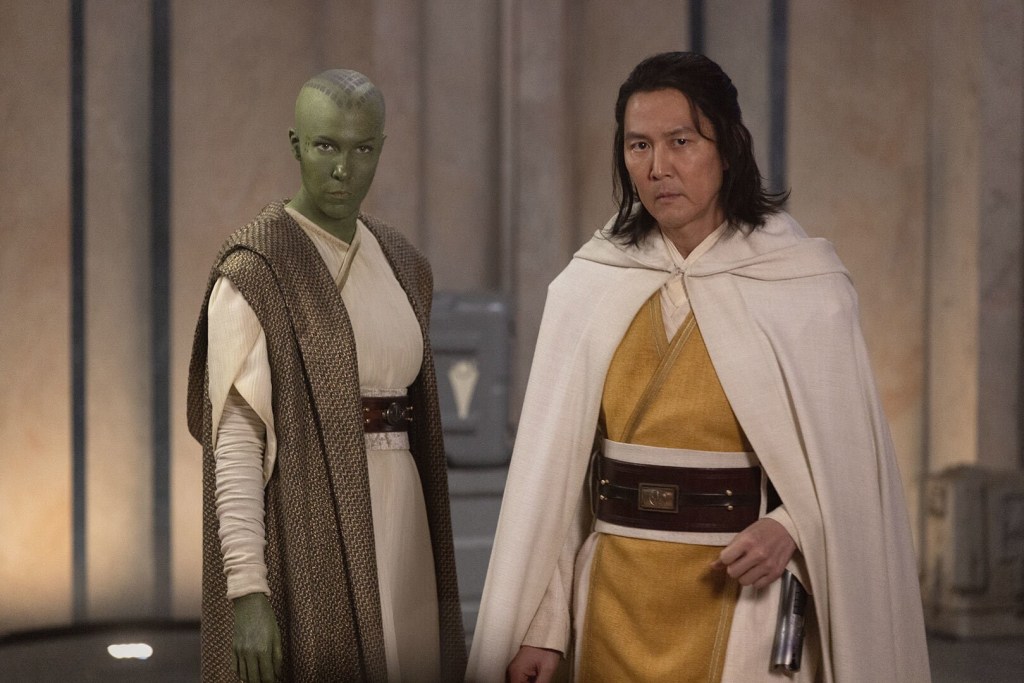
I’m glad The Acolyte has a freedom hitherto unseen when it comes to modern Star Wars. Andor is also brilliant, but it’s different – it’s a hardcore political thriller, while The Acolyte embraces what people love about Star Wars while also styling itself as a murder mystery, a sub-genre rarely tackled within this universe. It’s interested in having crucial conversations about the problem with the Jedi philosophy and the blurred line between the Light and the Dark, and how the Force can be used in unique and interesting ways outside of those parameters (in a way that is not dependent on either the Jedi or their Dark counterparts, the Sith). In fact, Senator Rayencourt, a character played in an excellent one-scene performance by David Harewood, even verbalizes that point: he claims to Jedi Master Vernestra Rwoh that the Jedi are “a massive system of unchecked power, posing as a religion — a delusional cult that claims to control the uncontrollable.” Never before has Star Wars been so free with the in-universe criticisms about the Order, who has previously primarily been portrayed purely as “the good guys” and not much else. I’m glad Star Wars is finally growing up, and I’m excited for a second season to expound upon these fascinating ideas.
The first season of The Acolyte is streaming on Disney+.

 Knock on Wood
Leave a comment