
Historically, remaking foreign films in the English language has paid dividends. Acclaimed successes like The Departed, Insomnia, Some Like It Hot, The Birdcage, 12 Monkeys, The Ring, and more all began their lives in another part of the world before making their way over to the United States. If nothing else, it’s emblematic of the overall American resistance to foreign cinema and as Bong Joon-ho put it in one of his Academy speeches, “the one-inch tall barrier of subtitles.” We must make it our own. We must assimilate every story into the American perspective.
Some of the aforementioned examples took years, even decades, to be remade. Very rarely have we seen a turnaround as swift as Speak No Evil.
With a trailer that played repeatedly in front of seemingly every movie within the past five months, I wasn’t quite sure what I was about to get. The day before I sat down in a theater to watch the remake, I watched the original for the first time and was unsurprised by how much I enjoyed it. Yes, Christian Tafdrup’s Danish film is bleak and unforgiving (almost Funny Games-esque in its relentlessness), but it’s a fascinating piece of character commentary that never feels heavy-handed or extreme. Tafdrup’s Speak No Evil swept the festival circuit and was received stupendously, and now an English-language remake has arrived just over two years after the original made its theatrical debut.
What’s ironic is that the original is mostly in English, too – the two central couples are Danish and Dutch, respectively, and English is the language they use to communicate with each other. Only when they’re speaking within their own families do they use their native language, which brings in a new layer of deception – being in a situation where people are very intentionally speaking to each other in a language you don’t understand can be disconcerting, and Tafdrup knows how to accentuate the discomfort.
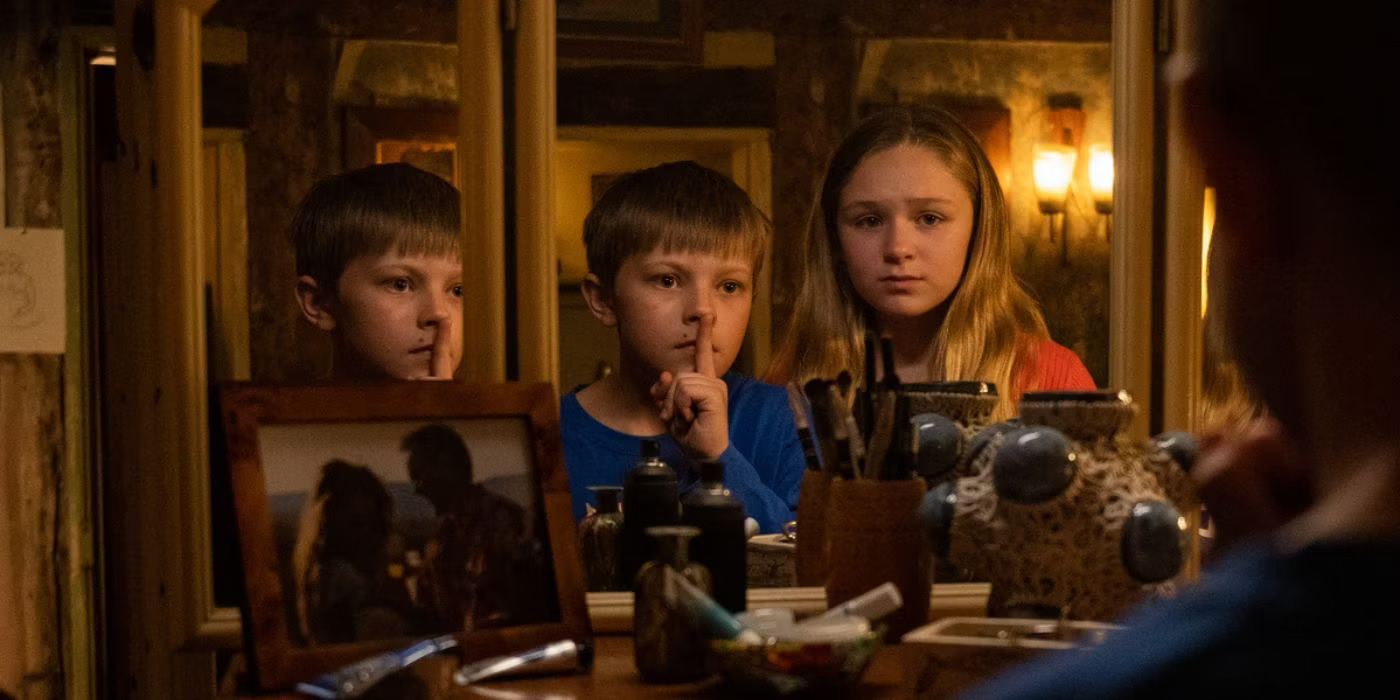
The American remake comes courtesy of writer/director James Watkins, who has directed an episode of Black Mirror (“Shut Up and Dance”) in addition to features like Eden Lake, The Woman in Black, and Bastille Day. It follows, naturally, an American couple, Ben and Louise Dalton (played by Scoot McNairy and Mackenzie Davis) who meet a British couple, Paddy and Ciara (James McAvoy and Aisling Franciosi) while on vacation in Italy. Ben and Louise’s daughter Agnes (Alix West Lefler) bonds with Paddy and Ciara’s son Ant (Dan Hough), and the Daltons decide to visit their new friends at their idyllic countryside home. Very soon, as the trailer is careful to spotlight, their holiday weekend morphs into a horrific nightmare scenario.
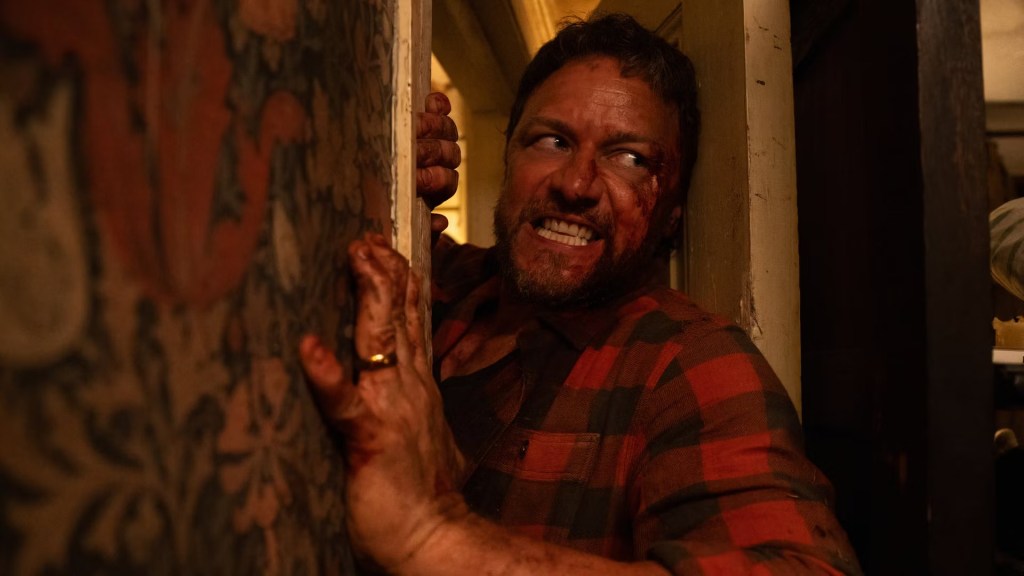
In a recent interview, James McAvoy said that the fact that his character does not have the best intentions isn’t necessarily a reveal in the conventional sense. In fact, it almost feels inevitable – over the course of the Daltons’ weekend with their new friends, the increasing oddities and strange behavior from their hosts lends itself to awkward, cringeworthy humor, designed to make you uncomfortable in a refined way that only a movie can pull off. James McAvoy is at the very center of it all, an incredible and simultaneously terrifying hulk of a man who plays upon the goodwill he’s built up playing heroes and villains alike over the years to craft a character who you so desperately want to trust, despite the myriad of red flags surrounding him at all times. His embodiment of smooth trustability lends an extra layer of textured nuance to an otherwise straightforward narrative. He’s the glue that ties it all together, and I’m not sure the film would work as well without him.
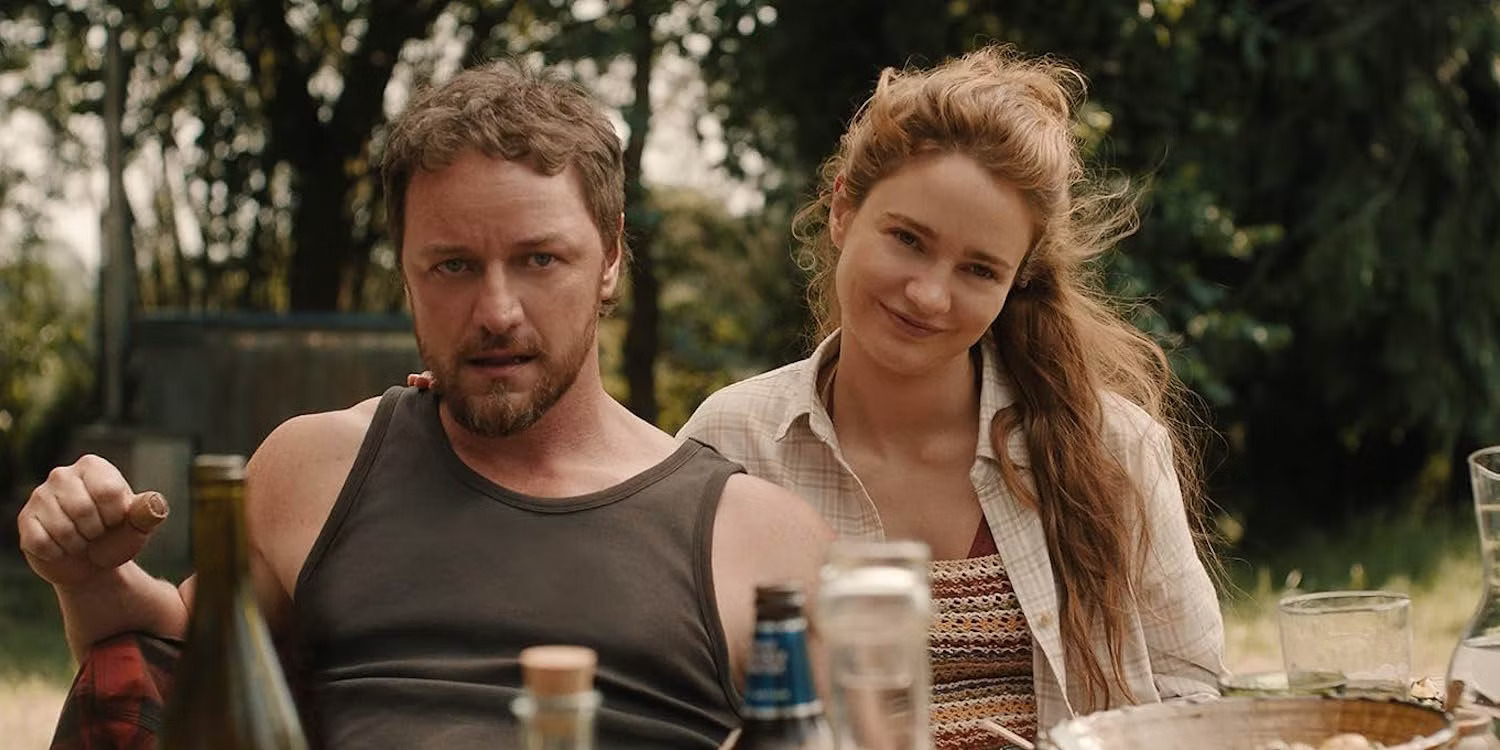
Speak No Evil follows its foreign predecessor almost beat-for-beat until the third act, when it becomes an entirely different film. That was when I was on the edge of my seat, anticipating the changes but relishing in the excitement. It’s not a horror movie, per se, but more of a ticklish, unsettling character comedy before it becomes a full-throttle thrill ride straight to the finish line. There are merits for both iterations of Speak No Evil, but the American remake distinguishes itself not only with a sextet of powerhouse performances but by entirely flipping the script when it comes to the takeaway. While Tafdrup’s original is an examination of politeness versus gut instinct, Watkins’ take targets domineering masculinity and gender dynamics, and the effect of tradition upon family. It’s a fascinating interpretation, and it’s the key difference between the two versions. Same title, varied themes.
I saw this in a theater on opening night with a crowd that wasn’t afraid to react, and that made the experience so much better. Whether evil is spoken or personified, when you’re cycling through the same bunch of emotions with a group of people who are just as invested as you are, it ratchets up the tension but makes it all feel safer. It’s a communal experience, where you’re all in it together – and one thing Speak No Evil does very well is making sure you’re in on the joke, all while disturbing you, horrifying you, and making you laugh, sometimes within the same scene. Here, the writing is on the wall, and as the masks come down and the blood pressure goes up, nothing and nobody is safe. Certainly not the sanctity of all that is good and holy…for here, there is only evil, even if it must not be spoken aloud.
Speak No Evil is playing in theaters now.

 Knock on Wood
Leave a comment