

Rosemary’s Baby is a masterpiece. Roman Polanski’s tactful tale about bodily autonomy, a woman’s right to choose, and (oh, right) devil worship arguably holds even more weight over 55 years after its release, and even though there was a follow-up TV movie in 1976 (the poorly-received Look What’s Happened to Rosemary’s Baby) I am surprised the Hollywood machine hasn’t overrun it with a franchise by now.
That is, before now – Paramount+ is about to unleash not a sequel, but a prequel to the iconic horror movie. Julia Garner (Ozark) steps into the lead as Terry Gionoffrio, a dancer who falls under the influence of the same Satanic cult that will later envelop Rosemary. Terry’s character harkens back directly to Polanski’s original. Very minor spoilers for a 55-year-old movie incoming, but Terry actually appears in one scene with Rosemary before the titular character and her husband, Guy, come upon Terry’s corpse on the street after she jumps from a window somewhere in the apartment building. Apartment 7A fills in the gaps, showing us what Terry’s life looked like before she met the sinister Castevets; her career as a dancer is derailed after an injury, and well-intentioned Minnie (Bullets Over Broadway’s Dianne Weist) and Roman Castevet (Pirates of the Caribbean’s Kevin McNally) offer her both a room…and the opportunity to change her life.
In my recent review of Agatha All Along, I wrote about the productivity (or lack thereof) of conversations about the “necessity” of art…but these are questions that are bound to arise when a major film studio revisits one of their oldest and most iconic pieces of intellectual property. For all intents and purposes, Apartment 7A is a remake of Rosemary’s Baby; if you’ve seen the original, especially recently (as I have), the beats will feel incredibly familiar, but if you somehow have escaped seeing Polanski’s classic, I can see this being a revelatory experience. It’s all a matter of perspective, but one certain thing is that Apartment 7A isn’t shy about imbuing modern horror conventions, including overt jump scares, into the recognizable story template. I can’t help but wonder that if Rosemary’s Baby was only initially adapted in the 21st century, this is exactly the sort of movie that would have been made – a scare-reliant, sensationalized vehicle, instead of the masterful tension machine that is the 1968 film.
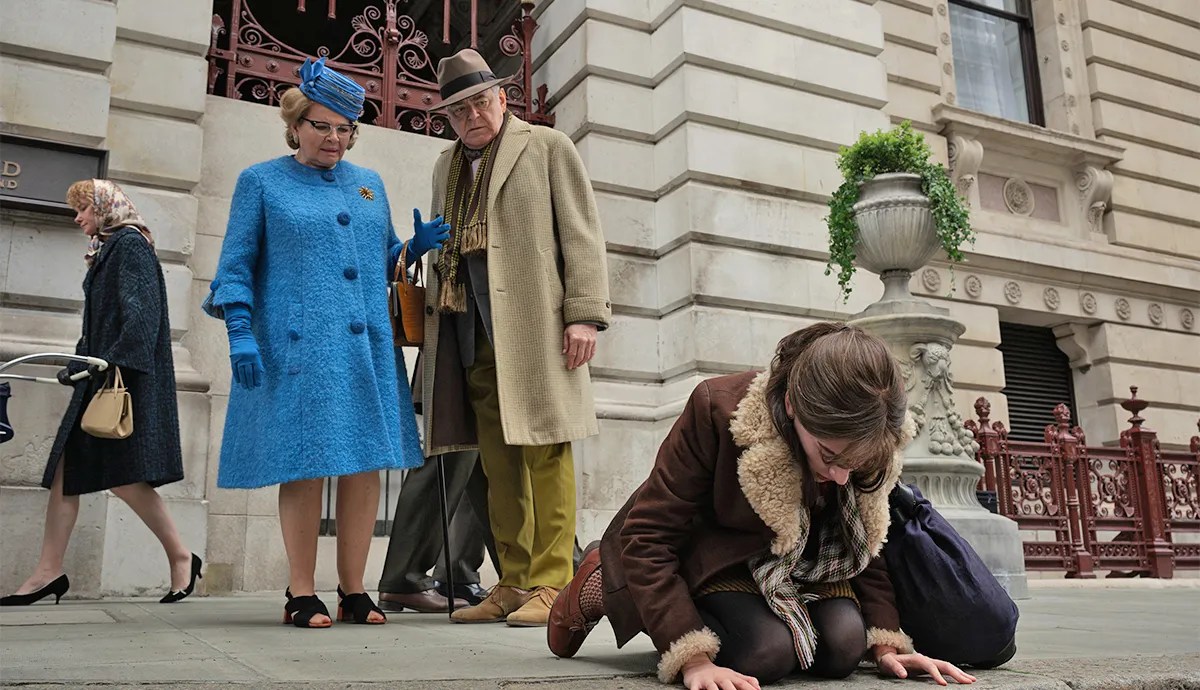
In terms of its necessity, I believe Apartment 7A certainly has plenty of merit. Julia Garner is a stellar lead, and her physical commitment to the role perfectly exemplifies the core themes. Terry’s struggle represents the rigors of life, and how difficult it is to achieve your dreams even if you have the talent to back up your skills. She constantly pushes herself, but she constantly runs up against roadblocks, chief among them the merciless producers of the dance industry in New York City – in a scene early on, a casting manager asks that she perform an incredibly complex dance move over and over again, very soon after she sustained an injury. It’s brutal to watch, but skillfully encapsulates the film’s ideas and crystallizes Terry’s motivation.
Soon afterward, she meets another producer (Across the Universe’s Jim Sturgess), who introduces the moral quandaries that plague Terry for the rest of her tragic journey – after firmly telling him she is willing to do anything, but won’t humiliate herself, she begins to take steroid pills before running into a series of dilemmas – what is the price she is willing to pay? How far will she go to escape desperation and destitution? For her, dancing is about control over her life and sense of self, and she will do anything to chase that control. But there’s always a chance for redemption, no matter the price – as Terry wisely repeats, “Our falls don’t define us; it’s what we do afterward.” And what would any of us do when seduced by ambition, with the promise of getting everything we ever wanted?

Apartment 7A also skillfully navigates gender roles and masculinity, and what they mean in a situation such as the one Terry finds herself in – after all, it’s a period piece, and it’s able to examine the ’60s in a retroactive light. That might be the only edge 7A has over Rosemary’s story – it may even assume that the audience is already clued into the sinister machinations of the Castevets, so it spends most of its time examining how we view the time period and societal norms from our perspective almost six decades later.
Writer/director Natalie Erika James is a force behind the camera, guiding Terry through her unraveling psyche with competence and care. There’s a fantastical practical set that felt almost Burton-esque, and it’s clear that James is deeply reverent of the source material, while paving her own way and imbuing 7A with (what will hopefully soon become) her signature filmmaking style. She especially directs Wiest and McNally very well, guiding them through the impossible shoes they have to fill. The two are excellent, consistently off-putting while walking the line between sweet and creepy with poise and grace…before fully committing to the terror by the end.
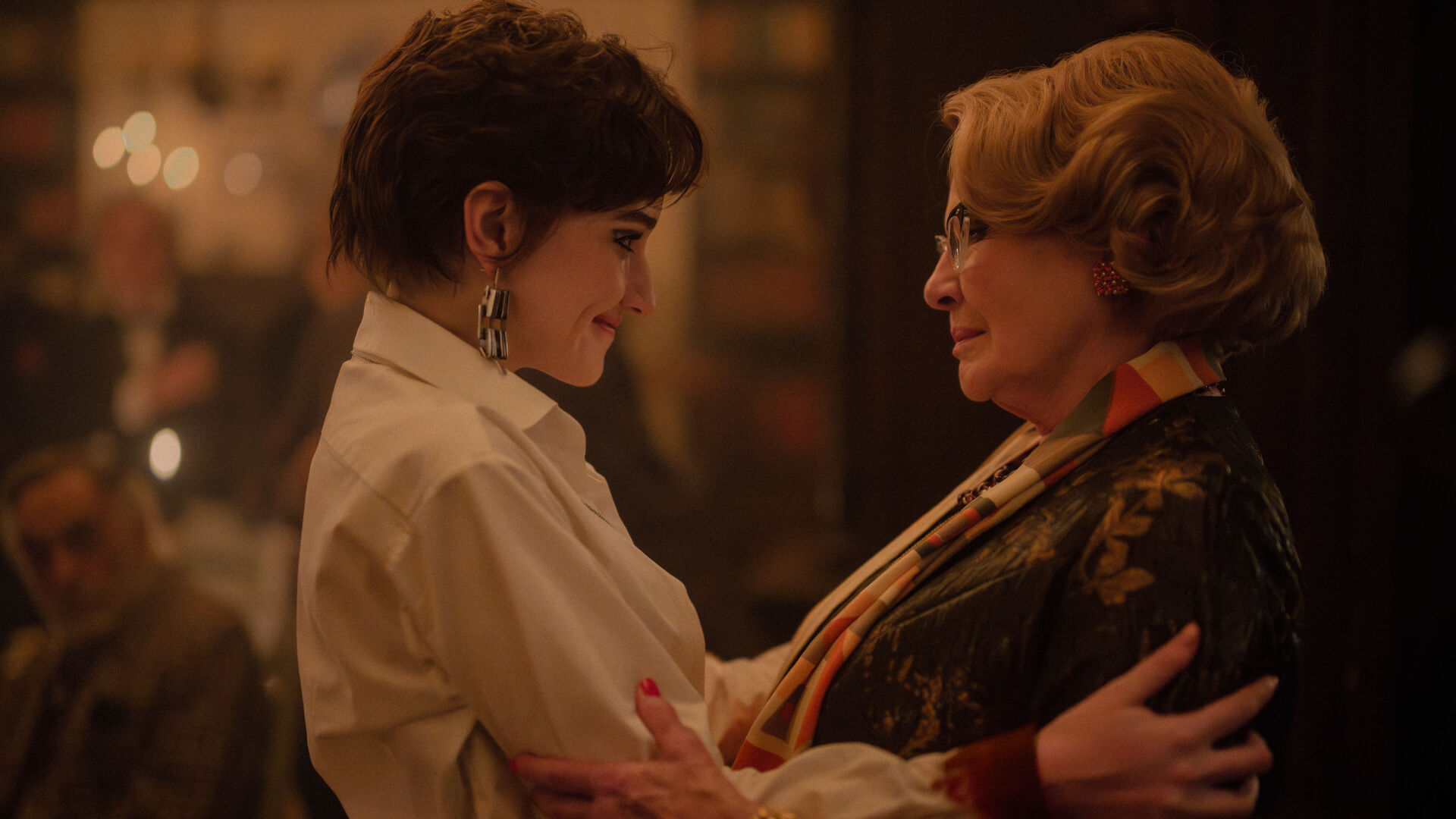
Apartment 7A proves that the central themes of Rosemary’s Baby are, unfortunately, more relevant today than ever. The horror is more visceral – after all, you can get away with showing more in 2024 than you could in 1968, but there’s something to be said about the effectiveness of restraint. I enjoyed my time in Apartment 7A, but when confronted with a choice, I will choose Rosemary every time.
Apartment 7A premieres on Paramount+ on September 27.

 Knock on Wood
Leave a comment