
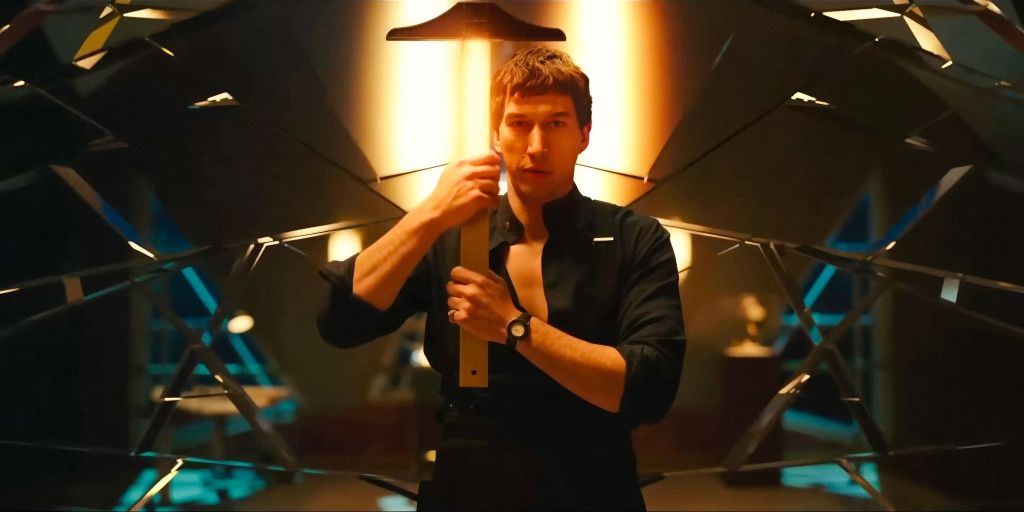
Megalopolis, Francis Ford Coppola’s nearly fifty-year passion project, has probably gone through more stages of development than any other film in the medium’s history. Unlike many such projects, however, Coppola’s white whale actually did get made, after years of starts and stops, and finally kicked into high gear after Coppola sold his prized wineries and borrowed millions to bring his dream to life.
And he did it with complete creative control. Megalopolis is, essentially, an independent film, entirely self-financed. Coppola is the singular creative visionary – a position that comes with an infinity of expectations and pressure, but if anyone can handle them, it’s the five-time Oscar winner who has delivered four of the greatest films ever made.
The problem with Coppola’s position is a temporal one. He has spent almost five decades entranced by this concept, invigorated enough to keep coming back to it (a feeling many creatives know well), and committed enough to sink half of his fortune into it. But – and this is a big but – that means nobody can say “no” to him. There’s no studio oversight, no one above Coppola to rein him in or curb his bad ideas. This could lead to something great, but it could also produce an unquestionable disaster. Megalopolis falls somewhere in the middle for me.
After its festival premieres (at Cannes and TIFF), it was clear Megalopolis would be polarizing and controversial, but I wasn’t quite sure to what degree it would be alienating. If nothing else, it was bound to be a unique, one-of-a-kind experience.
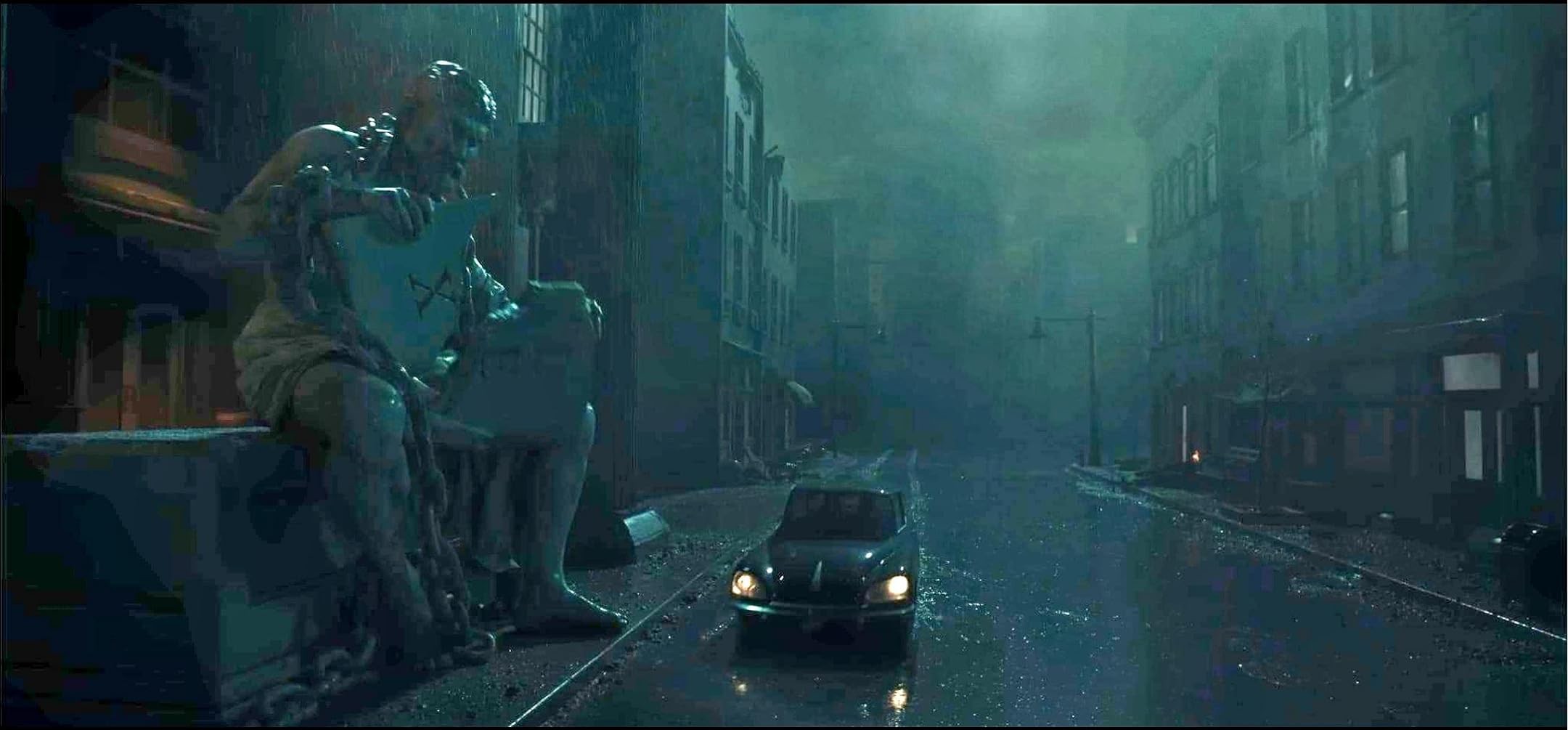
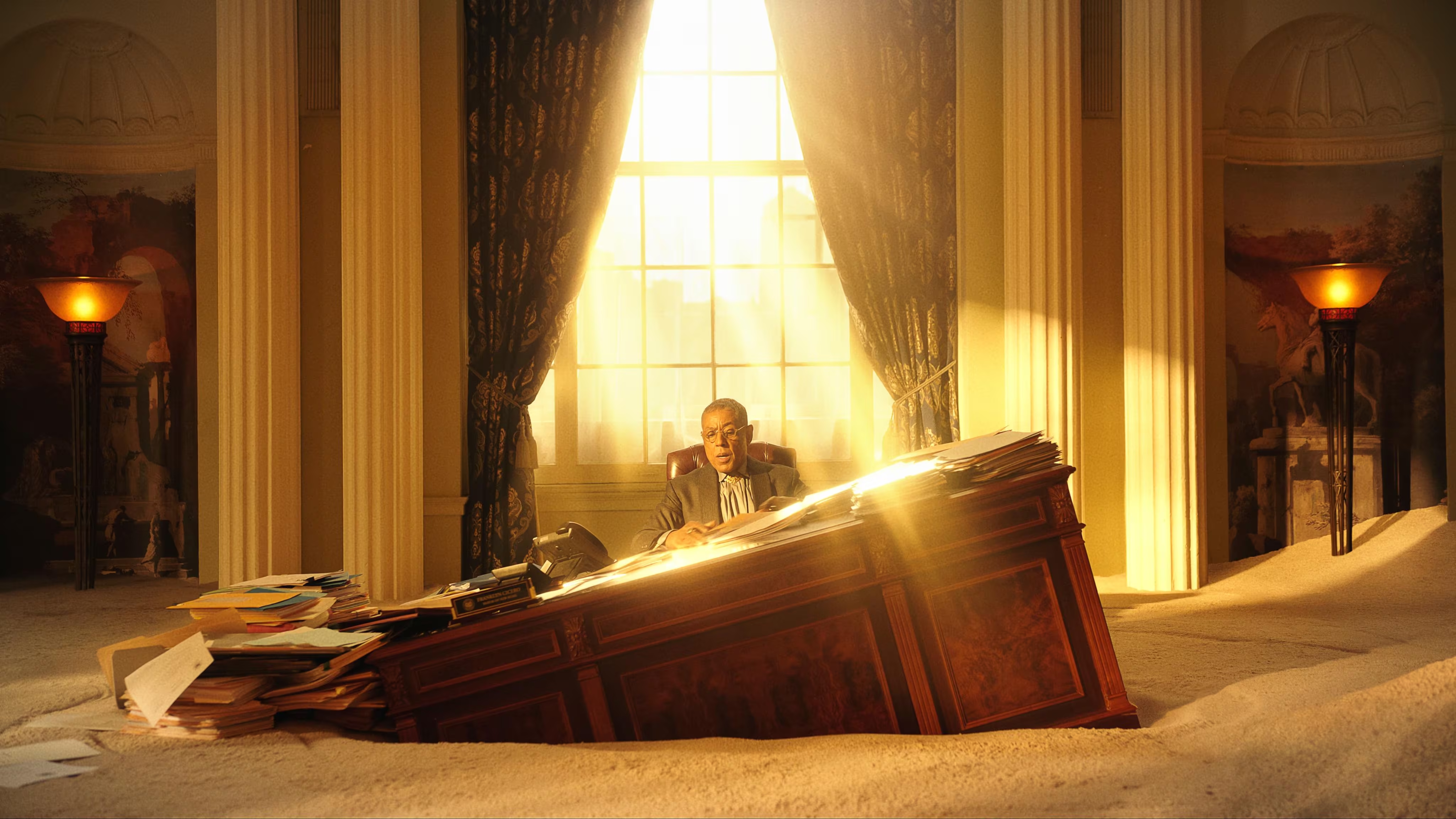
I will say – and I’ll give Megalopolis props for this – the story is easy to follow. It’s experimental at points, but it follows a straightforward narrative that allows it to lean into its strangeness without fear of losing its audience. One of the many central characters is famed architect Caesar Catilina (Star Wars’ Adam Driver), who seeks to use a miraculous, self-creating material he invented to transform the corrupt and decaying city of New Rome (visually represented as a bizarro, alternate-present New York City) into a haven utopia called Megalopolis. He is vehemently opposed by the New Rome mayor Franklyn Cicero (Breaking Bad’s Giancarlo Esposito), although the mayor’s daughter Julia (Game of Thrones’ Nathalie Emmanuel) develops a fascination with Caesar that blossoms into a romance. Also in play is manipulative TV presenter Wow Platinum (Parks and Recreation’s Aubrey Plaza), banker Hamilton Crassus III (Midnight Cowboy’s Jon Voight), and Caesar’s jealous cousin Clodio Pulcher (Transformers’ Shia LaBeouf), among many others. The cast is astounding (Talia Shire, Laurence Fishburne, Kathryn Hunter, Jason Schwartzman, Chloe Fineman, James Remar, and Dustin Hoffman also co-star) and more than worthy of Coppola’s magnum opus.
Taking massive inspiration from pre-Empire Ancient Rome and both historical and mythological politics, Megalopolis is all about legacy and the potential for future change (it spells out that thesis with on-screen text multiple times throughout), but comes off slightly confused and indecisive. It tries to cover so much ground that at times seems to be part satire, part human drama, and part faux-historical epic about the structure of power throughout human history. With countless on-the-nose classical references (Plaza’s Wow Platinum is very clearly the Cleopatra figure, even going so far as to dress up as the Egyptian Queen during the Saturnalia), it hits you over the head with its messaging time and time again, just in case you didn’t get it the first hundred times.
Knock on Wood readers know how much I respect ambition and big swings, and Megalopolis is essentially one massive undertaking that will almost certainly not financially pay off, but it’s remarkable that it actually exists. Even if I had plenty of issues with how it was presented, I admire Coppola’s vision, and I’m incredibly impressed that it got made and I was able to see it. It’s chock-full of so many disparate ideas that it becomes highly difficult to parse (though maybe it’s just my pedestrian perspective), and I came away from it feeling talked down to; maybe I just didn’t fully grasp what it was trying to tell me – ironic, as it literally spells it out multiple times – but maybe it really purposefully and performatively complex, not meant to be “understood” in the traditional sense. After all, it’s a fable, so it’s allowed (and, dare I say, expected) to be deeply metaphorical and symbolic, rather than a grounded, real-world story.
The word “indulgent” comes to mind, but it has primarily negative connotations, and even if I didn’t like Megalopolis very much, it is at least a fascinating case study when it comes to complete creative control. I can see myself revisiting it in 10-15 years and taking something entirely different away from it, something beyond the surface-level psychedelia that permeates every second, even when we’re not engrossed in some expansive fantasy sequence. It’s been in development for so long that I wouldn’t be surprised if it has since become something entirely different from how it was initially devised, perhaps even losing sight of its original intention over the decades. I will acknowledge that it probably all makes perfect sense in Francis Ford Coppola’s head, but translating those colossal abstract notions to the big screen is not easy. It almost feels theater-esque, or a music video without the music. It’s a true spectacle, and should not be missed if you have even the slightest interest.
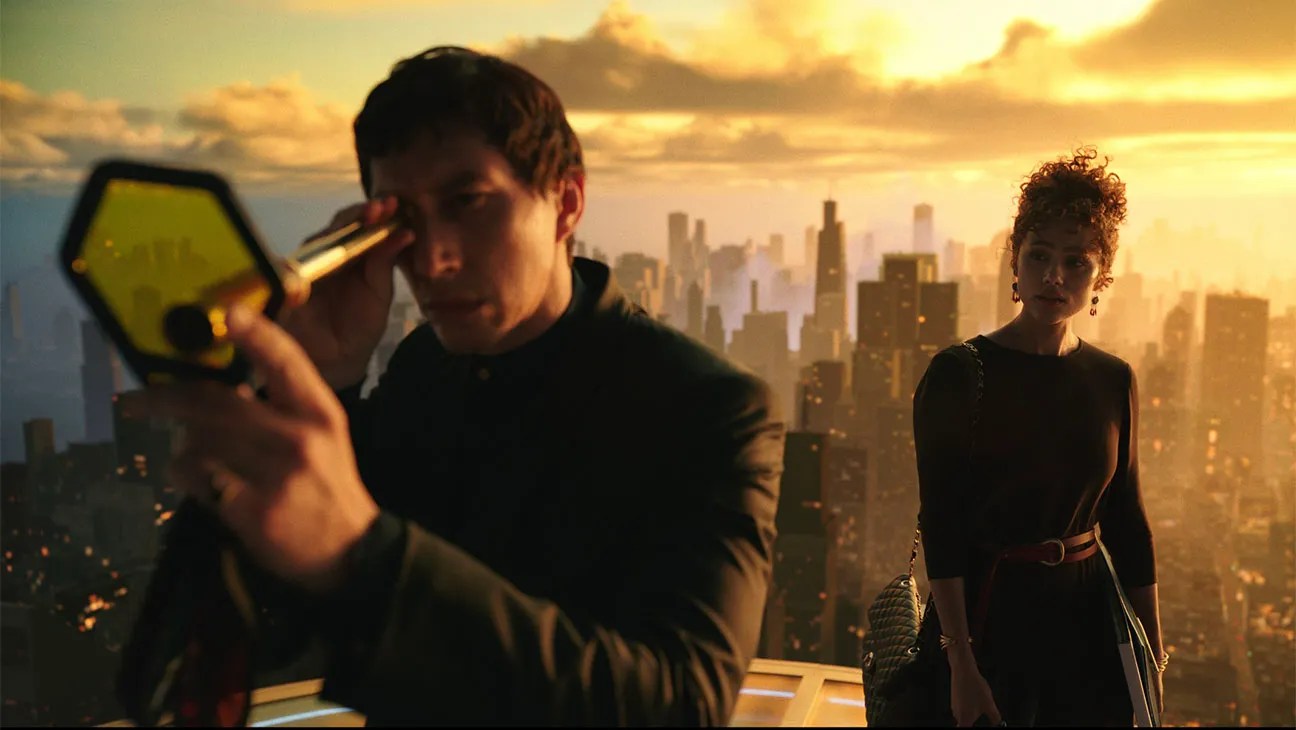
There is one aspect that I connected with instantly, and it’s one of the most interesting ideas left criminally unexplored – Caesar Catilina’s miracle metal, Megalon, gives him the rudimentary ability to control space and stop time at will. While suspended above the city with Julia, Caesar (who feels like he has lost his ability) tries, and fails, to freeze time, before Julia asks him to do it for her. “You told me once that all artists can stop time,” she says. It’s one of the few ideas the film has that resonates with me personally, and probably will for all artists watching – we all have that same power over our own worlds, and it’s a fascinating visual representation of a notion exclusive to our mind’s eye.
Megalopolis is, at its core, a plea for humanity to get itself together and unite to make a safe future for ourselves and our descendants. Who knows what it might have looked like if it had actually been made in the ’80s or ’90s – maybe the studio that produced it would have stifled Coppola, or put him on a more digestible path. We’ll never know. It’s a cinematic experience that everybody will take something different away from, but isn’t that what art is supposed to be?
Megalopolis is playing in theaters now.

 Knock on Wood
Leave a comment