

Welcome to class! My full-time job is working at a university, and I teach as well. One of my dreams has always been to teach a film class. Taking students through the world of cinema and helping them learn about the art form that I am so passionate about would be an amazing experience. But alas…I teach math. This series, “Lessons from the Wasteland,” is my opportunity to offer readers a curated watchlist to learn through doing (…watching movies). Each film on this list will highlight a filmmaker, sub-genre, filmmaking technique, or significant topic in order to broaden your cinematic horizons. For this month we have…
Westerns
High Noon
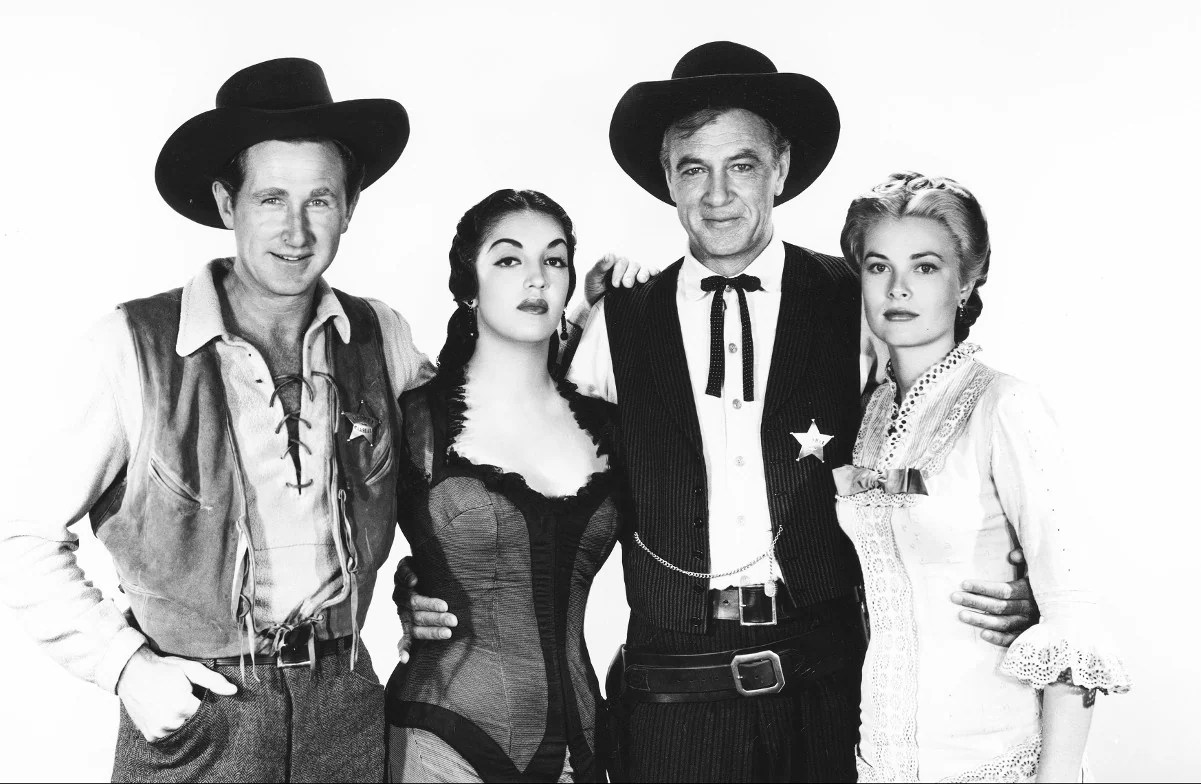
For decades leading up to High Noon, the Western was one of the stalwarts of American cinema. The likes of John Ford (more on him soon) and Howard Hawks were building the framework for the genre that just might be described as the most uniquely American. The Great Train Robbery set the tone in the early 1900s, creating the tropes and expectations of the genre. But much to the frustration of some, including perennial Western stars like John Wayne, High Noon took a fresh, challenging, and unexpected approach to this classic genre. It abandoned the sprawling vistas of the western United States as well as the epic expansive adventuring. This is a Western on the clock and stuck inside a singular town.
A thriller packaged like a Western, High Noon builds tension like few films of the genre do. It follows a retiring Marshal who must stick around to stop an outlaw returning for revenge. But instead of the community coming together, they abandon their protector and lawman in a biting commentary on humanity and, specifically, American society at the time. The final showdown is well-staged, intense, and has plenty of shocking moments as well. Director Fred Zinnemann crafts an impressive exploration of community and a fresh deconstruction of what we all would expect from a Western (especially at that time).
The cinematography is crisp, thanks to the gorgeous black-and-white film that really pops on-screen. The cast is incredible, as you have Gary Cooper (one of the great all-American actors) leading the way. There is a vulnerability in Marshal Will Kane, and Cooper nails that demeanor so well. Grace Kelly is gorgeous, but more importantly, she brings an unexpected strength to Kane’s new young bride. Legendary character actors like Thomas Mitchell, Lloyd Bridges, Otto Kruger, Harry Morgan, and Lon Chaney Jr. add layers in their own ways. Lean, biting, and expertly crafted, this one is an all-time classic.
The Searchers
John Ford is the king of the Western. From the 1910s through the 1960s, Ford was crafting the mythos of the West through a large filmography of classic Westerns. There are so many that could easily earn a spot in this curriculum (there could even be a whole article dedicated to Fordian Westerns). Stagecoach, Fort Apache, 3 Godfathers, Wagon Master, She Wore a Yellow Ribbon, The Man Who Shot Liberty Valance…there are so many potential choices, but the crown jewel of Ford’s career certainly has to be The Searchers.
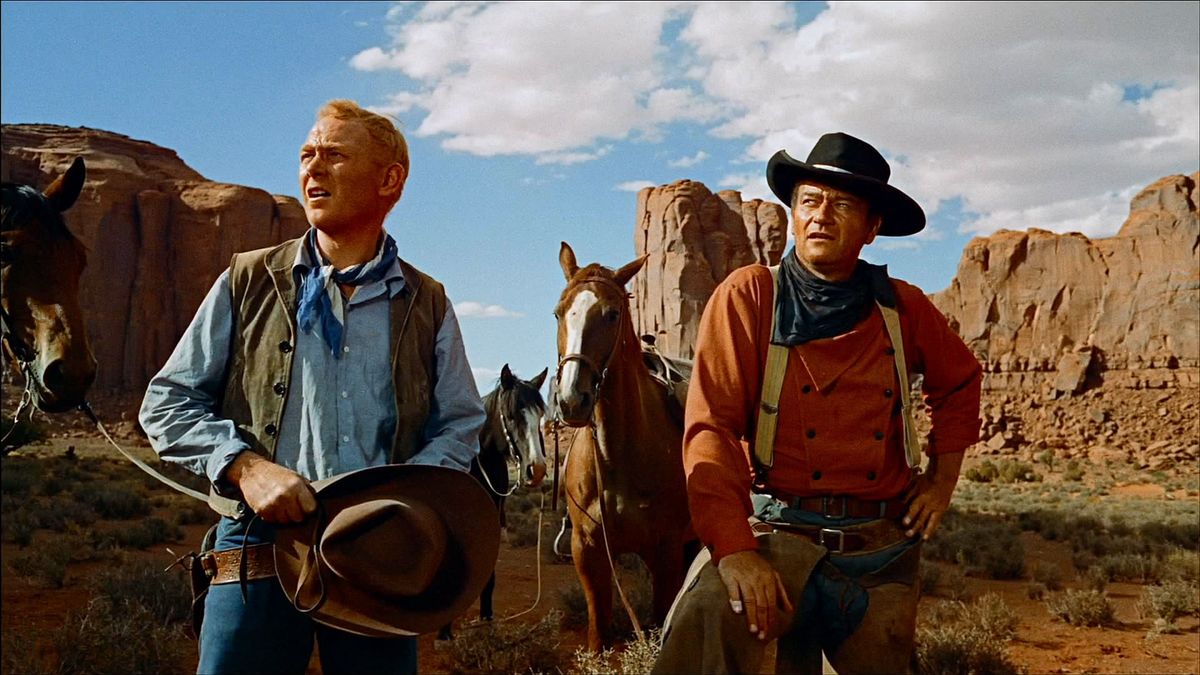
Frank S. Nugent (a long-time collaborator of Ford’s) wrote the tale of a former Confederate (or current Confederate, if you ask him) who finally returns home in time for a tragic raid that leaves most of his family dead and his two nieces kidnapped. A years-spanning epic Western is the best way to describe The Searchers, as it follows the uneasy alliance of Ethan Edwards (arguably John Wayne’s best performance) and Martin Pawley (Jeffrey Hunter), an unofficial member of the family.
The most significant aspect of Ford’s filmmaking is the incredible visuals. There are few Westerns that are more gorgeous to look at than a Fordian Western. The Searchers just might be his magnum opus, with stellar framing of the grand vistas of Monument Valley. The framing is pitch-perfect, with those horizons in all the right places. There are some striking shots of characters as well that are pregnant with feeling and emotion. The pristine Technicolor is the cherry on top. The pacing and comedic moments help create a thoroughly entertaining watch, but those emotional moments are where the real magic happens.
Where this film really stands out is the depth of themes it explores. Edwards and Chief Scar are two sides of the same coin. They are driven by hate, and will do any heinous thing for them to meet their goals. Edwards is a complex and deeply flawed man who is never meant to find himself in “paradise,” which makes the final shot of this film so iconic. Wayne has moments where he shows more emotion than he ever has as an actor. The swaggering and confident stature of Wayne paired with his racist, hateful, and stubborn traits makes for an iconic performance. But the likes of Ward Bond and Vera Miles deliver stellar supporting turns as well. This is the most John Ford Western you will ever see, and it’s a quintessential part of the genre.
The Good, the Bad and the Ugly

Italian directors like Sergio Leone completely reinvented the genre through the spaghetti Western subgenre, which focused on troubled, morally-gray characters who will challenge the audience to connect with instead of leaning on the classic archetype of the All-American hero. The elements that work best are when these characters challenge themselves to do good. But the film that has immortalized the subgenre is Leone’s The Good, the Bad and the Ugly, which provides a unique experience of three morally gray characters who are competing with each other to find buried treasure. What is so interesting about The Good, the Bad and the Ugly is that it is a Western epic (clocking in at almost three hours) that is set on the backdrop of the American Civil War. There are compelling thematic threads about war and what it does to humanity. A few narrative beats bring our “protagonists” (“The Good” and “The Ugly”) under fire. They are put in a prison camp where serious torture occurs. They are then commissioned to destroy a bridge for a dying captain of the Union Army. One of the most human and tender moments is Blondie (“The Good”) lighting a cigarette for a dying young man. This singular moment feels like the death of this man’s own humanity, and the birth of the iconic “Man with No Name” character (as he puts on his iconic poncho for the first time).
Clint Eastwood is the prototype of the steely, silent badass. His scowl is piercing, and his stature is felt throughout the film. Blondie is not quite a hero (despite his doing some honorable things), but the most entertaining character by far is Eli Wallach’s Tuco. This wiley and crafty scoundrel is the key to so many fun and impactful scenes. His dynamic with his brother is a surprising emotional anchor to the film, but the banter between Blondie and Tuco is absolutely fantastic.
The technical aspects of the film are off the charts with sharp editing, gorgeous cinematography, perfect tonal balance, and great pacing. The violence is potent and effective. The music from Ennio Morricone is iconic, and has transcended this film and become essential to the Western genre. The final sequence of the film is one of the most perfect pieces of cinema ever created, from “Ecstacy of Gold” to the cemetery standoff to the final confrontation between Blondie and Tuco. Beyond the Western, this film is one of the most perfect examples of cinematic achievement ever conceived.
Unforgiven
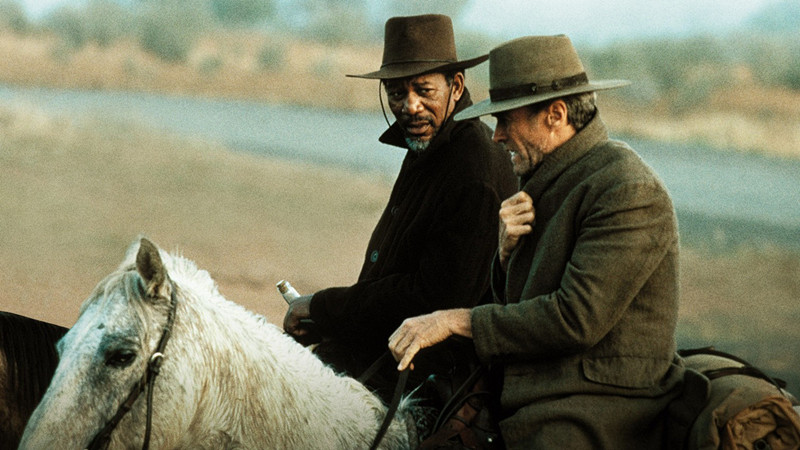
The Western become so synonymous with American culture through the mythology. Over the decades, filmmakers like John Ford crafted a genre on the back of great vistas, strong heroes, and dastardly outlaws. The revisionist western became a major player when society wanted a different perspective. They did not want to see pristine heroes and simple stories anymore. They wanted cinema to reflect the world around them, which was becoming more complex in the ’60s and ’70s. Clint Eastwood became the face of this new Western, replacing John Wayne as the face of the genre. His characters were not swaggering heroes. They were antiheroes with some redeeming qualities who might have a righteous mission, or perhaps no mission at all.
Eastwood became a talented filmmaker in his own right and crafted the greatest revisionist Western of all time. Unforgiven is a gritty, intense, and dirty tale of a once horrific outlaw trying to do what he seems is the best he can to support his children by killing rapists. The most important thing to understand about Unforgiven is that there are no heroes. Bill Munny might be a quiet, aging widower taking care of his two small children, but he was the most brutal and vile villain of the West in his prime. Morgan Freeman’s Ned was his accomplice, and his past haunts him as well. The law in this small town is Little Bill Daggett (Gene Hackman), who was once an outlaw himself and now uses his authority to oppress his townsfolk. Richard Harris’ English Bob is a charlatan and a con man, living on the mythology created around his name (much like the genre at its worst).
The film explores the folly of youth and its ignorance of a more complex worldview as well as the bastardization of history through a biased lens. This is a bleak and grim film that punches down the classic Western genre but is still able to deliver a compelling story that has great emotional weight and towering thematic exploration. Eastwood’s direction is so mature, intense, and poignant. The final sequence is such an impressive exercise in tension, payoffs, and deconstructing tropes of a genre. This turn of Eastwood’s shows just how much range he actually has as both an actor and director. The film begins with a hollowed-out shell of a man, but by the end, we witness the most dangerous and frightening force in all of the old West. Hackman is the perfect antagonist: an arrogant and spiteful man who thinks his past is forgiven…but Munny shows that you cannot outrun your past. Eastwood and his towering achievement of Unforgiven helps us learn that “deserves has nothing to do with it.”
True Grit (2010)
Is the Western actually dead? Unforgiven is thought of by many as the last great Western to grace the silver screen. Eastwood destroyed the myth of the Western, which set the tone for perception moving forward. Neo-westerns have since become more common, as they incorporate iconic Western elements into a modern context (a future lesson, for sure). But there are still filmmakers out there making some great classic-style Westerns as well. One such filmmaker…or filmmakers…are the Coen Brothers. They created the greatest neo-western in the history of the subgenre with No Country for Old Men, but they also crafted their own traditional western with True Grit.
The original film is a classic and beloved by many. John Wayne won his one Oscar for his performance as Rooster Cogburn. But this was certainly a more Hollywood version of Charles Portis’ impressive novella. The Coens (who have done amazing adaptations, including No Country for Old Men) took that novella and created an honest and raw adaptation that captures the true spirit of the piece. For a film called True Grit, you would expect a more gritty and textured look of the old West. Where the original adaptation has an Old Hollywood feel, the Coens and cinematographer Roger Deakins chose to pursue a stark look for the old Western frontier. When you have Deakins behind the camera, you know you are going to get a rich, perfectly framed, and gorgeous-looking film.
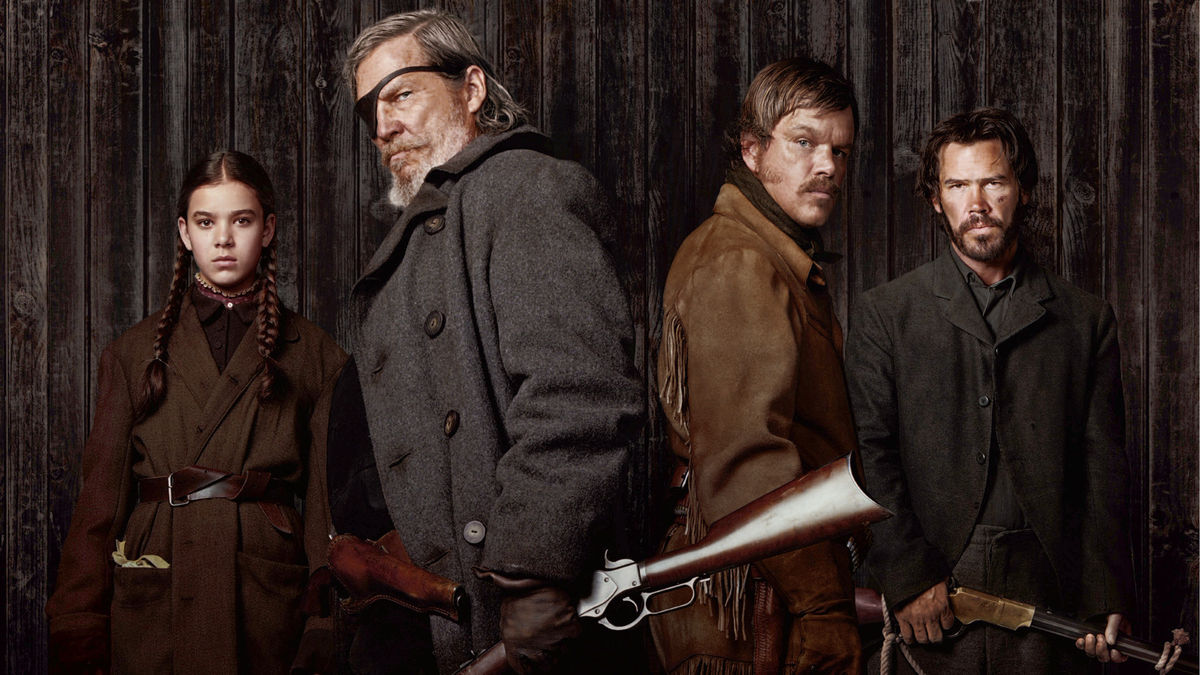
The story is compelling, with the young Mattie Ross hiring a grumpy old Marshal and arrogant Texas Ranger to hunt down the man who killed her father. Mattie is such a great character, with her spunk and cleverness, but the exploration of her youthful ignorance becomes a bedrock of the film. Hailee Steinfeld is incredible, and delivers a strong presence as well as plenty of personality. Jeff Bridges launched a whole new gruff persona with his turn as Cogburn. His presence, complexity, and nearly inaudible voice all feel so perfect for this character. Matt Damon is a fun addition as Ranger LeBoeuf, whose banter with both Steinfeld and Bridges is incredible. He is not in it very much, but Josh Brolin is disgustingly perfect as the villainous Tom Chaney.
Just like any other Coens film, True Grit is stuffed to the gills with memorable character actors in both supporting and minor roles. This has one of the richest mosaics of Western characters put to the screen. This cast is perfect, even those with just a few lines. The film has a great sense of humor, while maintaining a serious and poignant tone as well. There might not be consistent streams of Westerns anymore, but sometimes you just might get a gem like True Grit.
Also see: Stagecoach, Dances with Wolves, Once Upon a Time in the West

 Knock on Wood
Leave a comment