

Part of the appeal of fantasy worlds is that they’re infinite. In a well-constructed fantastical reality, you can go anywhere in either direction on the timeline and you’re bound to see something interesting. Your imagination can run wild. The possibilities are quite literally endless.
And then there’s the franchise problem. It’s certainly on a case-by-case basis, but it’s difficult to tell when a franchise has more story to tell, or just when it’s been mined for all its worth. The Lord of the Rings franchise is one that has been miraculously untouched and preserved amidst the era of “legacy sequels” and cash grabs – the inevitable Hobbit movies notwithstanding – but the floodgates were opened with Amazon’s Rings of Power series. Two new live-action prequels are in development (one of them has been subtitled The Hunt for Gollum), but in the more immediate future, the franchise is heading in an intriguing new direction.
With the release of The War of the Rohirrim, Middle-Earth has officially gone anime. For the first in a series of planned animated spin-offs that aim to expand upon Tolkien’s mythology and broaden the world that Peter Jackson first brought to the big screen in 2001, Japanese director Kenji Kamiyama turns his eyes to the under-appreciated kingdom of Rohan: a key player in the last two chapters of the Lord of the Rings trilogy, but not as fleshed out as some might hope.
After the lukewarm reception to The Hobbit (not from me – I seem to be one of the biggest defenders of the trilogy) and the tempered reaction to The Rings of Power, it’s only natural to be dubious about even more stories set in Middle-Earth. After all, the more you revisit something like this, the more in danger it is of losing the magic and mystique that made it unique in the first place. But at the same time…how can any fan not be excited about a new Lord of the Rings movie?
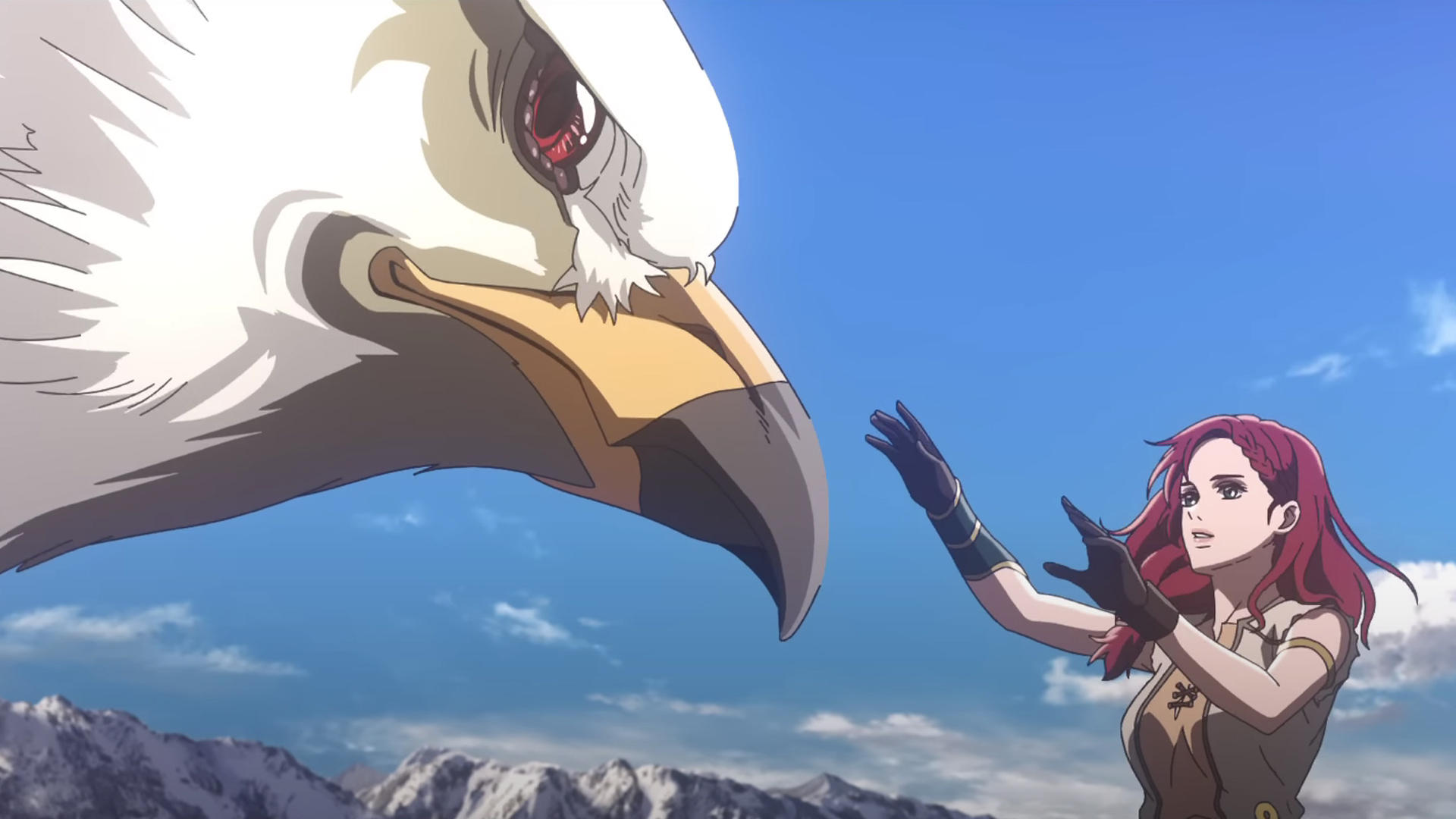
I’m thrilled to report that The War of the Rohirrim does more in capturing the epic spirit of Middle-Earth than we’ve seen in over 20 years. From the moment when I first heard the swell of Howard Shore’s music cues (gently nestled within a similarly spectacular original score from Stephen Gallagher), I knew I was in good hands. I think it’s important to state now that The Lord of the Rings is, and always has been, a very important series of films to myself and many of my friends; time and time again, I’ve done introductory marathons and overnighters, I’ve seen every edition that exists on every kind of videodisc, and (especially since the releases fell on my birthday weekend every year during my childhood) The Hobbit was my most anticipated movie of the year for three in a row. I was always going to like The War of the Rohirrim, but I didn’t expect to be so blown away.
Much of it boils down to the fact that the film is crafted on such a brilliant technical level, and the visuals elevate what is otherwise a fairly standard story into an epic fairytale of kings, monsters, and battles on a massive scale. It’s made with a clear love of the art form, and a love of the world as well – in fact, Kamiyama seems to have such confidence about living within this world that has been the subject of countless texts, scholarly analyses, appendices, and more over the course of the last 87 years that the film doesn’t feel the need to root itself too deeply in the all-important lore that The Hobbit so willingly embraced (perhaps a bit too much). The War of the Rohirrim has plenty of fascinating contributions to the cinematic Middle-Earth lore, but that facet is complementary, and isn’t distracting in the slightest. The film separates itself from other Middle-Earth stories so distinctly (the art style certainly helps with that), but fits so well into the world that it feels entirely natural. But its biggest big-picture success is that, if you stripped away every bit of Tolkien mythology and nomenclature, it could still function as an incredible fantasy movie. It’s not a Lord of the Rings movie as much as it is a movie that takes place in the Lord of the Rings universe.
Taking place almost two centuries before the events of Jackson’s trilogy, The War of the Rohirrim tells the story of Helm Hammerhand, King of Rohan (voiced in an impressive performance by Succession’s Brian Cox), as he and his family defend a pack of invaders who have a personal vendetta against him. It’s all framed through a coming-of-age story centered about Helm’s rebellious and free-spirited daughter Héra (voiced by Gaia Wise), as she attempts to protect her family. The film is narrated by Miranda Otto, who played Éowyn in Peter Jackson’s Lord of the Rings trilogy, to lend a deeper authenticity to the film’s folktale feel.
The War of the Rohirrim, unsurprisingly, features extensive action sequences, all of which are colossal and intense on a level I have never seen from an anime film before. It was a definite highlight of the film for me – apart from the fact that we finally get a proper female-centric narrative in Tolkien’s male-dominated world (look it up: there are no instances in the original trilogy where two named women even speak to each other) – and makes the whole film seem grander and far worthier of the Lord of the Rings stamp of titular approval. In a perfect world, that label is a measure of quality, and I’m happy that its integrity is upheld here.
At points, Rohirrim even feels more visceral than Lord of the Rings – while characters kill others in the trilogies, in Rohirrim, people die, sometimes brutally – which helps set it apart from what will inevitably become a crowded slate of Middle-Earth features. Rohirrim does wonders in showcasing Middle-Earth in a whole new way, not just by shifting focus to a purely terrestrial kingdom with very little magic to be found, but by shining a light on something else besides Hobbits and rings and heroic quests. The journeys in Rohirrim are out of practical necessity, not adventures bequeathed by a mysterious wizard. By blending its two-dimensional characters with stunning three-dimensional locations and backgrounds, The War of the Rohirrim perfectly recreates Tolkien’s fully-realized world in a way we haven’t quite seen before.

Quite honestly, I don’t think The War of the Rohirrim will be the smash hit it deserves to be. In a climate of overt cynicism and skepticism, where anything too different that strays from the norm risks the ire of the all-powerful fandom, this film is a miracle, a singular work of ambitious proportions that left me absolutely breathless and brought me immense happiness and joy. I hope that, if you have a similar history with The Lord of the Rings (or even if you enjoy fantasy and creative genre fare), it will be able to do the same to you.
The Lord of the Rings: The War of the Rohirrim opens in theaters on December 13.

 Knock on Wood
Leave a comment