
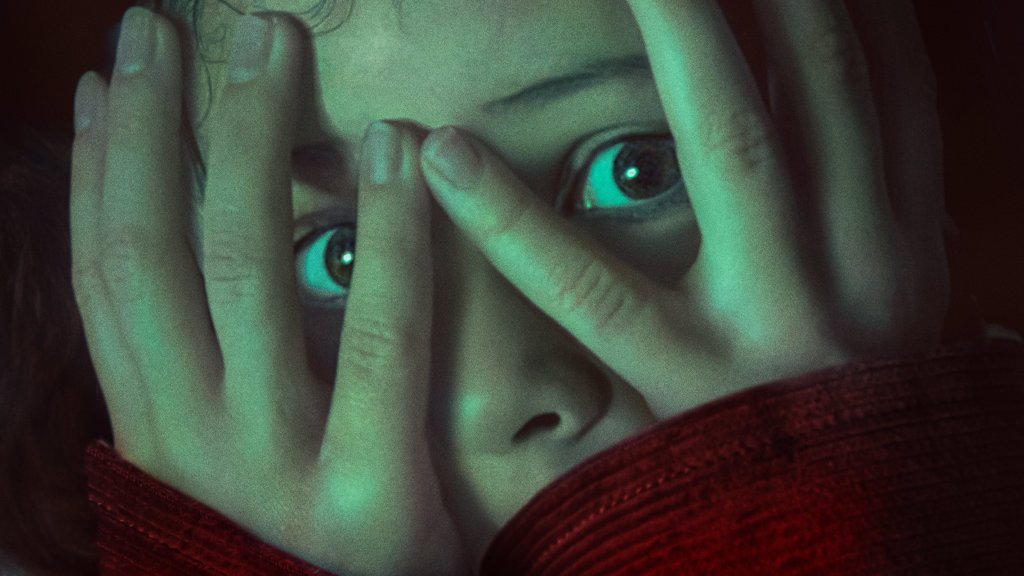
Of the many projects to rise from the ashes of Universal’s misguided “Dark Universe,” which sought to create an interconnected world where monsters like Dracula and the Mummy terrorize innocents in solo and shared films alike, Leigh Whannell’s The Invisible Man is unequivocally the best. A textured examination of emotional abuse and relationship toxicity, Whannell’s film brought the concept of an unseen menace to the big screen in a marvelously inventive and unquestionably modern way. It only makes sense that his next film sought to do the same for the Wolf Man.
One of Universal’s most iconic monstrous characters, the Wolf Man has typically been brought to life in a violently silly fashion, relying on classic tropes like the full moon and indigenous mythology to explain its existence. Whannell smartly simplifies the concept, reimagining the creature as a visceral, viral infection that twists and changes the body of the afflicted into a hellish, incommunicable beast with a thirst for blood.
At the center of Wolf Man is Blake Lovell (Christopher Abbott), a writer whose sole characteristic is that he loves his wife Charlotte (Julia Garner) and daughter Ginger (Matilda Firth). Years after his obsessive father’s disappearance and presumed death, Blake has inherited his childhood home in the mountains of Oregon, and he decides to temporarily relocate with his family to close out his father’s affairs.
As you might presume, not everything goes as planned – on the way to the farmhouse, the family is attacked by an otherworldly creature, and Blake is wounded by the beast’s claws. They lock themselves inside the home, but Blake’s transformation soon begins, threatening the life of the family he holds so dear.

After a cold open that establishes Blake’s childhood and a brief series of introductory scenes, Wolf Man is limited to very few locations over the course of only one night, which forces us to sit with every moment of the fear and terror on every side of the brutality. It plays out like a home invasion movie, if the invader is one of the main characters slowly losing control of himself. It’s very cool conceptually, but especially when compared to The Invisible Man, it feels noticeably devoid of anything beneath the surface. The characters are made of little more than one note, which helps when they’re running away from a murderous creature (who’d want to see a 10-year-old get torn to shreds?!), but not so much in any dialogue-driven scenes. There are sparks of a motif or a connecting thread, but the payoffs are few and far between, and the film just doesn’t seem interested in telling a character-driven story.
I will admit that I was impressed with Wolf Man on a technical level – apart from the incredibly tactile makeup and practical effects, Whannell knows how to use the camera (for more, see 2018’s Upgrade), and has a fascinating visualization for the dual perspective that bifurcates as soon as Blake’s transformation begins. As he begins to lose his grasp on human speech and gains wolf-like abilities, the visual language of the film changes whenever we see what he sees, and seamlessly flows back to the reality we’re used to when Charlotte or Ginger are in command of the narrative. In fact, I’d say that aspect goes the furthest in developing an emotional core to the film – as Blake becomes less and less human, we can see him struggling through this new visual language, holding tight to the love he has for his family that becomes harder for him to convey the further he gets from his humanity.
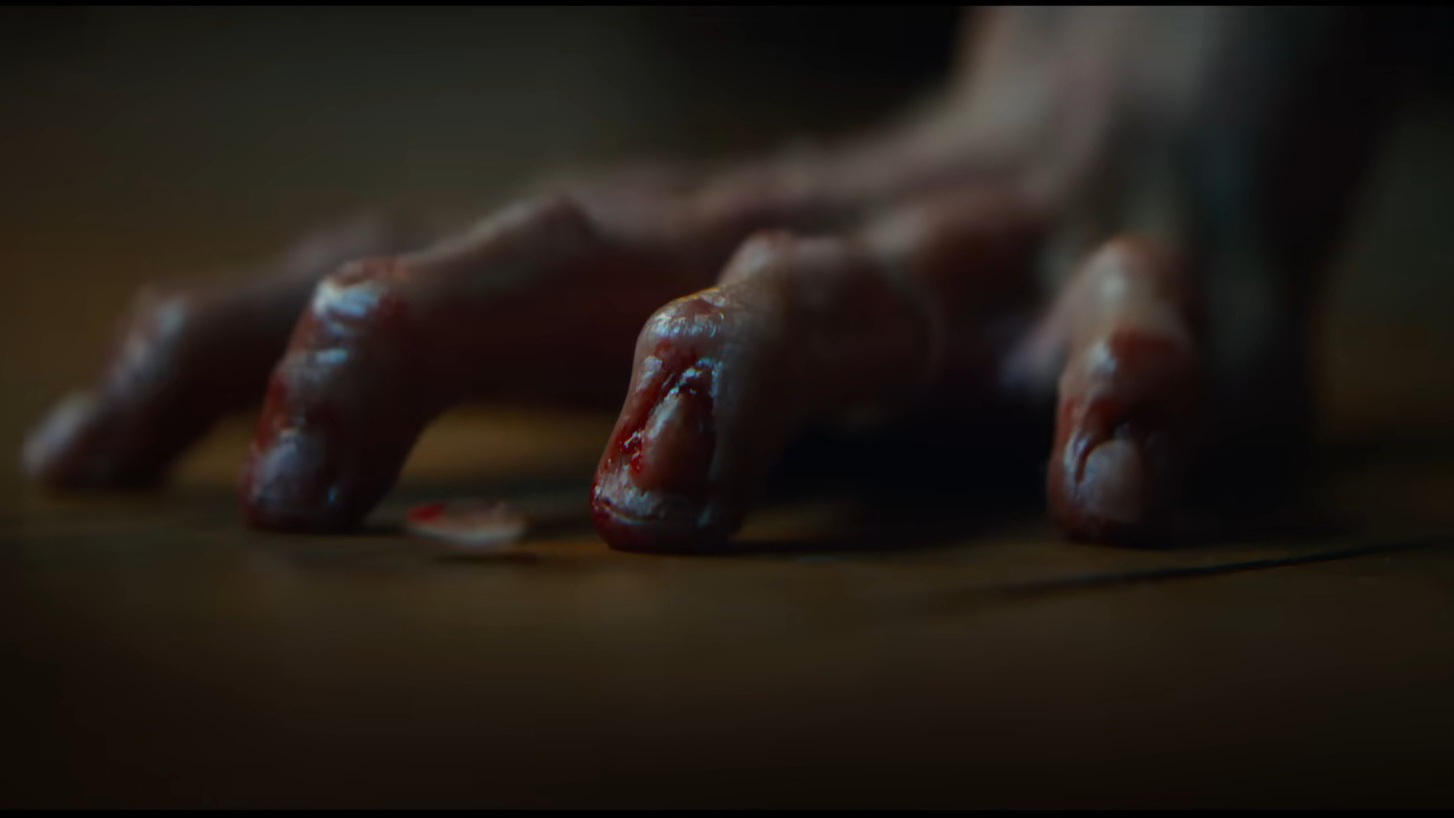
Wolf Man is a monster movie mashed with a suspense thriller, and based on the number of times my head was turned slightly away from the screen, I’d say it was fairly effective. There’s not much there texturally, but if you’re looking for a decent horror flick from one of our more interesting genre filmmakers, you can do far worse than spend an evening in an abandoned farmhouse with the Wolf Man.
Wolf Man is playing in theaters nationwide.

 Knock on Wood
Leave a comment