

The latest film from cinematic horror maestro Mike Flanagan is now playing in select theaters, which means now is as good a time as ever to revisit his oeuvre of feature films that have terrified audiences since 2011. I will, of course, not be covering his melodramatic student films (largely because Flanagan has very intentionally erased their internet presence) nor his episodic series – though his television work is tantamount to his legacy as a filmmaker, I will be waiting for the release of his next series to delve into that realm.
Over the last few years, Mike Flanagan has become one of my favorite filmmakers – not just because of his admirable ability to bottle the strife of human experience and the haunting impression of trauma into palatable and genuinely scary horror films, but because he does so with a particular style that sets him apart from most directors working in the horror genre. He doesn’t rely on jump scares, but he utilizes them well, and has been able to craft a perfectly eerie and unsettling atmosphere in his seven horror features, as well as a captivating, inspirational ambience in his latest release.
8. Absentia
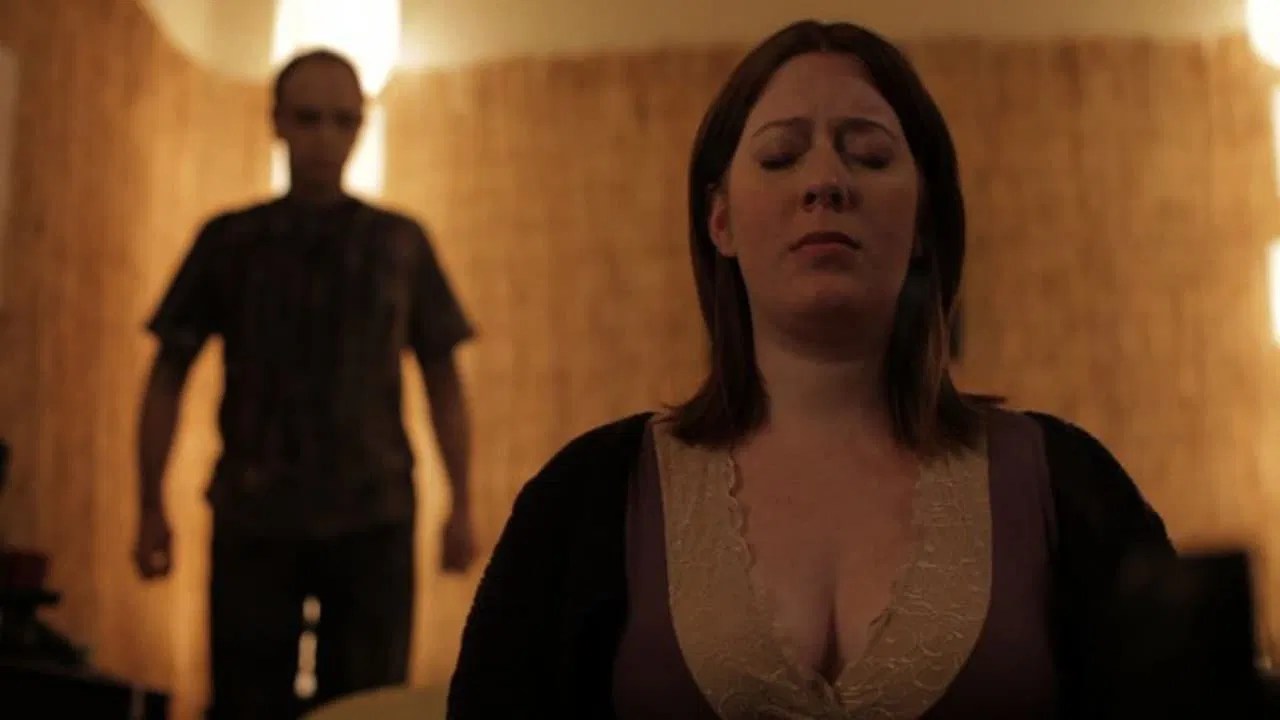
Flanagan’s first high-profile independent film, Absentia, was funded through Kickstarter, and despite a grimy aesthetic, you might never be able to separate the production value from the bleak 2000s horror run that defined a subgenre. Courtney Bell stars as Tricia Riley, whose husband Daniel (Morgan Peter Brown) has been missing for seven years. It’s now time to legally declare him “dead in absentia,” but a visit from her sister Callie (Katie Parker) and a series of unexplained phenomena interrupt the routine procedure. Absentia is, unsurprisingly, both creepy and suspenseful, and begins to explore themes and subjects that Flanagan’s work still touches to this day. It’s also the first of his films to turn a regularly occurring everyday object into nightmare fuel – in this instance, a pedestrian tunnel – and he proves that through his deft direction, he can prey upon the latent fear many of us have of the dark, the unknown, and the things we cannot see but imagine just the same. Much of it feels very “indie film,” but none of that detracts from its efficacy. It’s a hell of a directorial debut, and a strong start to our list – while Absentia may be my least favorite Flanagan, it’s by no means a bad film. None of them are.
Watch it on YouTube, Hoopla, Plex
7. Before I Wake

One of Flanagan’s three 2016 premieres is Before I Wake, a fantastical story that has been bizarrely memory-holed by not just Flanagan fans, but the horror community at large. Thomas Jane and Kate Bosworth star as Mark and Jessie Hobson, a married couple who, in a step to move past the death of their young son, adopt Cody (Jacob Tremblay), an orphan with the uncanny ability to physically manifest his dreams…and nightmares. The film is both devastating and sincere; magical in presentation, reaffirming Flanagan’s creative strength in delving into the psychology of childhood and loss, and how the two intersect. It’s also quite scary and highly introspective, and though its conclusion might roll a few eyes, I found it very emotional – and Jacob Tremblay is a big reason for that. Despite being shot before his breakout in 2015’s Room, Before I Wake was officially released on Netflix three whole years later, and so even though his “introducing” title card in the end credits was somewhat outdated, this film stands as Tremblay’s first great performance, and the first of his three collaborations with Flanagan. This film’s release was unfortunately bungled, for a variety of reasons – after a variety of cancelled release dates, it made its film festival debut in 2016, was distributed by Netflix everywhere except the US in 2017, and finally released quietly on the streamer domestically in January 2018. Its shortchanging is unfortunate, but it still stands as one of Flanagan’s more family-friendly works, while still slotting very well into his terrifying comfort zone.
Watch it on Netflix
6. Gerald’s Game

An adaptation of Stephen King’s novel, at one time considered unfilmable, Gerald’s Game marks Flanagan’s first collaboration with the master of horror himself. It’s also the first appearances of Carla Gugino and Bruce Greenwood in the “Flanaverse” – they play a married couple, Jessie and Gerald, who stay at an isolated house for a getaway that they hope will fix their floundering relationship. After a round of intense foreplay results in Jessie being handcuffed to the bed, Gerald has an unexpected heart attack, leaving Jessie stranded without hope for rescue. She turns to her past and present for solace, but the sexual abuse she suffered at the hands of her father (Henry Thomas) begins to resurface, and she soon finds herself in an inescapable waking nightmare. For all intents and purposes, this is Gugino’s movie, and though it’s one of the smallest casts Flanagan has ever worked with (mostly due to the contained structure), her star quality is perfectly showcased in the crosshairs of an extremely gnarly situation. It beautifully pairs King’s thoughtful thematic work (shackling yourself to the past, etc) with Flanagan’s highly digestible filmmaking style, even though I still can’t bring myself to sit through the uniquely gory “de-gloving” sequence.
Watch it on Netflix
5. Ouija: Origin of Evil
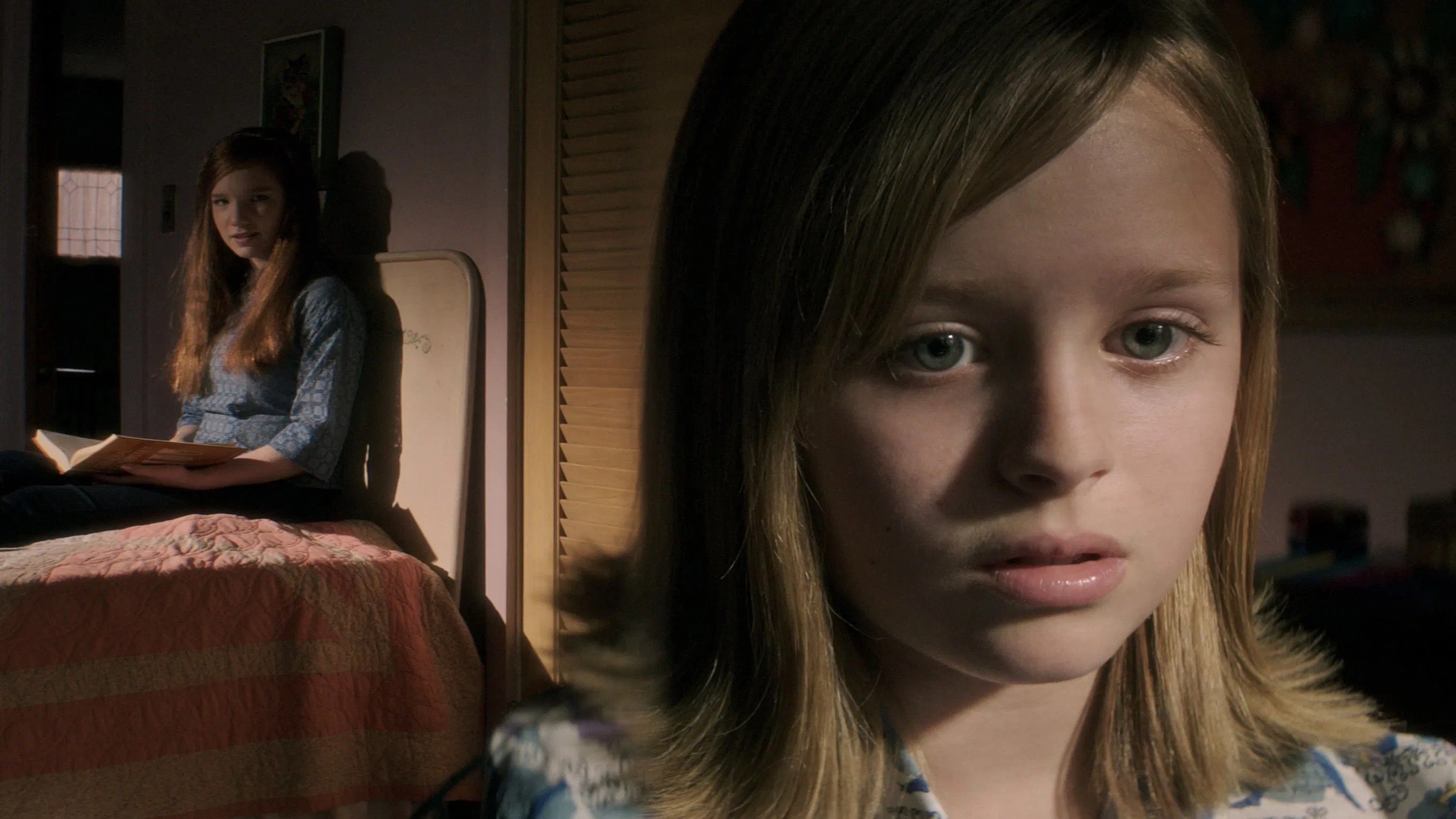
In his higher-grade sequel to 2014’s achingly bad (but incredibly profitable) Ouija, Flanagan brings his A-game in grounding a truly silly premise in brutal supernatural reality. The film winds back the clock to 1967, where the widowed Alice Zander (Elizabeth Reaser) works as a fake medium to support her two daughters, Doris (Lulu Wilson) and Lina (Annalise Basso). Eventually, a ouija board surfaces, and the girls discover that it might be a gateway to another world. Wilson is fantastically creepy (though Flanagan has always struck gold with child performers) and Basso, in her second Flanaverse appearance – see the next film on this list for more – delivers a surprisingly emotional performance, proving she is more than capable of acting as the beating heart of a horror story. It’s always nice seeing Henry Thomas and Kate Siegel tear up their supporting roles, and of his early work, this film feels most like Flanagan is pulling out all the stops and proving his creative worth – split diopter shots, horrific facial manipulation, and wildly scary moments are just some of the tricks he employs here, with its biggest strength being that, even when operating within an established franchise, it’s still a signature Flanagan story, personal in its own way – concerning a family dealing with grief through the presence of ghosts and spirits – while being a very linear prequel to a movie that does not deserve one. As far as I’m concerned, this is the only Ouija movie.
Watch it on Netflix
4. Oculus
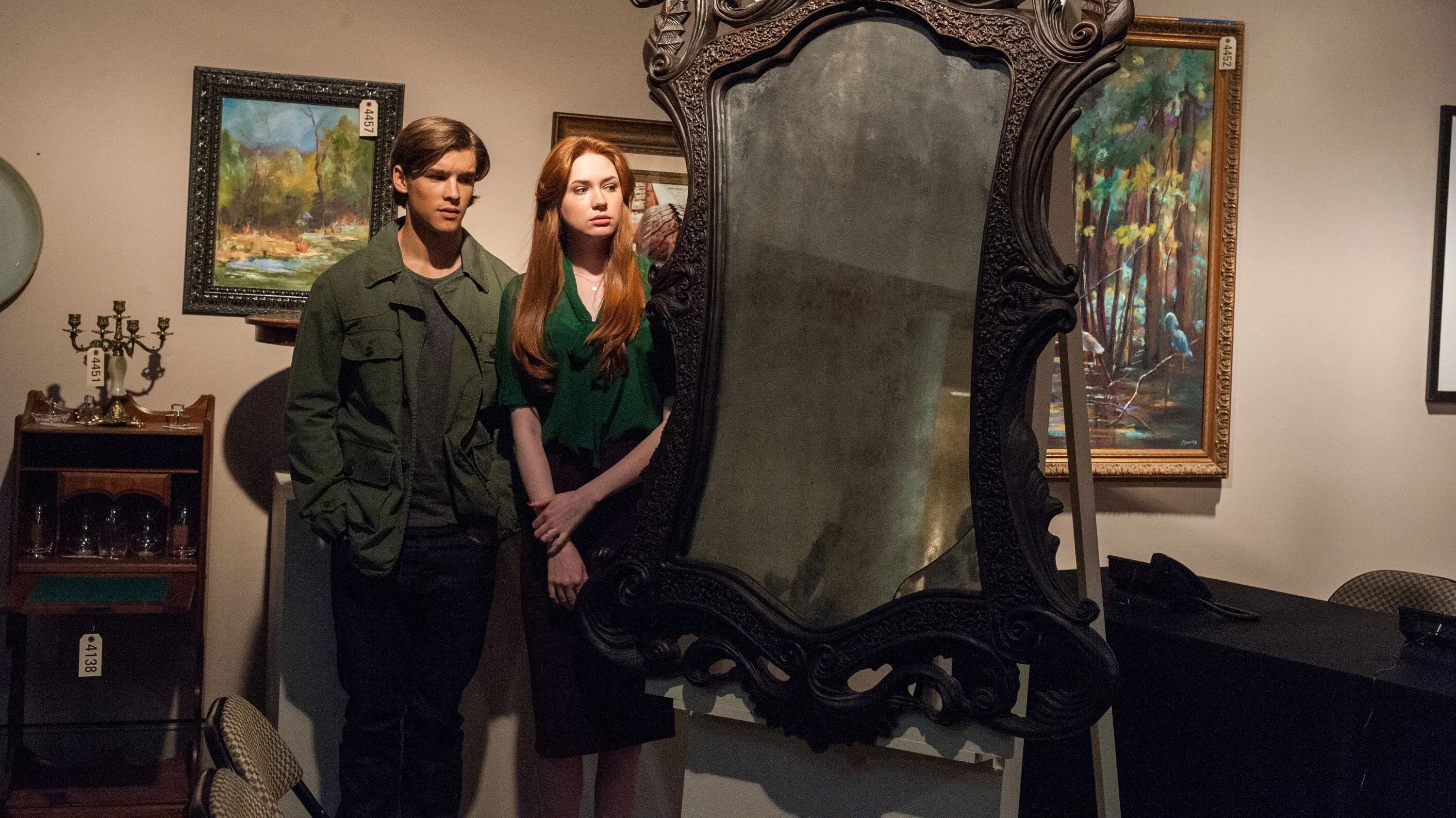
With Absentia, he personified pedestrian tunnels and made them truly terrifying, so it’s only appropriate that Mike Flanagan did the same thing with a mirror in his second feature, Oculus. Adapted from his short Oculus: Chapter 3 – The Man with the Plan, the film is – you guessed it! – a meditation on grief and trauma, but this one is particularly bleak in areas that Flanagan doesn’t typically tread. That being said, this “haunted mirror” movie is much more than just its antagonist – it’s shocking, cerebral, and upsetting, with Karen Gillan’s central performance anchoring the devastation with a level-headed, confident coolness that sells the premise with a chilling urgency. She’s the heart of the movie (and it’s no surprise that Annalise Basso plays her younger self), and her unyielding determination makes this one of her most compelling roles. Gillan plays Kaylie Russell who, days after her brother Tim (Brenton Thwaites) is released from a mental institution, holes up in her childhood home with the mirror she is convinced is responsible for centuries of vicious tragedy, most recently to their own family. In flashbacks, Katee Sackhoff and Rory Cochrane feature as Marie and Alan, Kaylie and Tim’s parents, who suffer from dangerous visions and debilitating anxiety before it all culminates in a night of violence. There’s a lot here about the merit of memory and the effects of childhood trauma, but this is one of the rare cases where leaning on the underlying themes actually undercuts Flanagan’s assertive execution, which is pitch-perfect as always. Oculus is an experience, and a damn scary one at that.
Watch it on Prime Video, Kanopy, Plex
3. Hush

The zenith of Flanagan’s collaboration with his wife, Kate Siegel, is Hush, a brisk 80-minute home invasion thriller co-written by and starring Siegel as Maddie, a deaf-mute author whose house is broken into by a masked psychopath (John Gallagher Jr). Hush is intimate, an examination of violation and womanhood, which operates on a level that is less vicious than much of Flanagan’s other work, but just as visceral. Siegel is front and center, present in nearly every scene, and this is perhaps her best performance in the Flanaverse – the danger feels personal and real, and every minuscule reaction on Siegel’s face comes across clear as day. Hush becomes almost something of a game, as we root for Maddie’s success and tangibly feel every failure, no matter how small. Hush is also notable for featuring the first references to Midnight Mass – here one of Maddie’s published books, but later a full seven-episode series that Flanagan produced for Netflix. He had initially tried to write it as a novel, but found little creative satisfaction with it, and put it as a clever story-within-a-story here instead. Last fall, I saw the world premiere of a new black-and-white cut, dubbed the “Shush Cut,” which also largely lacks the Newton Brothers’ instrumental score, and it was only then I realized just how much of a safety net the music is in Flanagan’s work. It reminds you that you are watching a work of fiction (in a way that makes me appreciate the artistry all the more), and when you remove it, there is nothing stopping the utter tension from taking over every part of your mind.
Watch it on Shudder, AMC+, Philo, Shout! TV, Plex
2. Doctor Sleep
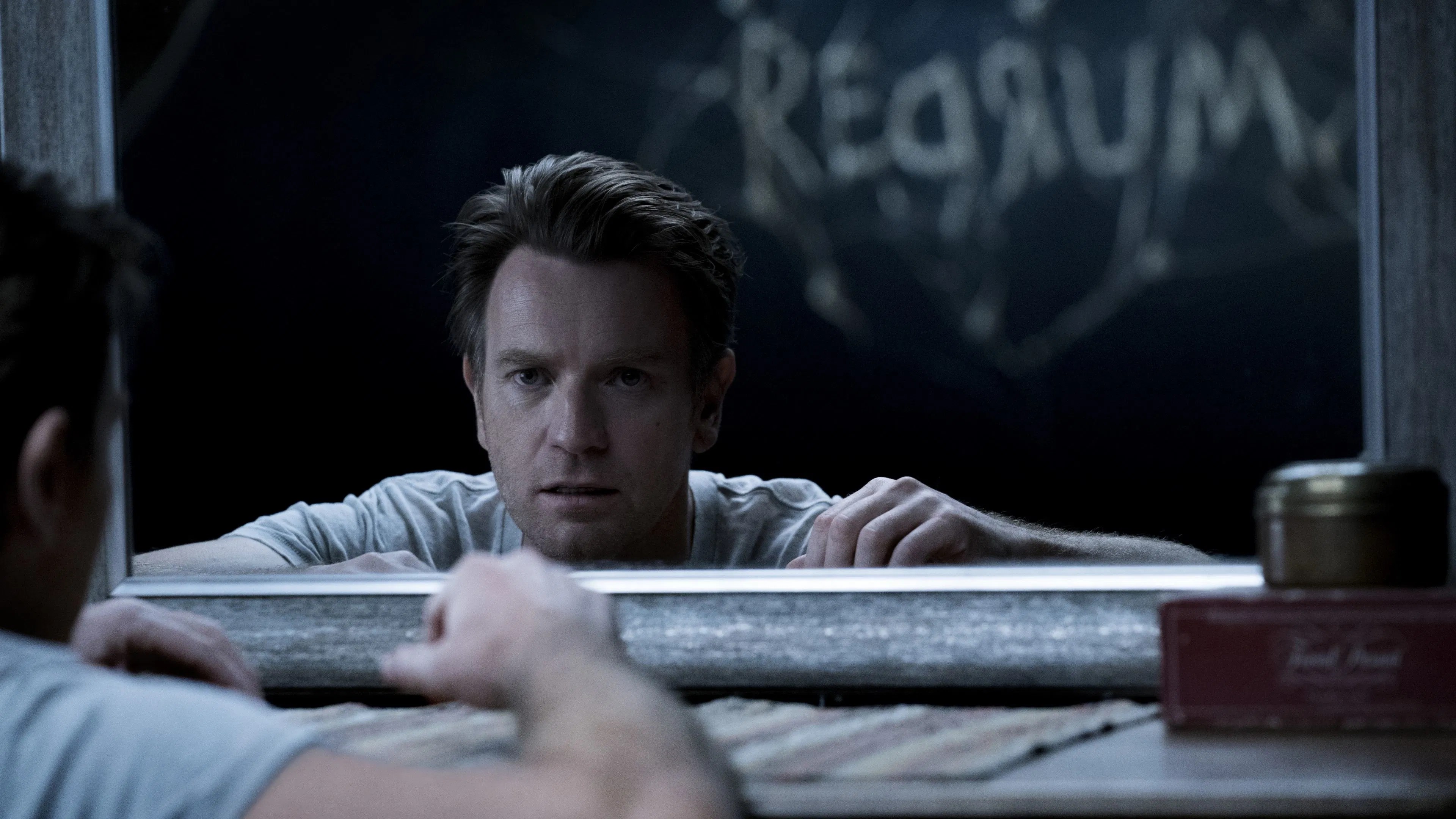
Mike Flanagan had an impossible task with Doctor Sleep, intended as both an adaptation of Stephen King’s novel and a sequel to Kubrick’s The Shining, which King famously despised. King is one of many relieved that Flanagan actually pulled it off, threading the needle through the most crucial parts of each to form a tapestry sure to satisfy fans of both. I find Doctor Sleep absolutely delightful, which seems an odd word to use, but I have loved King’s worlds and Flanagan’s tense, casual filmmaking for so long that this appealed to me as a perfect marriage of the two. Ewan McGregor takes center stage as an older Danny Torrance, still haunted by his experience at the Overlook Hotel as a child, who takes a young woman under his wing as she is hunted by an immortal cult that feeds on children with the Shining. Luckily, Flanagan has both a deep understanding and an unbeatable affection for the source material, and handles these truly dark subjects with the gravity they demand. He’s also dedicated to preserving King’s universe, and that is essential for adapting the sequel to one of the most recognizable modern stories. This film also features one of the best performances ever given by Rebecca Ferguson (known to many now as Ilsa Faust in Mission: Impossible and Lady Jessica in Dune) as Rose the Hat, the psychotic yet hypnotic leader of the True Knot. Flanagan regulars Kyliegh Curran, Carl Lumbly, Bruce Greenwood, Jacob Tremblay, Henry Thomas, and Violet McGraw also appear, expanding their range and ensuring their continued place in the Flanon (Flanagan + canon? Maybe that one won’t catch on). The director’s cut, which adds about half an hour to the film’s runtime, is my preferred version – watch it if you can. Luckily, it’s readily available on both digital and physical releases.
- The Life of Chuck

Recency bias be damned! Mike Flanagan’s latest work might just be his best film to date. It’s not only his first non-horror feature, but his third collaboration with Stephen King, and it hosts what feels like his biggest ensemble cast to date. Some are calling it the best-ever adaptation of King’s work – I wouldn’t necessarily go that far, but it’s certainly one of the best. It’s an enchanting, emotional masterpiece that epitomizes everything creative people strive to do, and most importantly, it makes you smile. Much of Flanagan’s work is dark, sad, and scary (by design!), but this is an uplifting rollercoaster about taking advantage of your time on this planet and the impact we make on those around us on an everyday basis. For more on Chuck, check out our review!
Watch it in theaters everywhere June 13!

 Knock on Wood
Leave a comment