

It has been 28 years since the initial outbreak of the Rage Virus, and the not-so-United Kingdom remains hopelessly overrun with the infected. Husband and wife Jamie (Aaron Taylor-Johnson) and Isla (Jodie Comer) have taken shelter with a small community of survivors in Lindisfarne, just off the northeast coast of England. While Isla’s illness renders her effectively homebound, Jamie deems it time to take their 12-year-old son Spike (Alfie Williams) across the tidal causeway. Once there, Spike — armed with nothing but a bow and arrow — will learn firsthand how to kill the infected, lest they become infected themselves.
Danny Boyle is no stranger to pushing the limits of technology, operating like the gritty, underground cousin of James Cameron, constantly experimenting with new ways to shoot and edit his films on a budget. Whether Boyle and his cinematographer Anthony Dod Mantle knew it at the time or not, their choice to film the original 28 Days Later entirely with digital cameras led to their film becoming one of the earliest — and messiest — artifacts of the digital revolution in Hollywood. The crude visual style of 28 Days quickly became one of the film’s most controversial elements, as Boyle and Mantle’s continued partnership on films like Slumdog Millionaire, the first digitally shot film to win the Oscar for Best Cinematography, solidified their legacy as early pioneers in the age of digital cinematography.
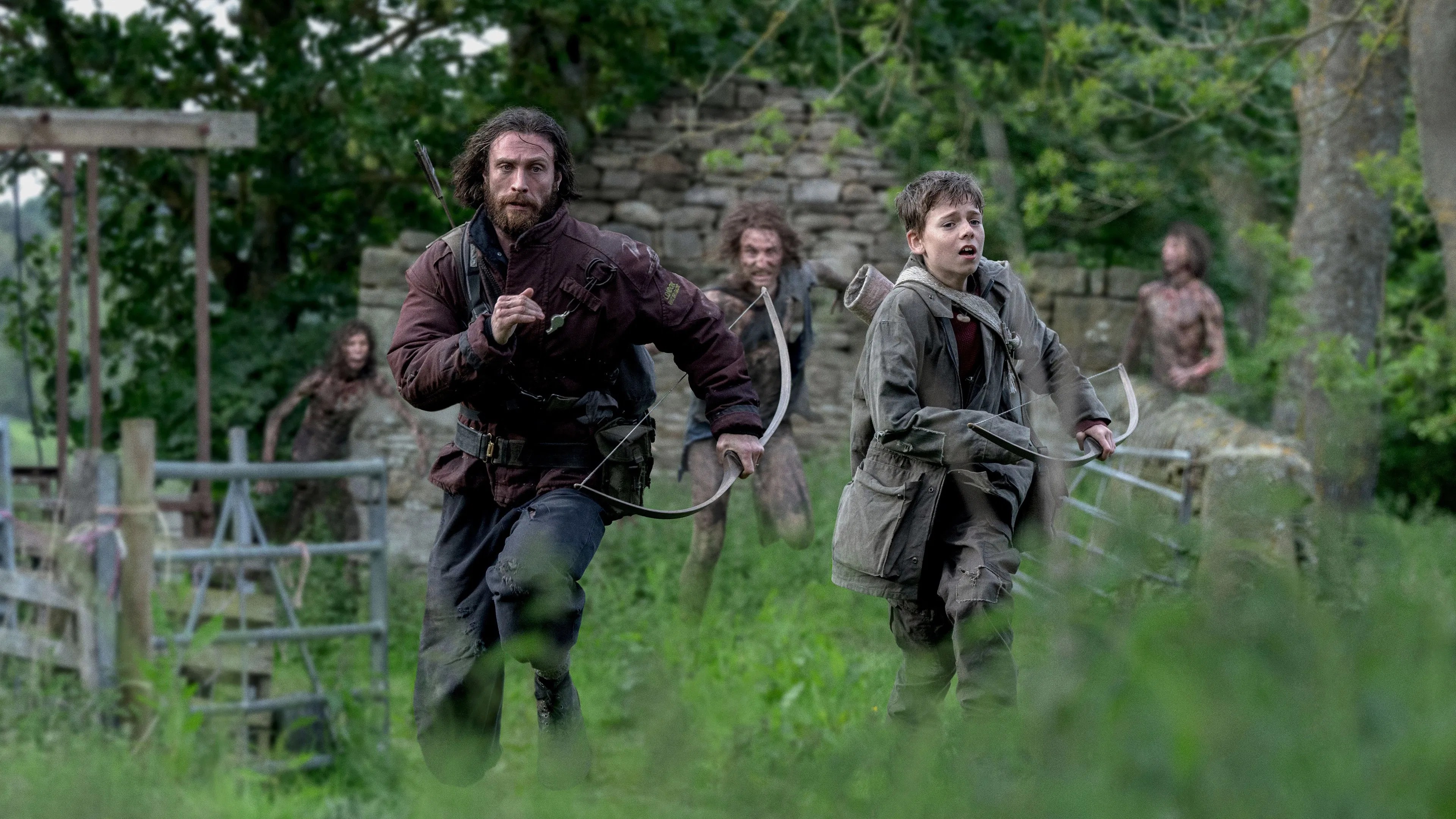
The question remained for Boyle and Mantle – how could they carry or evolve such a divisive aesthetic for audiences in 2025 with 28 Years Later? That question would be answered when, earlier this year, the film made the rounds online due to a set photo featuring an elaborate set-up of twenty iPhones staggered onto a U-shaped camera rig, perfectly positioned to capture a grisly zombie death. Not only is the choice to shoot 28 Years Later almost entirely using the iPhone 15 Pro Max not a gimmick, it turned out to be the perfect way of evolving the visual language of the franchise for 2025 audiences, much as the original film did for audiences in 2002. It is a creative swing that will likely alienate some, but even beyond the beautiful and abrasive cinematography, the film is littered with bold creative swings from nightmarish infrared photography to hyperactive editing and aggressively jittery sound mixing.
As much an exercise in experimentation for Boyle and Mantle as the film is, 28 Years Later manages to punch through all the blood and guts to deliver a remarkably emotional arc for Spike, played brilliantly by Williams in his feature film debut. Alex Garland, likewise reprising his role as screenwriter from the original film, convincingly depicts a world in which society has not only accepted the presence of zombies but has completely adapted to it. Where most films would set up the emotional arc of their characters early on to make room for an action-filled climax, 28 Years Later boldly inverts this formula.
Garland manages to convey all necessary bits of context to his audience naturally and without exposition, allowing for the delightfully manic tension of the film’s first half to pave the way for the unexpected heart of the second. The final act of the film, thanks in no small part to the brilliance of Ralph Fiennes as Dr. Ian Kelson, uses the film’s well-developed sense of dread as the perfect vehicle to deliver moments of true emotional resonance for Spike and his parents. Welling up with emotion may not have been on your 28 Years Later bingo card, but after seeing the final product, perhaps it should have been.
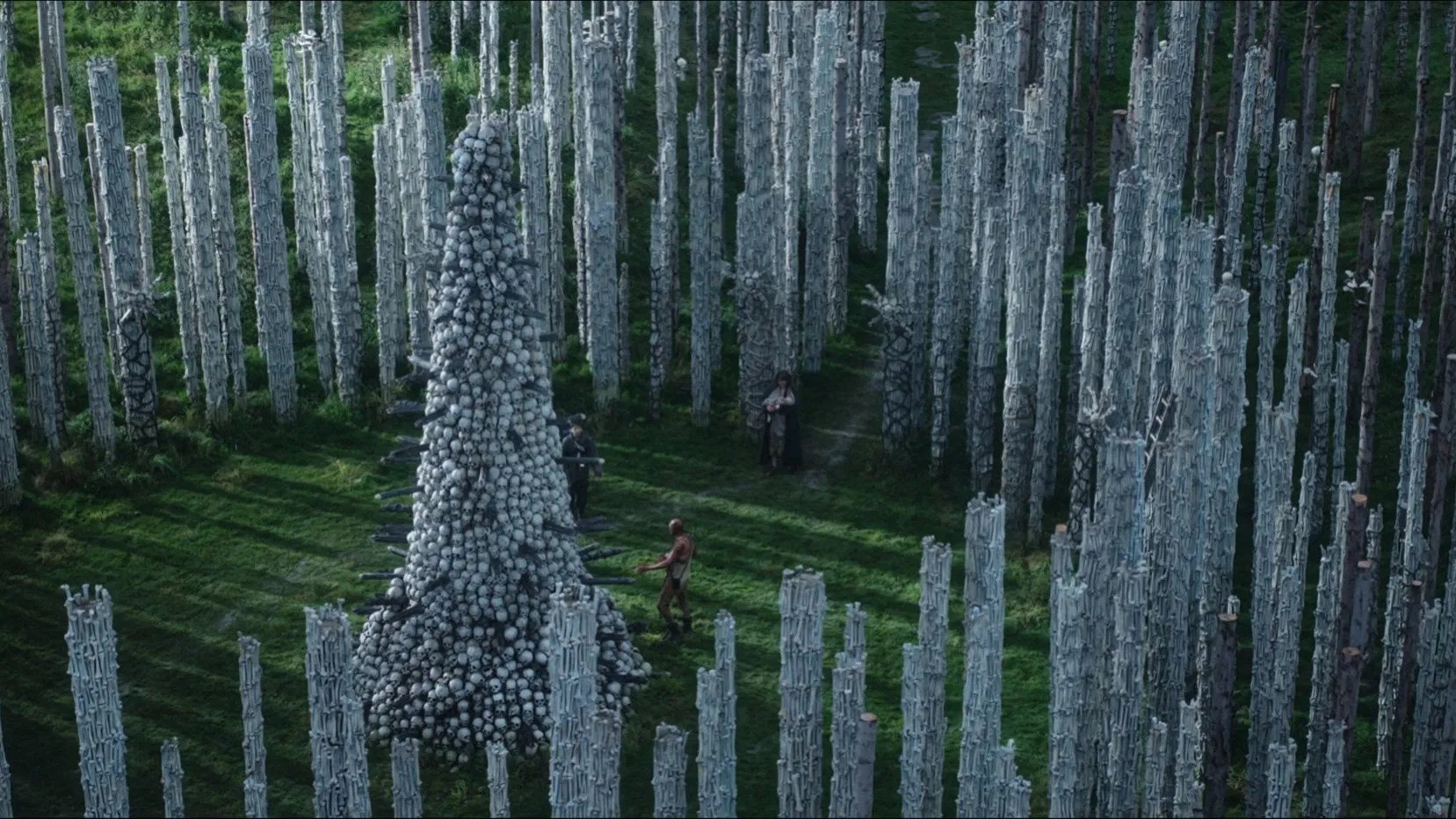
28 Years Later makes a compelling argument for Boyle to be considered one of the most innovative and influential filmmakers of the 21st century. Despite being nearly 70 years old, Boyle directs with the tenacity and originality of a first-time director eager to prove his worth but with the precision of a man with complete control of his art. For a supposedly mainstream horror film, 28 Years Later abandons clichés at every turn, delivering the freshest and most original franchise film of the year.
28 Years Later is playing in theaters nationwide.

 Knock on Wood
Leave a comment