

Welcome to class! My full-time job is working at a university, and I teach as well. One of my dreams has always been to teach a film class. Taking students through the world of cinema and helping them learn about the art form that I am so passionate about would be an amazing experience. But alas…I teach math. This series, “Lessons from the Wasteland,” is my opportunity to offer readers a curated watchlist to learn through doing (…watching movies). Each film on this list will highlight a filmmaker, sub-genre, filmmaking technique, or significant topic in order to broaden your cinematic horizons. For this month we have…
The Coen Brothers
The Big Lebowski

One of the most impressive aspects of the Coen Brothers’ filmmaking is their ability to mix genres and combine differing tones. One of their most impressive and beloved examples of such an ability is The Big Lebowski. The Coens have a passion for old-school noir tales, including the works of Raymond Chandler, and thus, The Big Lebowski just might be one of the strangest neo-noir films you are going to find. The Dude, a bum who gets caught up in a strange disappearance mystery involving the young wife of a wealthy man, is the most oddball “Private Investigator” around. To be honest…that is one of the most “P.I.” kind of cases you will find in a noir. When you combine that with the Coen Brothers’ extreme knack for creating supporting and minor characters, you have a two-hour romp that is incredibly entertaining from start to finish. The Big Lebowski also incorporates elements of some silly and goofy comedies of the early 20th century, and you can tell the Coens have a love for Howard Hawkes and Billy Wilder. What is unique for those types of comedies and what has become a trademark of the Coens’ comedies is a dark edge. Some of their comedies are pitch black. A mixture of severed toes, nihilists, bereaved friends, and other things makes The Big Lebowski a wild, darkly comedic experience. There is even a nice dabbling in surrealism with such scenes as “Gutterballs”…one of my favorite scenes in the history of cinema.
This film is also the perfect example of why the Coen Brothers are the kings of creating memorable characters. Even the smallest characters get a chance to shine. Every scene introduces someone new who makes a lasting impact. Plus. you have such a stacked cast from Jeff Bridges to John Goodman to Steve Buscemi to Julianne Moore to Phillip Seymour Hoffman and more. The Dude just might be the quintessential Coens creation as well, and Bridges is iconic in the role. But let’s not forget how well The Big Lebowski manages to leverage music from Bob Dylan to Creedence Clearwater Revival. But “Gutterballs” just wouldn’t be the same without Kenny Rogers & the First Edition with “Just Dropped In (To See What Condition My Condition Is In).”
No Country for Old Men
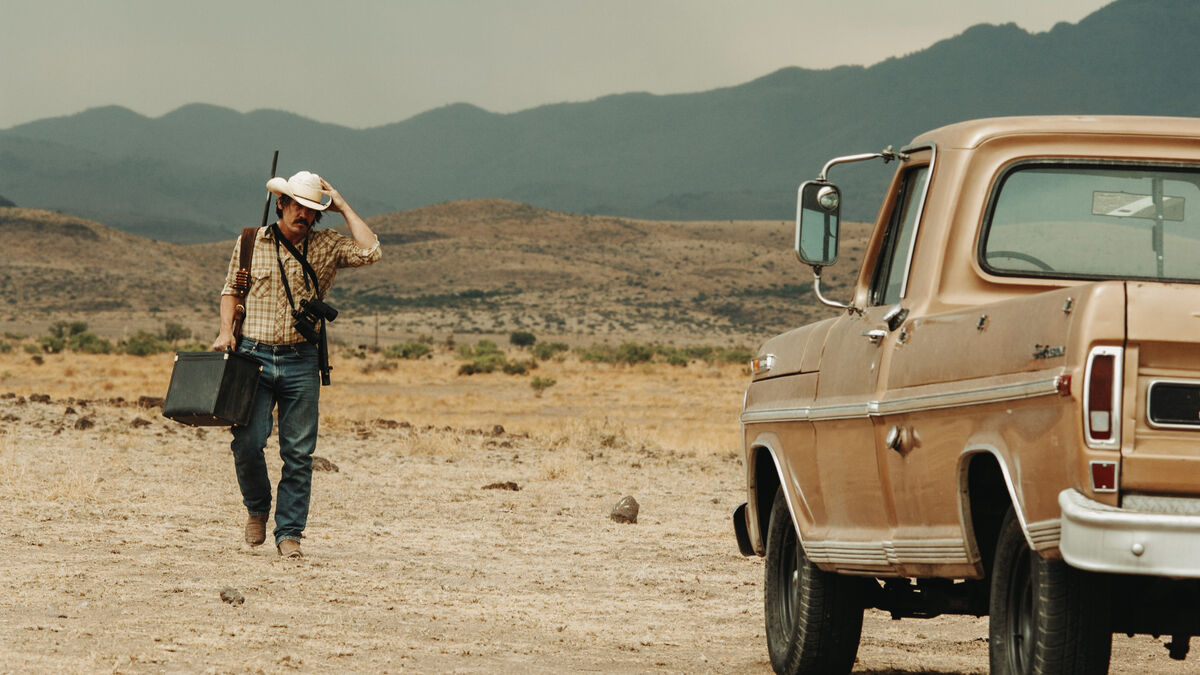
What is so impressive about the Coens as writers is that they can create iconic original content and also do great work adapting from others. No Country for Old Men is the peak example of their abilities to take a book and bring it to life on screen. Cormac McCarthy is not an easy author to translate and replicate; his prose and voice are stark and brutal and No Country for Old Men is a nihilistic journey that is damn near impossible to render properly on screen. The Coens did it expertly, though, by trusting McCarthy’s words (mostly just by typing word-for-word dialogue into the script). Having read the novel, you can see it all brought to life in the most picture-perfect of ways. The deeply impactful visual storytelling of McCarthy translates perfectly thanks to the deft direction, as well as the incredible photography of Hollywood’s greatest cinematographer, Roger Deakins. Carter Burwell (frequency composer of the Coens) took a step back here as the Coens produced a film almost devoid of a musical soundtrack. The sound design and mixing are incredible as well as experiencing so much in the silence.
But it is the framing and camera work of Deakins that feels so dynamic. No Country for Old Men is the most serious of the Coens’ catalog, as it builds a fever pitch of tension…but they’re able to slip in some seriously dark comedy right in there too. The trio of Josh Brolin, Javier Bardem, and Tommy Lee Jones is one of the best cinematic trios you will find in film. This cat-and-mouse game is elevated to legendary status by the filmmaking and the dark and foreboding tone and atmosphere deeply rooted in the themes of McCarthy’s work. This is one of the tensest crime thrillers in film and subverts all expectations from a storytelling perspective you might have. The Coens created a truly unique cinematic experience with this film and it is why it instantly became a fixture of cinematic excellence (along with its fellow 2007 release, There Will Be Blood). Few films make neo-westerns look so good and few filmmakers can express so much through the rectangular frame of film.
Barton Fink
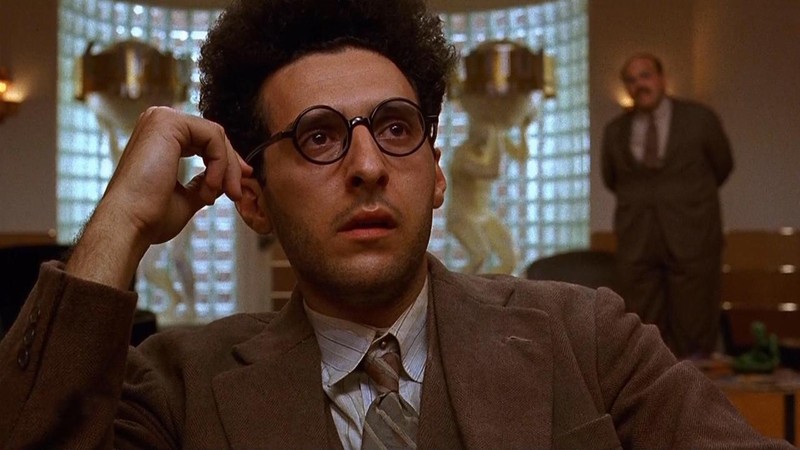
Barton Fink is the Coens’ film that most expresses the journey of a creative soul. It’s an arthouse flick that is also one of their most underseen entries. Created in the shadow of their own writer’s block trying to make one of their future classics, Fink is a film that is deeply rooted in the most challenging stages of the creative process that most writers hope to never find themselves in.
Barton Fink is a lauded playwright on the New York stage. Critics and the high society audiences of the stage love HIS perspective on the working man. Because of this, Fink is whisked away to Hollywood to write wrestling pictures, but much to his chagrin, he finds himself stumped. What proceeds is a surrealist cinematic experience that doesn’t just parallel the frustrating blockage of a creative, but also the classism that creates distance between the intellectuals of our society and those blue collar “every-people” who seek out escape on film. But if that wasn’t enough, there is a biting look at the corporatization of art and the societal limitations that put some artists into the shadows. Throw in some crime thriller elements (a dash of serial killer) and you have yourself a unique and wondrous display of artistry that is both engrossing and compelling. Deakins made his professional collaborative debut with the Coens on this picture, and the richness of every frame is awe-inspiring.
But it is the narrative the Coens weave that will leave your jaw on the floor. There is a fiery and heavy climactic sequence that is one of the boldest in a Coens film up to this point and honestly through their whole filmography. What really makes Barton Fink special is the man who brings this character to life. Journey character player John Turturro is finally given a meaty leading role and he kills it. Barton is our protagonist but most viewers will not connect with him thanks to the elitist Ivory Tower he has built around his own hero worship. Turturro captures the fallacy of a “hero of the people” who will never actually listen to the people. You have a larger-than-life performance from Coens’ collaborator John Goodman, who even outdoes himself with his unexpected turn in the film. Yet again, a great supporting cast of characters is the glue that holds yet another Coens film together.
Fargo
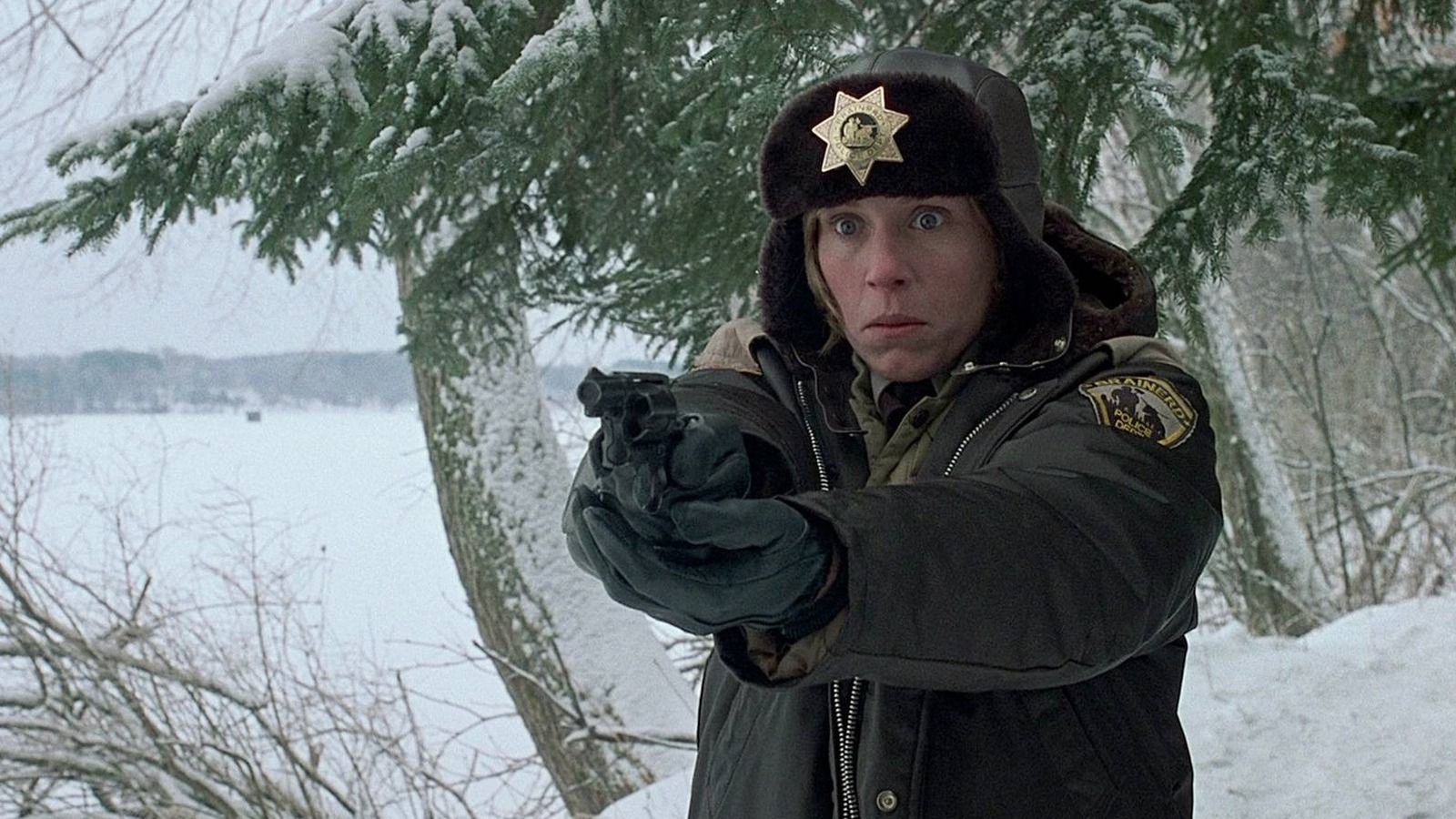
The pitch-perfect blend of the Coens’ bold comedic sensibilities and their ability to craft a tense and hellacious drama is Fargo. It just might be the universally accepted magnum opus of the Coens’ filmography thanks to the film’s ability to balance hilarity and shocking pathos in every scene. The accents, for one, are some of the most delightfully hilarious and oddly authentic elements of the film. You will probably be finding yourself speaking like these north midwestern characters for quite a bit of time after watching. The dialogue is excellent, with these midwestern folks living their best “down to earth” existences until something shocking and vile happens to upend this peaceful existence.
Fargo is the best example of the Coens’ knack for awkward and shocking violence; there are stakes in this unhinged crime thriller, as well as quite the body count. The “blood on snow” aesthetic is striking and works wonders for the effectiveness of this crime narrative. The awkward and shocking violence makes for an unexpected and twisted tale that keeps you on the edge of your seat from scene to scene. But, again, it is the characters that make this film so effective. Marge is the best hero you might find in any Coen film and Mrs. Joel Coen herself, Frances McDormand, injects this police chief with so much intelligence, resourcefulness, and warmth, unlike most police characters you might find in film. But William H. Macy just might make the slimiest of all Coen characters as the insecure and amoral Jerry, who sets in motion the film’s horrific events. But if you want to find the best two pairs of goons in any film, look no further than Steve Buscemi and Peter Stomare. They make the perfect odd couple criminals who have set the tone for so many pairings afterward. Shocking, funny, and bleak, Fargo is a crime thriller positively unique in its own right, while delivering some hope that people like Marge could still exist in this world.
A Serious Man

If Barton Fink is the most authentic and true to the Coens’ creative process, A Serious Man (a true hidden gem) is the most personal of all of their films. There are not big crime stories or larger-than-life characters in A Serious Man, but there is the incorporation of a deep Jewish experience that is so true to the Coens’ experiences. This is a familial drama centered on a college professor dealing with a moral quandary along with the fact that his wife wants to leave him for a more “serious” man. Few films give acclaimed actor, Michael Stuhlbarg, so much to do as this one, as the Coens offered him up a meaty leading role for this film. The film opens with an incredible prologue that digs deep into Jewish culture and lets you know that this is not your standard Coen Brothers film.
This Minnesotan period drama certainly has many of the trademarks of this brotherly pair of filmmakers, but it just feels so personal this time around. You can tell they drew upon their upbringing and Jewish culture to capture this drama with as much authenticity as possible. Larry (our protagonist) finds guidance from three different Rabbis throughout the film, and the audience gets a peek into the differing perspectives of Judaism. But we also get a great character study (anchored by Stuhlbarg’s performance) that also gives the audience an impressive morality tale with some shocking consequences in its final moment. We see the Jewish experience from his son as well, as he prepares for his Bar Mitzvah. The cast might not be filled with A-list talent, but it does feature incredible supporting performers, from Richard Kind to Fred Melamed to George Wyner. The other four films in this lesson might help you learn about the creative journeys of the Coens, but A Serious Man will help you better understand who they are as people…specifically, as Jewish people.
Also see: Raising Arizona, O Brother Where Art Thou, True Grit, The Hudsucker Proxy

 Knock on Wood
Leave a comment