

Welcome to class! My full-time job is teaching at a university, but one of my dreams has always been to teach a film class. Taking students through the world of cinema and helping them learn about the art form that I am so passionate about would be an amazing experience. But alas…I teach math. This series, “Lessons from the Wasteland,” is my opportunity to offer readers a curated watchlist to learn through doing (…watching movies). Each film on this list will highlight either a filmmaker, sub-genre, filmmaking technique, or significant topic in order to broaden your cinematic horizons. For this month we have…
Symmetrical Composition
Metropolis
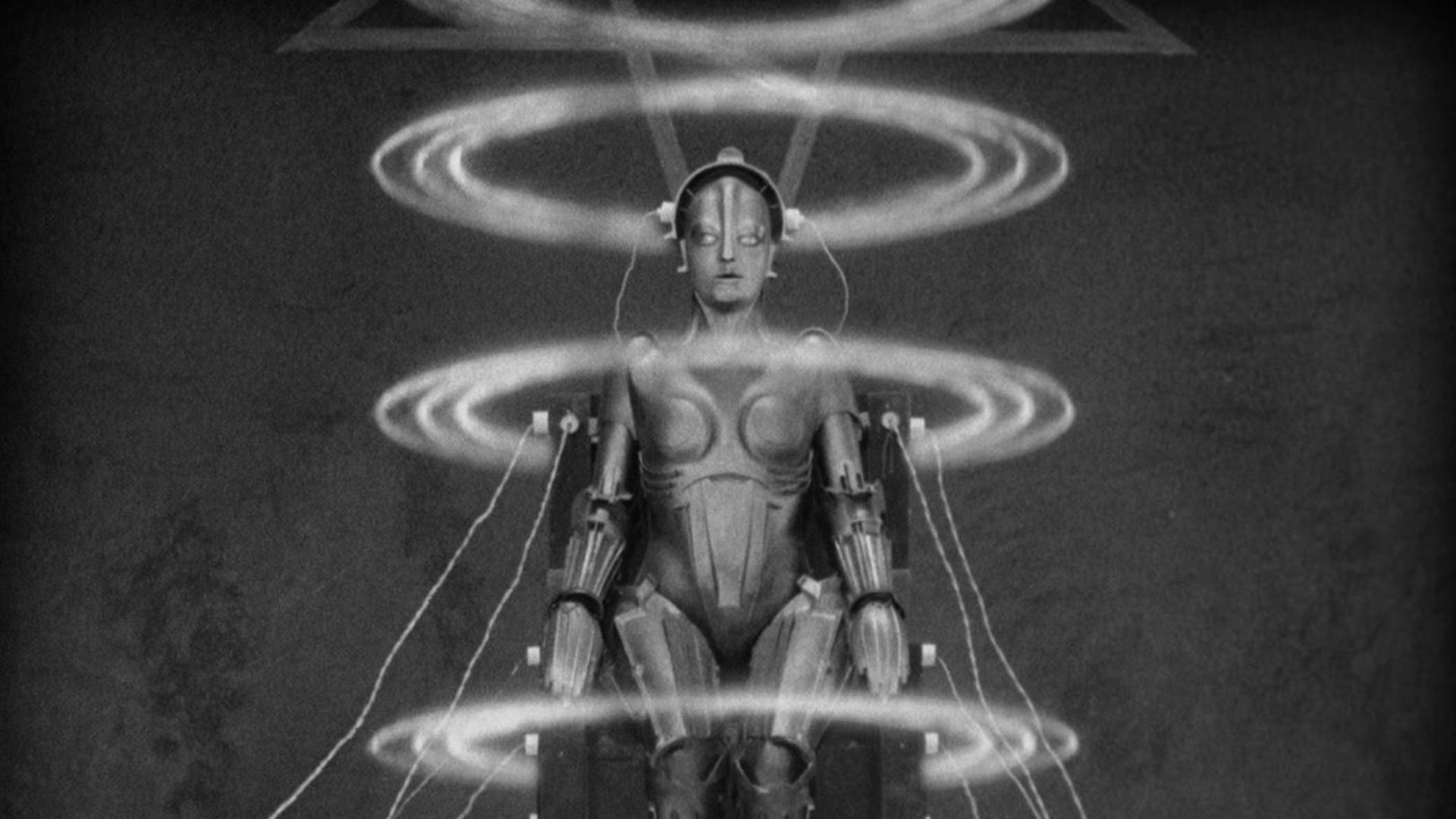
Why is symmetry so significant in film? There is a rhythm. There is a visual impact. You see something evocative in front of you that is so precise and eye-catching. These choices have been working so well all the way back to the beginning of film history.
One of the early legends of filmmaking is Fritz Lang. His films like M and The Testament of Dr. Mabuse live on as all-time classics. But it is his towering science fiction masterpiece Metropolis that endures as his crowning achievement. It shows a future where the rich live above in metropolitan oases and the workers live in clustered cities below the surface. The son of one of the richest men above falls for a working-class woman, and he sparks a revolution that brings change and evolution to this futuristic world.
Lang’s visuals are some of the most memorable and iconic in all of science fiction. But it’s the symmetry that makes it spark so well. One of the most meaningful shots in all of film history is the towering machine that is run by dozens of workers. A great use of fading shots transitions this machine into an ancient temple for human sacrifice. Do you get the visual? Those perfectly framed shots make them stand out so well. The introduction of the iconic machine man is presented so precisely in the middle of the frame as it stands up for the first time. This is one of the most famous androids in all of cinema, and that entrance is just so impactful in that symmetric framing.
Lang employs plenty of intimate shots of our male and female lead with intense close-ups. Every one of those shots is perfectly balanced and framed to make the biggest impact on the actors’ faces on-screen. One of the most provocative shots of the film is the imposter version of our heroine, who is standing over a sea of men like a golden idol. Lang captures it in the right way in order to create a symmetrical pyramid and horny and ravenous men reaching for this sexpot. The worshipping shape of a pyramid indelibly captures the actions of the film. The most impactful of the symmetrical shots shows the entrance and exit (balanced in the frame perfectly) as we see the works entering at a somber pace and exiting (exhausted) on the other half of the frame. This dichotomy and reinforcement of the weight of this brutal life is captured in a singular shot and is that more impactful due to the balance in the frame. Lang was an inventive, creative, and precise filmmaker who leveraged symmetry to create iconic imagery that has lasted almost 100 years.
2001: A Space Odyssey

Is any other filmmaker more precise and intense than Stanley Kubrick? There is a reason he will pop up again on this list. He was notorious for his obsession and perfectionist approach to filmmaking. Every shot feels painstakingly constructed. The perfect symmetry has become an important piece of Kubrick’s legacy as it gives a feeling of unnerving perfection and hyper-realism.
2001: A Space Odyssey is one of Kubrick’s most beloved and praised films of his filmography, and has the legacy of being one of (if not) the greatest science fiction films of all time. There is one shot in this film that has become one of the most recognizable shots in the history of cinema, and that involves the monolith, the key to the whole film. An entity or instrument that is the catalyst for evolution in the film, the monolith is the most significant visual of the film (or maybe the second…we will get to H.A.L. 9000 shortly). The shots of the monolith lined up with the sun and sky from the perspective of the early apes are evocative. This synergy is a sign of advancement. A linear alignment is both narratively significant and visually impactful. The matching music in that moment helps craft one of the most unnerving and entrancing static shots in all of film. The planetary alignments that bookend the film only work and have their need impact if Kubrick resources it through his visual storytelling. When they all line up, we can feel the impact of the visual thanks to those symmetrical shots.
Then there is the other entity that is static yet emits so much in similar ways to the monolith, H.A.L. 9000. The artificial intelligence that becomes the main antagonist of the film, H.A.L., is just a mechanical red eye. No more, no less. But Kubrick’s precise and symmetric shots help create the unsettling atmosphere around H.A.L., which is a significant piece of the puzzle. The voice of Douglas Rain, which is perfectly hollow, robotic, and haunting, being placed over those symmetrical static shots just brings the menace all together.
The Shining

I told you he would return again! Kubrick would continue to emphasize symmetry in his works throughout his career, but The Shining had a significant meaning behind the symmetry. Dread. Unnerving atmosphere. Horror. Kubrick dove into the horror genre with The Shining as he took the general framework of the book and injected his own visual flair.
Less about the deeply emotional and personal themes of Stephen King’s novel, The Shining became an experience all about the suspense, terror, and scares. The foreboding atmosphere sparks so well thanks to the use of symmetry. There is something off and alarming, seeing everything so perfectly lined up in such a film. Many modern arthouse horror films lean heavily into the symmetry of shots. Where did they get that from? The Shining is a huge influence. Combining the symmetry with horrific visuals, unnerving music, and an overall terrifying atmosphere, and you will get an experience that will crawl underneath your skin.
Twins are an example of human symmetry we experience. The potential of identical twins standing in tandem can give off an unnerving feeling as it feels unexpected. Throw them in an eerie hallway in a giant empty hotel and you get an all-time classic scare. Little Danny Torrence turns that corner and finds the Grady twins, and the perfect symmetry is just so off-putting.
The breaking of symmetry can be just as effective. A symmetrical shot of dual red-doored elevators seems classy and could be quite gorgeous. But when one opens to a sea of blood, the shattering of that idyllic perspective makes the scene that much more effective. The most iconic and unnerving symmetrical shot in The Shining is a simple one: a white door splintered open right down the center. Jack Nicholson’s unhinged face creeping through. “Here’s Johnny!!!” It still hits all these years later.
One of the most dynamic elements of Kubrick’s symmetry is on the move. The use of steady camera work is present throughout The Shining, especially in the moments when Danny is riding around on his tricycle. The scene with the twins works so well because of the ability to keep the camera centered, even as he is riding around the uneasy hallways of the Overlook.
There are quite a few moments that use intimate closeups. The scene of Danny screaming is unnerving enough from the sound but the perfectly squared framing makes the audience feel like they are staring him down.
The Royal Tenenbaums
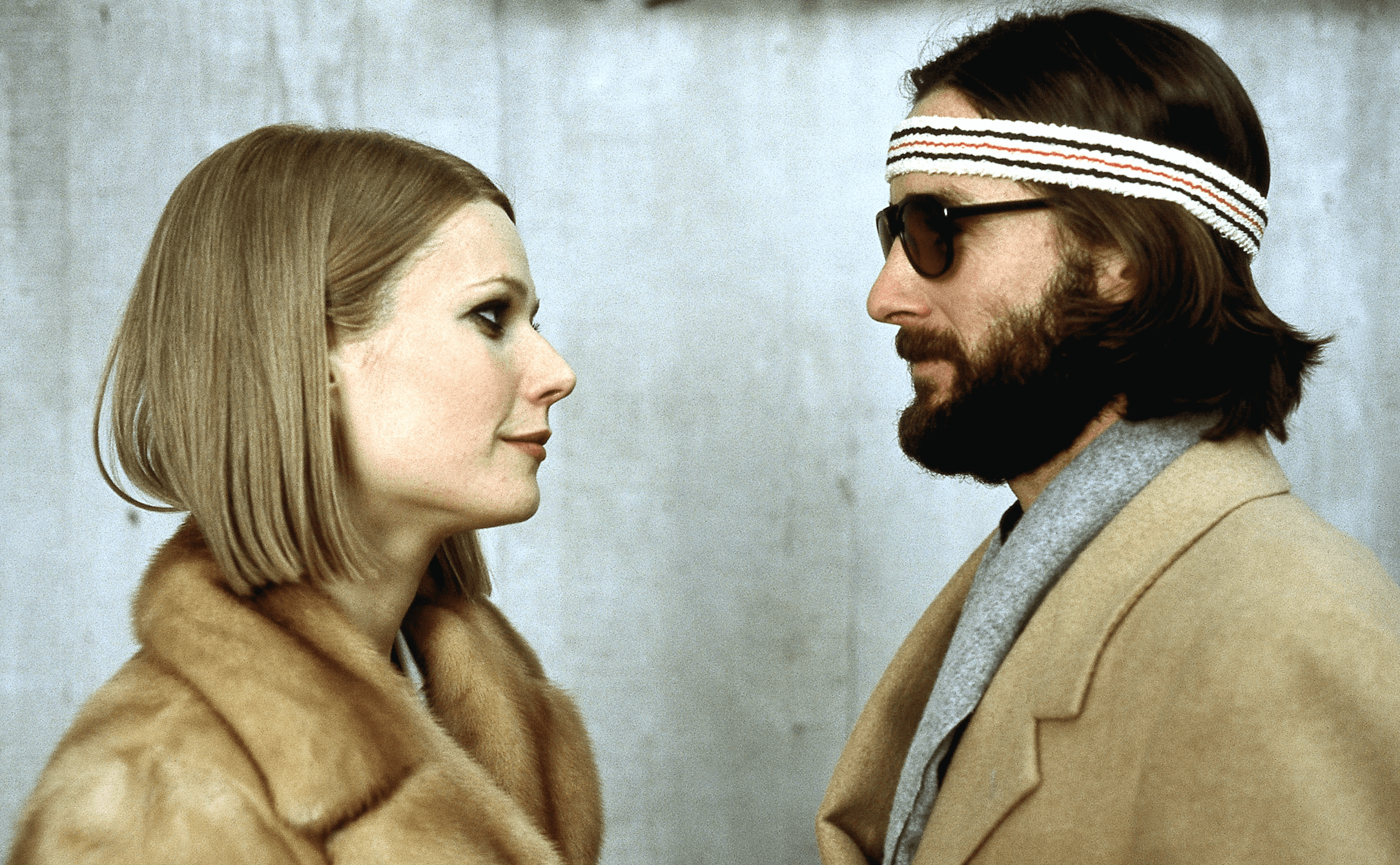
You were all waiting for this one, right? If you ask anyone who watches movies “who uses symmetry the most in their films?” you know the most frequent answer will be Wes Anderson. The symmetry of his films has become legendary, and that feature is one of a few that makes up the purely unique cinematic voice of Anderson. Toy-like production design, striking color palettes, and dry dialogue are some of those other features.
Some of Anderson’s favorite shots in his films are the perfectly framed and symmetrical shots of characters as they stare down the audience. The Royal Tenenbaums dishes out an onslaught of them in the opening as Anderson introduces all the players to the audience. There were shots like this for the opening school engagement montage in Rushmore, but The Royal Tenenbaums really explored this trend and set the tone for this film moving forward. There are plenty more of these shots throughout the film that stand out. You have Ben Stiller’s Chas flanked by his two sons in multiple shots throughout. The beautiful shot of Luke Wilson’s Richie gazing upon his (adopted) sister as she walks in slow motion toward the camera (also symmetrically framed). Those great shots have another element that works so well.
As mentioned earlier, the production design of Anderson’s films works so well to build the atmosphere. Many of the symmetrical medium shots of the characters allow the audience to enjoy the production design. The Tenenbaum household is gorgeous, and much of its personality can be taken in well due to the symmetricallity of the shows.
One of the most harrowing scenes in the film features an attempted suicide. The way the two wrists lay upon the sink and the blood flows in a synchronized manner is so effective and delivers such an emotional and devastating visual to process. The scene is heavy enough thematically and story-wise, but the way the scene is framed delivers such a memorable and lasting thing to process. There are probably more symmetrical shots in this film than there are not. But that is Anderson for you.
There Will Be Blood
Paul Thomas Anderson is one of the best filmmakers in modern cinema. He has captured the attention of so many great talents to star in his films because he creates an environment that is great for actors to explore. There is impeccable filmmaking going on as well with engrossing camera work and storytelling.
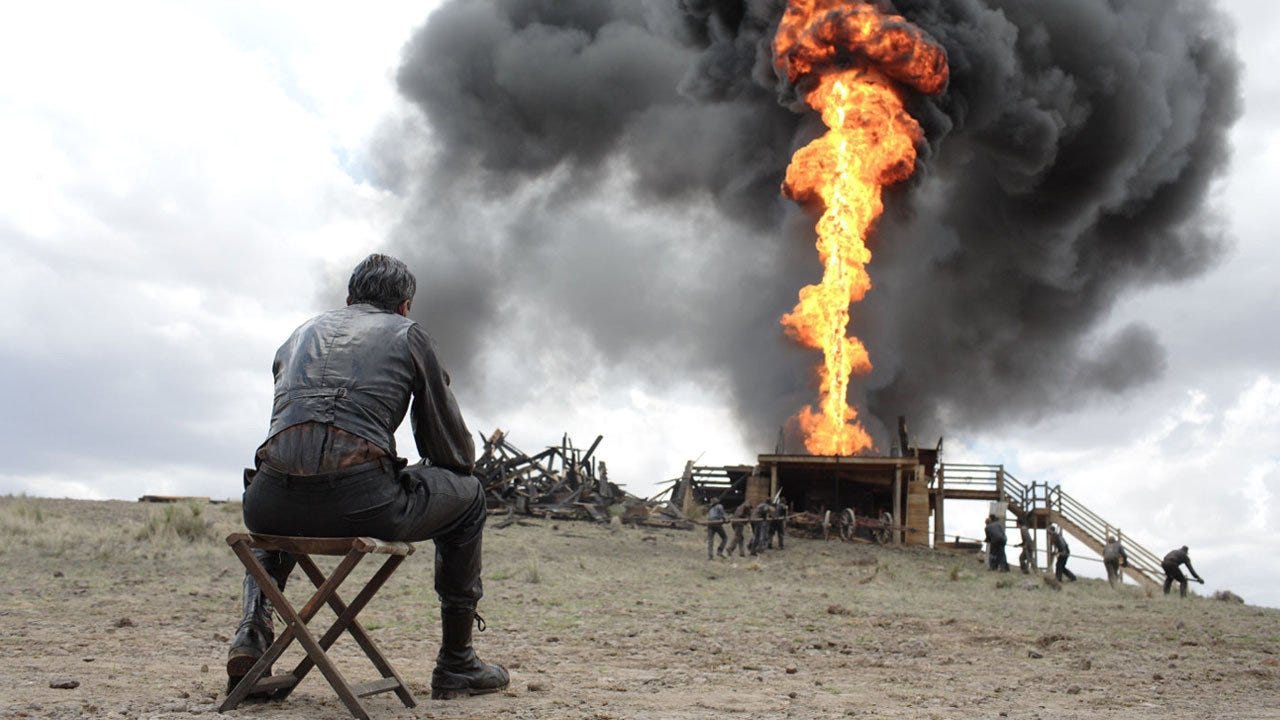
PTA has an interesting filmography with some strong variety. But only one of his films is well known for its symmetrical shots, and that is There Will Be Blood. This period drama mixed in a late western setting and psychological thriller elements which is all paired with some meticulous and precise framing that makes for some truly evocative imagery. What is fascinating is that PTA is more known for a raw and visceral approach with his visuals instead of the steady and fixed elements of There Will Be Blood, but it works so well.
The overhead shot of the fire rising from the struck oil reserve as two wagons come into frame from either direction gives way to the towering inferno, and seeing Daniel Plainview looking down on it makes for a powerful shot. The perfection of the headlong shot of Plainview’s bowling alley hits, and the distinct lack of symmetry in later shots of this scene shows just how out of order and reason our malevolent tycoon has become. The only other shot that truly stands out (quantity is not so important when these few shots are so meaningful and evocative) is a close shot of Plainview with his face perfectly framed with the open cross-shaped window behind him. The way Plainview frames himself in that window is powerful and shows his confidence in standing with “faith” behind him. But Eli Sunday’s hand reaching in to slap Plainview and disrupt this shot shows the ways that Eli has disrupted what Plainview has created. Symmetrical composition might not be PTA’s go-to approach, but when he uses it…he really uses it.
Also see: Citizen Kane, Moonrise Kingdom, Ratatouille, Full Metal Jacket

 Knock on Wood
Leave a comment