
I have to start with a disclaimer: Wicked is a musical that is very important to me. I have at least half the soundtrack memorized, I’ve seen it staged twice, and I’ve been excited about this musical adaptation for nearly its entire development, which, oddly enough, mostly runs parallel to my own development as a human being. This is one of the rare big-screen blockbusters I will likely never be able to view objectively, and that’s okay. We all have our biases. Once a theatre kid, always a theatre kid.
After being churned around in development hell for decades, Wicked has finally reached the big screen, and from the first few beats alone, it dispelled most of my concerns about the translation of one of the best musicals of the 21st century (or of all time, depending on who you ask) from stage to film, a transformation process that does not always preserve what made the show great in the first place. I’m happy to report that Wicked not only escapes unscathed, but it instantly dismissed any worries about pacing, casting, or length. As the opener “No One Mourns the Wicked” began, I was overwhelmed with emotion, which does not usually happen when I sit down to watch a new release.
Seeing as the staged version of Wicked runs about two hours and 45 minutes, I was initially dubious when Jon M. Chu’s film was announced to be just five minutes shorter, especially considering that the film only covers the first act of the two-act show (the second act is coming next year, don’t worry). But Chu, who cut his teeth on musicals like Step Up 2 and In the Heights, knows what he’s doing – his film expands on dialogue-driven scenes that only serve as brief moments in the show. While Broadway has to constantly keep the action moving from song to song, the film is under no such obligation, and is able to exist as its own entity rather than a one-to-one adaptation. Broadway is magical, yes, but the big screen offers more opportunities to showcase striking visuals and effects-driven spectacles, meriting more time spent on bringing them to life.
Plus, “Defying Gravity” makes a fantastic cliffhanger. Just saying.
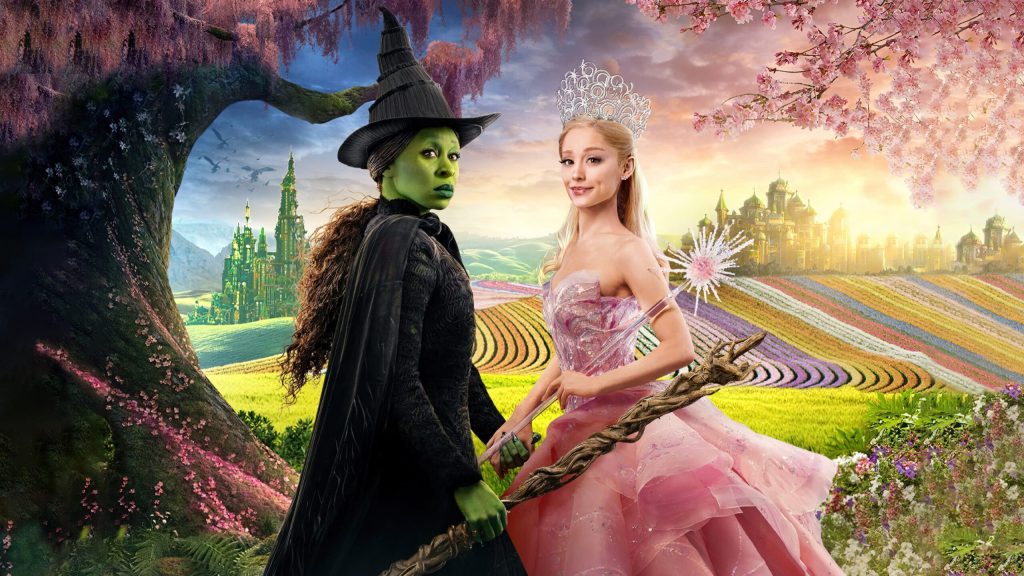
In case you’ve been living in a pop-culture-proof shield for the past 21 years, Wicked is a prequel to The Wizard of Oz. Initially based on a (very different) novel by Gregory Maguire before being adapted for the stage, it’s a humanizing story about the Wicked Witch of the West, proving she’s more than the green-skinned hag that haunted Dorothy Gale. After the opening number set after the Witch’s death, Glinda the Good Witch (played here by pop star Ariana Grande) takes us back in time to her school days, where she formed an unlikely connection with the Witch (Harriet’s Cynthia Erivo), known then as Elphaba Thropp.
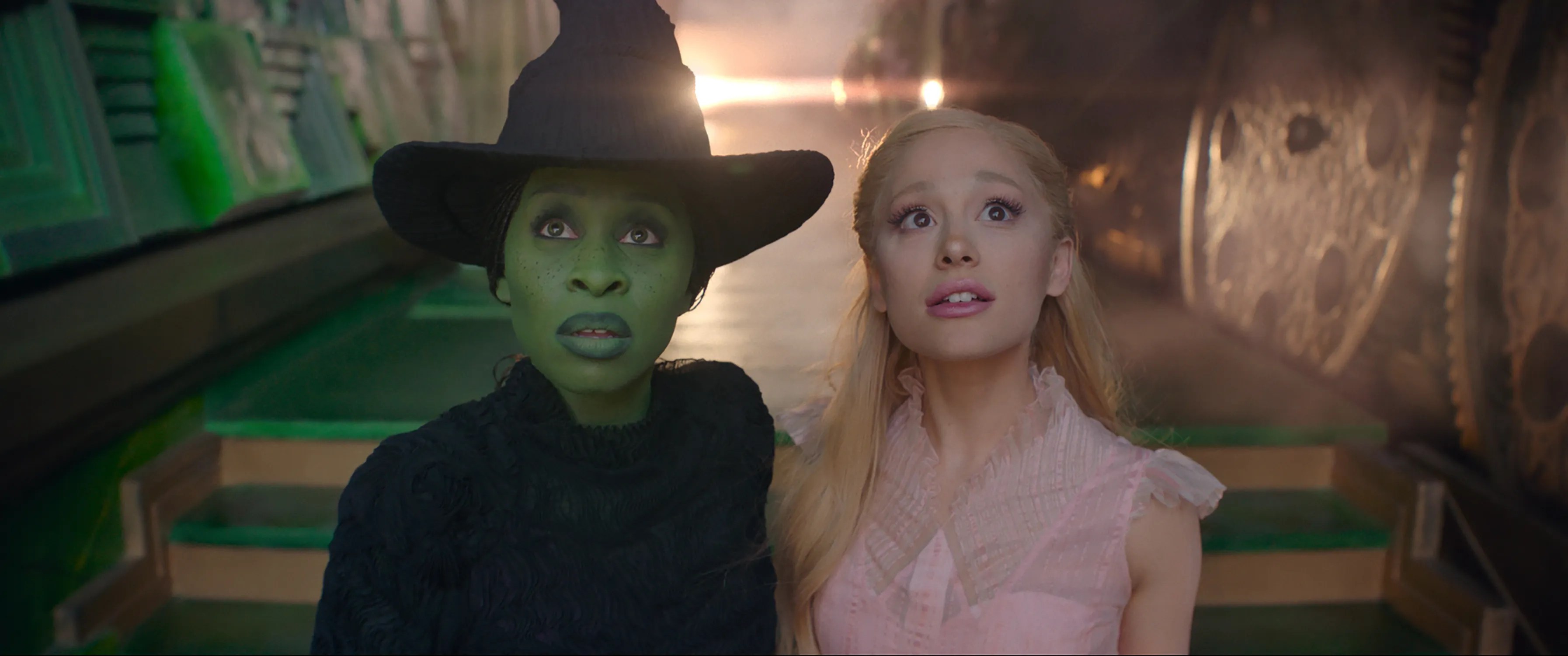
But Wicked is not just a story about an unconventional friendship. It’s also a warning against propaganda, authoritarianism, and ethnic cleansing, told in song through the colorful sheen of the magical world of Oz. It’s also a young love story, as Elphaba gets closer to the handsome Winkie Prince Fiyero (Bridgerton’s Jonathan Bailey). It’s also a touching tale about how a book should not be judged by its cover, as Elphaba comes to expect scorn and mockery simply because her skin is a different color. Wicked is a coin with many faces, and its many morals are what makes it unique; it’s vivacious proof that a musical does not have to acknowledge its lessons directly in the lyrics of its songs. Wicked is the ultimate nuanced musical of the 21st century, and to see it finally adapted to the screen with the verve and enthusiasm it deserves makes my heart very happy.
The casting is a very, very big part of that. I think it was a foregone conclusion that Erivo would be incredible as Elphaba, but I wasn’t quite as ready for the energy Grande would bring to the role of Glinda. She perfectly embodies every stage of Glinda’s development, first her shallow, ditzy nature upon her introduction, and later the intense emotion as she and Elphaba diverge onto separate paths. It’s among my favorite, if not one of the best, performances in a mainstream blockbuster so far this year.
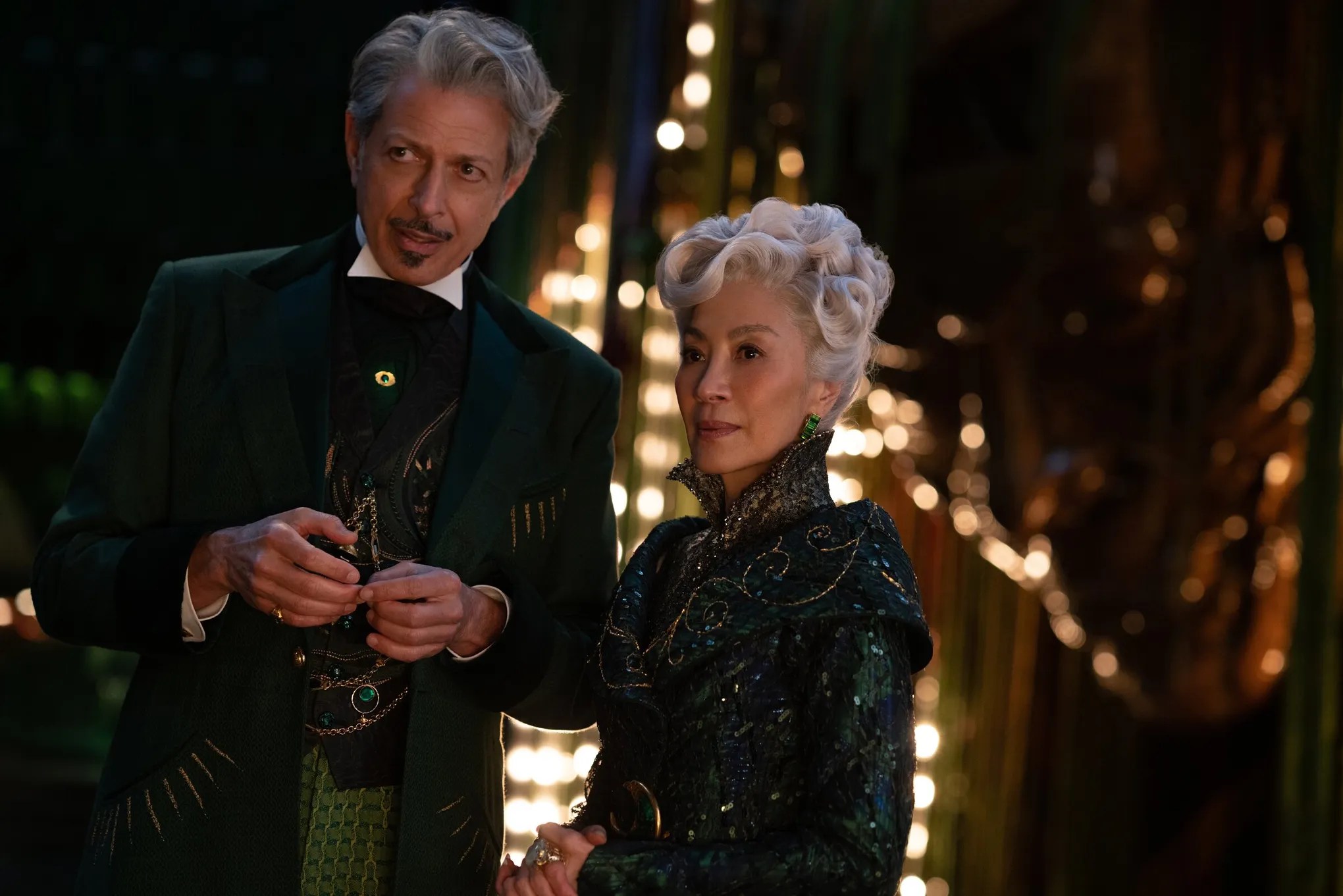
The supporting cast is rounded out by an outstanding ensemble. Every role is perfectly cast, down to the Headmistress of Shiz University (a non-singing role), played by Keala Settle (The Greatest Showman), who oddly enough has one of the most impressive voices of any stage performer working right now. Bailey is remarkable as Fiyero, nailing a similar range to the Glinda character: first the superficial laissez-faire attitude, and later an intense care for a good cause. Michelle Yeoh (a recent Oscar winner for her role in Everything Everywhere All At Once) plays Madame Morrible, the Dean of Sorcery at Shiz, as a textured diplomat who keeps her emotion close to her chest. Ethan Slater (The SpongeBob Musical) and Marissa Bode are excellent as the munchkin Boq and Elphaba’s disabled sister Nessarose, respectively. Peter Dinklage delivers an emphatic voice performance as Doctor Dillamond, a Goat professor at Shiz who inadvertently brings Elphaba’s attention to the disappearance of intelligent Animals in the land of Oz. My two MVPs (apart from Grande and Erivo) are Bowen Yang, who plays Glinda’s friend Pfanne, who gets some of the best laugh lines of the entire film, and Jeff Goldblum as the enigmatic and charlatanic Wizard of Oz.
My biggest issue with Wicked (and this is a criticism that dates back to the release of the first look images and teaser trailer) is the hopelessly flat coloring that makes too many scenes feel muted and restrained. For a prequel to one of the most iconic Technicolor masterpieces in film history, you would expect there to be a lot more care put into how everything looks. It doesn’t do the endless backlighting any favors, and in a film where an impossible amount of work was clearly put into almost every facet on a technical level, it’s bizarre that (especially after the trailers were ridiculed for this very reason), there was no effort to clean it up. When set against the constant emotion swelling in my chest for all two hours and 40 minutes, it’s a relatively minor gripe, but it distracts from the visual experience enough to be a notable demarcation against the film – one of the only ones, actually, which somehow makes it worse.
Mileage on Wicked will vary, I think, depending on your history with the material. In a perfect world, this film will be the entry point for a whole new generation on the story of Elphaba and Glinda and their fight against systemic injustice, but even though we don’t live in a perfect world, I still have faith that Wicked will inspire new voices to fight for what they believe in. This is another reason why ending with “Defying Gravity” is the perfect choice; Elphaba’s new credo has a much higher chance of sticking with us as we leave the theater. In a world that is constantly trying to tear us down, it’s even more important to remember: everyone deserves the chance to fly.
Wicked is playing in theaters nationwide.


 Knock on Wood
Leave a comment