

It’s incredibly rare to sit down for a movie and realize in real time that you’re watching a masterpiece. You are seeing a definitive work of art unfold before your eyes. You can see the future, and tell that what you’re witnessing is going to be cherished and discussed for many decades to come. That is the experience of watching Paul Thomas Anderson’s latest epic, One Battle After Another.
A loose adaptation of the 1990 novel Vineland by Thomas Pynchon, One Battle After Another follows Bob Ferguson, aka ‘Ghetto’ Pat Calhoun (Leonardo DiCaprio), a once-upon-a-time revolutionary with big dreams and aspirations that never came to fruition, who has languished in self-imposed exile from society for more than a decade and a half. What was once an ambitious, forward-thinking man has devolved into a paranoid burnout barely capable of staying sober and taking care of himself. Unfortunately, he also has a daughter, Willa (Chase Infiniti), to take care of, the result of a passionate but tumultuous love affair with fellow revolutionary Perfidia Beverly Hills (Teyana Taylor) that ended in tragedy. Now, many years after fighting for the cause, the sins of his past have come back to haunt him as his nemesis, Colonel Steven J. Lockjaw (Sean Penn), has finally tracked him down and vowed to take him and his daughter out.
Conjure up thoughts of The Big Lebowski. The Dude, more concerned about the rug that ties the room together and where to acquire some drugs, gets in way over his head as he’s caught up in a much grander scheme. Now, and stay with me here… let’s ponder Les Misérables. A story of rebellion, an unfair justice system, and a father, Jean Valjean, trying to protect his daughter as he’s being relentlessly pursued by an authoritarian soldier, Javert. In many ways, One Battle After Another is the hilarious, action-packed, and politically poignant brainchild of these two stories that, on the surface, feel like they should work together at all when, in reality, it couldn’t be more perfect. That’s all I kept thinking as I watched this wild story unfold in front of me. The Dude has been trying his best to run from the uncaring Javert, but is thwarted by his own incompetence, all while trying to fight for his own revolution, one that doesn’t even belong to him anymore, as it has passed on to his daughter’s generation. In the end, there’s nothing more important than protecting his child and making sure she’s safe. The film uses this premise to confront the numerous important struggles of today’s reality, yet it simultaneously keeps reality at arm’s distance to allow for delightfully absurd implausibility to make for such a compelling satire, all while being wholly relatable to the terrors that we face in the real world today. Paul Thomas Anderson showcases exactly how delicate our world can be with this beautiful enigma that has been crafted for us.

It’s a testament to Anderson’s wit and intelligence that he is able to make this world feel so lived-in, especially seeing as the novel source material was based on flower-power Vietnam War protestors. Adapting this text to our modern political climate would be no easy task, but he approaches everything so deftly that it’s impossible not to be impressed in many ways in which this film tackles contemporary political satire. Inevitable comparisons to Eddington, a political satire released earlier this year by Ari Aster, are going to be made; both films tackle very similar themes, and even have a similar visual aesthetic. But, for my money, One Battle After Another is everything that Eddington was trying to be, but fell short of accomplishing. Anderson doesn’t have to struggle with his verve and conviction to blaspheme both sides of the political aisle, like Aster, but also condemns one side as being significantly more divisive, power-hungry, and violent than the other. One Battle doesn’t poke fun at the common man, belittling people who have lived their lives in pain and paranoia as they’ve been manipulated by lies and propaganda, but instead confronts ideologies at large and the people in power. It’s like famed author Terry Pratchett once said: “Satire is meant to ridicule power. If you’re laughing at people who are hurting, it’s not satire, it’s bullying.” Intrinsically, Anderson understands this power dynamic, and One Battle is all the better for it.
Sure, this approach will be more divisive. It’s going to potentially upset a wider range of audiences. But that’s the risk you take when you’re making art to take a stance, and that’s what Anderson is accomplishing with his vision. But again, to be clear, having a perspective doesn’t stop Anderson from pointing out the ineptitude of revolutionaries who are unequipped and ill-prepared to fight the fight their convictions dictate, while simultaneously showcasing a white supremacist illuminati cabal that controls all aspects of power and a constitutional government. It’s fascinating how this film both plays with our expectations and illustrates a disturbing reality that you don’t want to be true, but can’t escape the thought in the back of your mind that the world just might indeed be this fucked up. In many ways, the beauty of this film can be summarized by stand-up comedian Marc Maron and a poignant line from his most recent comedy special, Panicked, released earlier this year – at some point, Progressives have to come to terms with the fact that they annoyed the average American into fascism. But we still have to understand and acknowledge that far-right fascism is a far more destructive thing for our world. Dehumanization, imprisonment, and death are far worse crimes than any Progressive whose pronouns are they/them.
What’s amazing, though, is that while all of this is at the forefront of the film, this isn’t even the thesis of the film itself. Anderson uses our political climate and uncomfortable discourse as a canvas to paint a story about a father’s love for his daughter. It’s a tribute film about a self-realizing moment in which a middle-aged person has the wherewithal to understand that it is not their world anymore, it is that of the next generation. His kids. This is the heart of what this movie is actually about, and it’s incredibly moving, especially as the film rolls along, culminating in an ending that might just break you down to tears. It comes down to this…you can do everything in your power to mold the world to be better for them, to try to teach them everything you know, and protect them as much as you can, but at some point, we have to turn the keys over. We have to trust them to take the reins. Even if that means having to watch our kids pay for the mistakes of our generation, seeing them get their hands dirty to solve problems not of their own making, all we can do is try to guide them and help them make the best decisions they can, but inevitably, it’s their decision. As a wise man once said, “We are what they grow beyond.” That is this film in a nutshell.
As a father myself, I found this very emotionally compelling. There’s a beauty and poignancy here that I cannot properly articulate. Luckily, I don’t have to. Anderson does it for me. In fact, he does it so well that even if you’re not a mother or a father, the final moments of this film exude empathy, making this film understandable, if not relatable, to all.
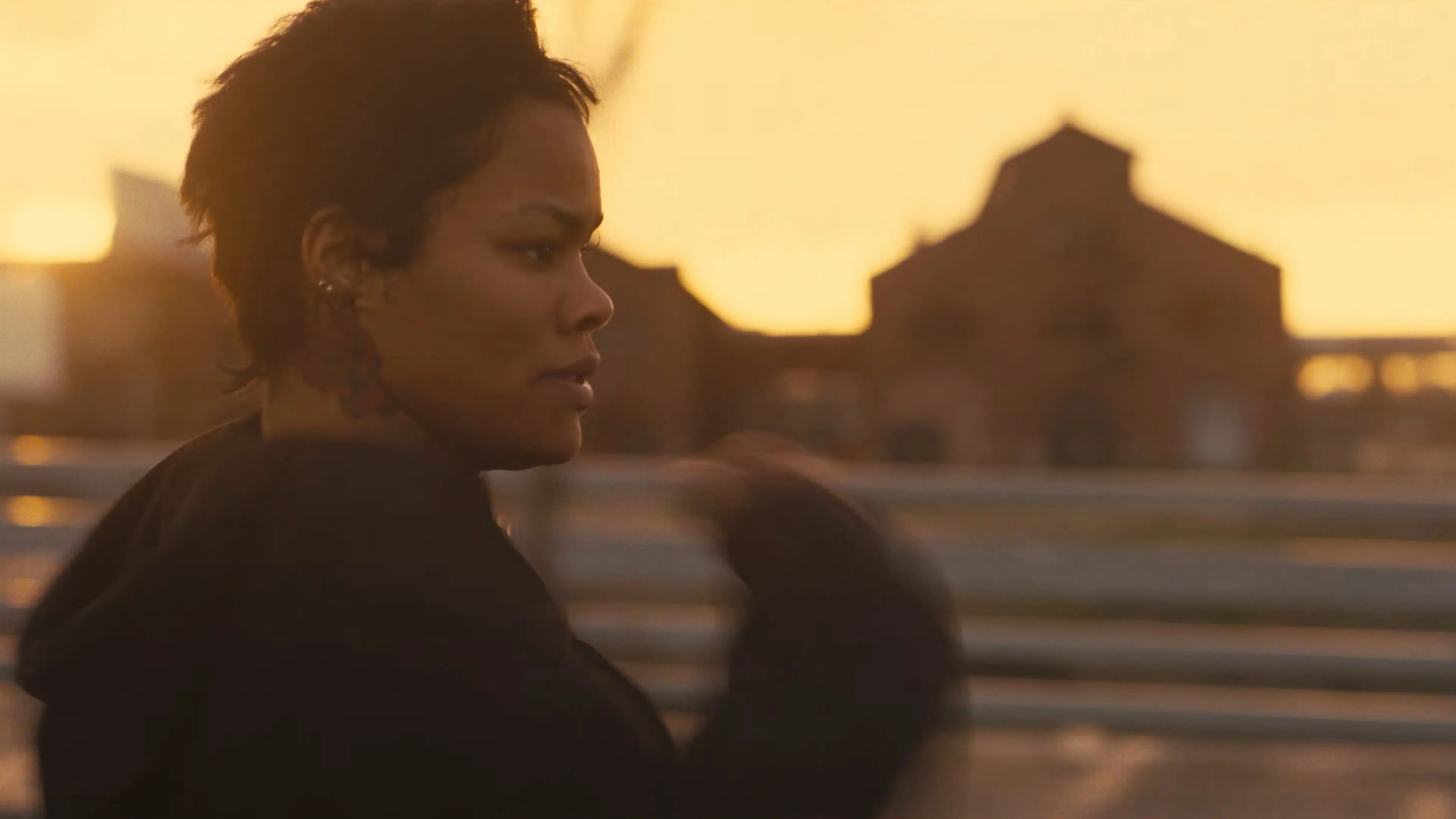
It’s noteworthy that this film is highly dedicated and centered around people of color, particularly Black women. Outside of DiCaprio and Penn, all the major players in this film are Black women. We see their joy, their strife, and, most importantly, their voice. A large chunk of this film is from the perspective of Black women. Anderson is married to Maya Rudolph, a Black actress and comedian of Saturday Night Live and Bridesmaids fame. Together, they have four kids, three of whom are daughters. I obviously cannot speak for Anderson, but it’s hard to walk away from this film and not see this as a very important and personal story for Anderson. He’s talking about how Black women are some of the most oppressed and marginalized people in America, yet simultaneously some of the strongest and most determined, capable of all kinds of rebellious brilliance and political change. There’s a sense of pride and longing for a better world that is channeled through this lens, and it’s beautiful.
It would be more than easy enough to love this movie for everything that it accomplishes with its messaging and themes. Fortunately, this movie is also incredibly fucking entertaining.
First and foremost, this is an intense action thriller. A relentless chase movie from beginning to end that culminates in one of the most unique car chases I’ve ever seen in any film ever made. You’d think by now we’d seen all that we could see regarding car chases, yet here Anderson is, a man known primarily for talky period movies, showing us something we’ve never seen before in film. It’s uncanny. There are shootouts, there are public standoffs in the street with police in riot gear, people are slinking through hidden passageways and crawling through tunnels, people being chased down on foot…it’s relentless. You could watch this movie on a completely surface level, not even spending a second thinking about all the deeper elements as to what this is actually about, and still be wholly entertained by the experience.

What’s really great is how perfectly this showcases captivating action while also conveying an incredible amount of sophisticated humor. Throughout the first two acts of this movie, I couldn’t help but laugh my ass off. In fact, I haven’t laughed this hard at a movie in I don’t even remember how long. Whether it’s DiCaprio having a simple phone conversation that feels so intrinsically PTA in its dialogue, Benicio del Toro, our lovable sensei who sneakily gives one of the greatest performances of the entire movie, dancing on the side of the road as cops are about to put him in handcuffs, Taylor forcing a military soldier to get an erection at gunpoint just to emasculate him, or a character attempting to leap across rooftops but instead falling 40 feet to the ground (all shot in one take, by the way, how did they pull that off?!), this is a riot! For every gut-wrenching moment, there are just as many side-splittingly hilarious moments that’ll be seared into your memory.
A surprising amount of humor actually comes from Penn as the villainous Col. Lockjaw. He completely disappears into this role in a way he hasn’t in over a decade. He’s aggressive and intimidating, while also being completely vulnerable and pathetic. His white supremacist nature and talk of the superior race flounder in the wake of his own failed actions as he stumbles and falls relentlessly, which stands in sharp contrast to his position of power. Watching him overcome his failures time and time again, because he has so many resources at his disposal, is yet another way PTA condemns the world we live in while also mocking it. You’ll be cackling at Penn just as much as you will be horrified by him. His physical mannerisms, absurd line deliveries, and even his ridiculous speech about being ‘raped in reverse’ are nothing short of insane. Don’t be surprised to hear his name come up during awards season. In fact, don’t be surprised to hear One Battle come up a lot this season.
Like many other Anderson movies, this is focused on men who strive to change the world but are incapable of recognizing their own faults and weak nature, such that they cannot be the catalyst for change. It’s a movie about troubled, pathetic men who are stifled by innovation, women, and the world around them. It’s thematic work that PTA has gone back to many times throughout his career. Even someone as accomplished as Daniel Plainview in There Will Be Blood is a man guided by greed who cannot even overcome petty humiliations without committing heinous crimes because he is so thin-skinned. We see that here in Lockjaw. Ineptitude takes on a new form in Bob as he can barely even get himself dressed, as he spends the movie trying to tackle the world’s political issues in a hilariously ugly plaid bathrobe.
Although, let’s be fair, that robe is kinda instantly iconic…

I could go on and on about how amazing this film is. About how much it speaks to me, and how much it speaks to our world today. How incredible the performances are, and how much this film should be cherished. I didn’t even talk about some hilarious cameos and narrative surprises that will knock you back. I haven’t even talked about how beautiful Michael Bauman’s cinematography is, or how chilling and off-putting, yet simultaneously calm and soothing, the score by Jonny Greenwood is. The distinction in tone and tenor between the blissful Spanish guitar versus the haunting piano chords is incredible. We didn’t get into the editing choices and framing decisions that put this on par, or above, nearly any film you’ve ever seen. That’s the brilliance of this film. You could discuss it for hours, and you’re still only scratching the surface of what makes it so exceptional.
This is not just an entertaining movie, but a film that understands the richness of cinema as an art form. It delivers technical proficiency in its craftsmanship to such a high degree that you could watch this without even considering the story and still find this to be an audio and visual treat for the senses. The only thing that might hold some people back is its nearly three-hour runtime. But you won’t feel it because the pacing is so brisk and propulsive that the film remains kinetic despite its length. It flies by in a breeze, and you’ll have so much fun along the way you won’t even mind. In fact, you might just want to watch it all over again.
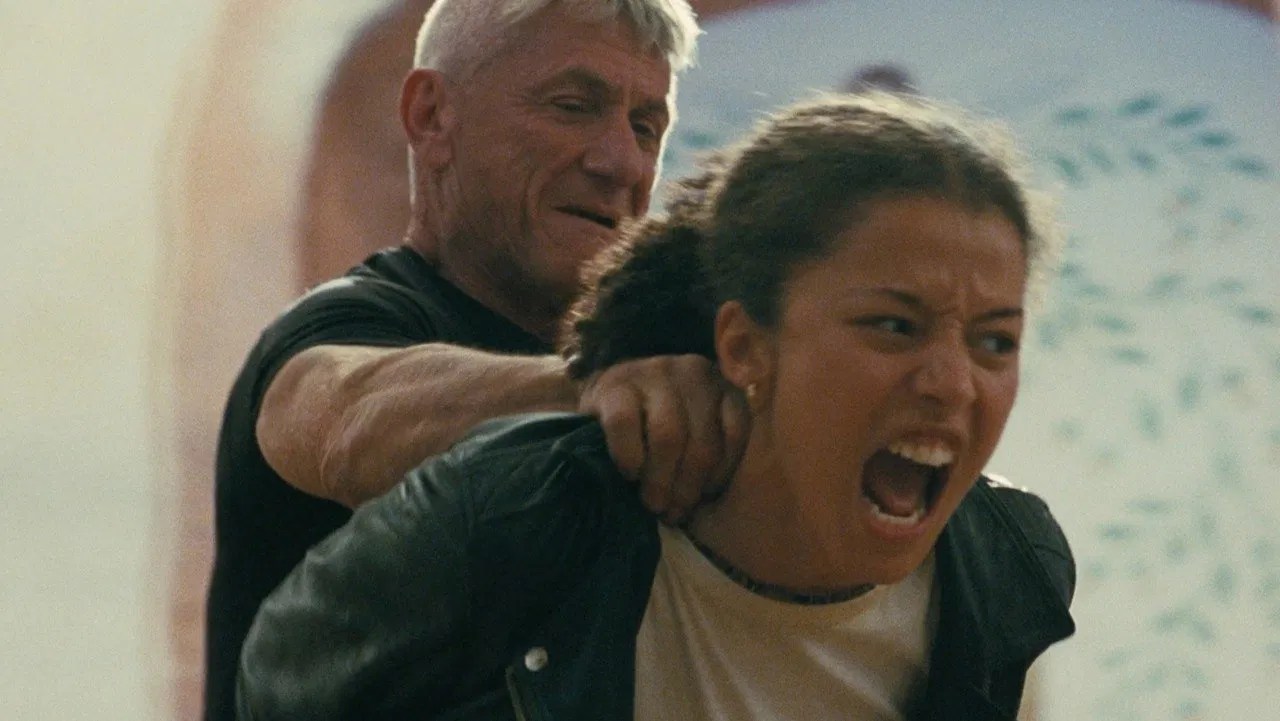
One Battle After Another is a masterpiece. Simply put, it could arguably be the pinnacle of Paul Thomas Anderson’s already illustrious career. One of the defining American filmmakers of our time has made an epic that we desperately need in the world right now to bluntly confront our political discourse and hold those responsible for its downfall accountable by brazenly holding a mirror up to their sins. Let’s treat this film with the respect it deserves, as one of the greatest films of this year, and even this decade.
One Battle After Another is playing in theaters nationwide.

 Knock on Wood
Leave a comment