
Welcome to class! My full-time job is working at a university, and I teach as well. One of my dreams has always been to teach a film class. Taking students through the world of cinema and helping them learn about the art form that I am so passionate about would be an amazing experience. But alas…I teach math. This series, “Lessons from the Wasteland,” is my opportunity to offer readers a curated watchlist to learn through doing (…watching movies). Each film on this list will highlight a filmmaker, sub-genre, filmmaking technique, or significant topic in order to broaden your cinematic horizons.
For this month, we have…
Visual Effects

Tron (1982)
Tron, one of (and the most famous) CGI worlds brought to life on screen, set the precedent for so many other worlds in future films. The fact that this world is a technological one makes it even more interesting. This will be the only one of these films where the effects do not “hold up” on this list, but they are so significant that it doesn’t really matter. The world in the film created on the Grid is so unique, even if it does not look realistic anymore. But the nostalgic feeling of seeing a digital world that feels like a video game, 8-bit world is so fascinating. When you look at the Grid, there are so many neon colors that are striking in how bright they are. The structures throughout this world are so rigid, square, and full of edges. The blocky design was much easier to render back in 1982, but the vibes and design work perfectly for a technological world at the time. There are a variety of color vehicles and constructs throughout the film and they are brought to life in vibrant, state-of-the-art CGI for the time. The Light Cycle races are some of the most thrilling moments in all the film and the moves might be restrictive but it feels so authentic to games at the time. You also have Tanks, Recognizers (the giant U-shaped aircrafts, and Solar Sailers which look so cool, futuristic (for the time), and creative. The production design of Tron is so inventive and imaginative, with the CGI delivering as well as it could with the level of technology available at the time.
The mixture of CGI, physical settings, and the technological costumes worn by the characters all do their part to make this Tron experience come to life. There would be other films who owe a lot to the digital world created in Tron, like Ghost in the Shell and The Matrix (which don’t necessarily carry on with the vibrant and colorful vibes, but do leverage the grid-like essence). Once the CGI caught up to the vision, we were treated to the world of Tron with sharp, striking, and impressive effects with Tron: Legacy and Tron: Ares. Each of those films would earn a spot on this list due to their incredible CGI effects, but Tron was the trend-setting and wrote the blueprint for years to come.

Terminator 2: Judgment Day
James Cameron has earned that title of greatest visual-effects driven filmmaker in the history of cinema, as he has been part of the technological evolution occurring during his career. With each of his films, he leveraged his own talents as an inventor and VFX artist to explore new ways to tell his stories visually. Terminator 2: Judgment Day will not be the last Cameron on this list, but it is certainly an important place to start. The first film leveraged physical models and stop motion perfectly to bring the T-800 to life (as performed by Arnold Schwarzenegger). This cybernetic organism comes back (but on the side of humanity this time) but the new T-1000 is a whole new ball game. With a character made of liquid metal, you need to find new revolutionary ways to bring this character to life. There are moments with practical effects (especially in the climax of the film as we witness its destruction), but for much of the film, CGI is utilized to capture the fluid movement of the metallic liquid and seeing it change shapes.
Few big films at the time were playing around with such fluidity and creativity in terms of character design which needed a more dynamic and complex CGI effect to make it work. The metal looks smoothed-out, but that is the nature of the character’s physical material which makes the T-1000 “hold up” much better than other effects-driven characters at the time. They find the limitation of only being able to create simple tools and aparati which makes the job of Cameron and his VFX team so much easier (showing more of the impressive cinematic mind of Cameron with understanding technological limitations).
We witness Robert Patrick (the T-1000’s actor) with prosthetic metallic limbs at times but the effects to make them come to life are essential to preserve the suspension of disbelief. The moment when we witness the T-1000 hiding on a checker pattern floor, morph into a humanoid shape, then turning into the security guard is something truly special to witness on screen. There are so many impressive physical effects throughout this film as well, but this is a mark of a great filmmaker. Judgment Day shows the perfect balance of practical and computer effects as they transition so perfectly between each other. 35 years later, Terminator 2 still features some of the coolest and more dynamic CGI effects in film.

The Lord of the Rings (2001-2003)
When you look at the cinematic achievement that is Peter Jackson’s The Lord of the Rings trilogy, you cannot help but admire the grand work that was accomplished. There are some similarities with Terminator 2 in just how integrated the physical effects and CGI is, and how they work in tandem. There are so many models, physical sets, force perspective, and make-up that brings the world of J.R.R. Tolkien’s Middle Earth to life. But there are plenty of examples of CGI that still stand out. First off, there are plenty of impressive creatures that come to life with computer-based effects. The Watcher. The Nazgul’s fell beasts. The Mumakil. The Cave Trolls. The Ents. One of the coolest examples has to be the Balrog. This giant fire demon figure looks massive, horrifying, and impressively integrated with the darkness and lighting leveraged by cinematographer Andrew Lesnie. The immense amount of deal that went into each of these different creatures is just awe-inspiring. The way CGI is leveraged to accentuate some of the settings is quite impressive as well. For example, the land of Mordor would not have the unnerving and horrifying darkness over it without the use of CGI.
The world of Middle Earth is so rich due to Jackson utilizing the beauty of his native New Zealand to his advantage, but CGI is used well enough to seamlessly make the world more fantastical. The Two Towers and The Return of the King have two of the largest battle scenes in the history of cinema, and CGI allows these massive conflicts to reach the grand scale necessary to make them so epic and powerful. But the most significant feat of CGI is the motion capture character work that brings Gollum (aka Sméagol) to life on screen. Andy Serkis delivers an award-worthy performance as the antagonistic force alongside Elijah Wood and Sean Astin, but the character is equally defined by the use of CGI. The way they use CGI to layer over Serkis’ groundwork and refine the character into its sunken and decrepit existence is striking and powerful. Make-up could not find the same level of detail and distortion, but the CGI can allow for unnatural body structure (like the unnerving state that Gollum lives in). He is one of the great motion capture creations in the history of cinema, and opened the door for characters like Davy Jones and Thanos to follow.

Avatar (2009-2025)
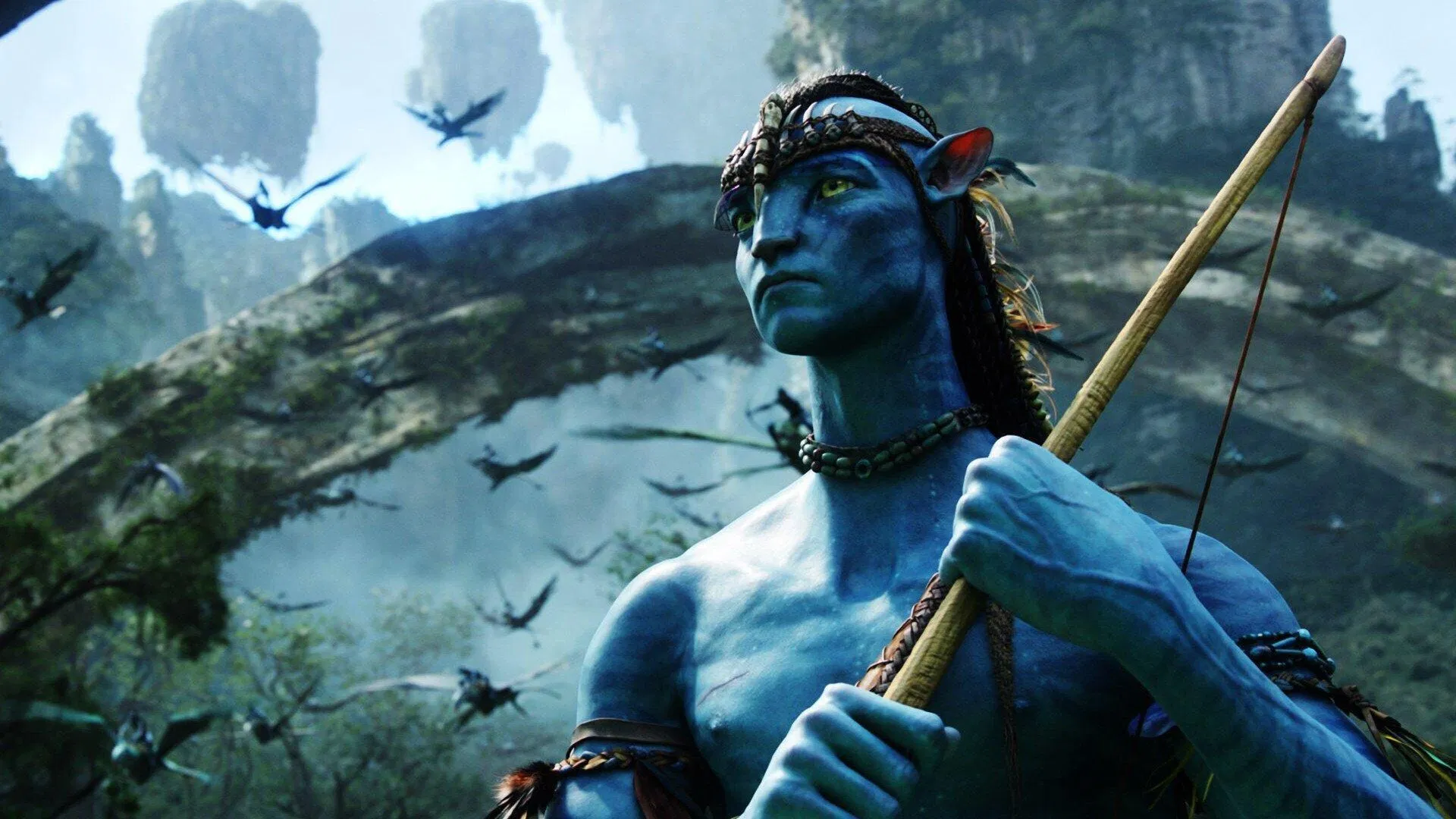
Are you ready for a little bit more of Cameron? He brought the world of Pandora to life in his Avatar franchise, which dates back to 2009. This was still a time where this approach was evolving, but Cameron’s effort with Avatar was simply awe-inspiring. You had a whole entire planet of Pandora come to life on screen with almost nothing but visual effects. There are some practical anchoring points but, in general, the CGI was the primary mechanism to make this alien world come to life with all of its vibrance. The forest elements of the planet are rich, colorful, and detailed in such an impressive way. You even get to see whole military installations, as well as war machines, come to life one hundred percent with CGI. There is no real machinery anywhere here, and the computer-generated effects were essential to bringing this world to life.
Few films had been so daring as of 2009 to feature a whole world of a film completely created through CGI. This is quite common with plenty of films today, but most pale in comparison to the grand vision and quality of Cameron’s artistic expression. The world of Pandora looks like it could be a real planet full of real beings. The world-building is not the only impressive feat from Avatar, as most of the characters are brought to life through motion capture work (not unlike Gollum and Davy Jones before them). The Na’vi are a fully realized race of beings that come to life with impressive detail due to the amazing work of the effects crews on all these Avatar films. As the franchise moves on, less and less of the characters are actually live-action actors, which is even more impressive as you get into The Way of Water and Fire & Ash.
The creatures that fill out the ecosystems of Pandora are just as detailed and impressive. The sheer variety of beings is quite the challenge which Cameron and his team rose to. But one of the most challenging aspects of CGI effects are recreating elements. Fire can look so fake and clunky if not done correctly and there is plenty of rich, vibrant, and terrifying fire throughout the franchise (especially in Fire & Ash). But water is a mountain of a task with computer-generated effects. Beginning with The Way of Water, there are whole sequences and sections of Pandora covered in striking and authentic looking water. The vast seas in the film come to life so vividly and with the natural fluidity of water instead of looking like some type of algorithm. If effects like Avatar become the standard, filmgoers will be in for a treat for years to come.

Planet of the Apes (2011-2017)
The creation (or recreation) of animals with CGI is very tricky. There are plenty of instances where inauthentic animal renderings have lowered the effects of certain scenes in film history. The wolves look a little shaky in the most recent renditions of both Beauty and the Beast and Frankenstein. No one forgets the weird and out-of-place swing vine scene from Indiana Jones and the Kingdom of the Crystal Skull, with those poorly-rendered CGI monkeys. You can even track this back to the ’90s, with bad CGI snakes in Anaconda and sharks in Deep Blue Sea. But there is a single film series that has redefined the expectations for CGI animals in film.
The new Planet of the Apes series (Rise, Dawn, and War) feature some of the most photorealistic animals in the history of cinema. You would be justified in thinking that these apes are actually real animals with trainers and the whole process. But they are not…they are motion-captured creations from Andy Serkis and his team. There are a whole cast of human performers behind each of these apes that fill up the screen. The most impressive thing is that there are more than just one ape. You have a whole group of chimpanzees with all different types of personalities. You even have a variety of traits and appearances, including Koba and Bad Ape (who look completely different from the rest of the chimps). These are not just a bunch of the same design and rendering. On top of that, you have gorillas and orangutans as well. The character of Maurice has so much detail in his design, and he looks so different from the rest of the apes.
Once you get to War for the Planet of the Apes, you see so many different apes that it is quite awe-inspiring. The way they are able to bring these characters to life in such practical spaces is quite impressive. You even have apes riding on horseback, which is such a wild sight, but they look so realistic. The world of this reboot series is so grounded and tactile, which is even more impressive when these animals feel so real in these detail settings, whether they are surrounded by fire, water, or snow.
Also see: Pirates of the Caribbean, Star Wars, Jurassic Park, The Matrix

Leave a Reply