
Welcome to class! My full-time job is working at a university, and I teach as well. One of my dreams has always been to teach a film class. Taking students through the world of cinema and helping them learn about the art form that I am so passionate about would be an amazing experience. But alas…I teach math. This series, “Lessons from the Wasteland,” is my opportunity to offer readers a curated watchlist to learn through doing (…watching movies). Each film on this list will highlight either a filmmaker, sub-genre, filmmaking technique, or significant topic in order to broaden your cinematic horizons. For this month we have…
Long Takes
Rope (1948)

Where is the line between a long take and a whole film appearing as if it was shot in one take? Alfred Hitchcock was always an ambitious filmmaker, pushing the boundaries of filmmaking and what film could do. His technical skills garnered consistent praise throughout his career as he was one of the biggest forces in creating modern filmmaking sensibilities. A film shot to look like it was done in all one take is certainly a challenge that feels right up Hitchcock’s alley, but you need the right story to justify such a feat.
Hitchcock was also known for coming up with some impressive yet simplistic concepts for his films and found the perfect one to sell this storytelling choice. Two men believe they have committed the perfect murder and decide to host a dinner party afterward, and they hide the corpse of their murdered classmate inside the furniture in this apartment. For the 80-minute runtime, Hitchcock is able to drum up plenty of tension, with the concern that they can be found out at any given moment slowly increasing. This slow-burning thriller works so well with the singular take because it allows the audience to also feel like we are stuck in this space and are just waiting for someone to catch them hiding the evidence of their horrible deed. John Dall and Farley Granger are fantastic as they meet every acting challenge while maintaining the appearance of a singular tale.
Rope is full of tension and great performances (Jimmy Stewart showing up as well is just the icing on the cake) and it is not hard to see why this is one of Hitchcock’s greatest films. Few directors could make a claustrophobic and confined film like this not feel stale and boring. The long take for essentially the entire length was a bold choice, but specifically elevates this story that Hitchcock devised.
Touch of Evil (1958)

A film’s opening sequence will be the “make or break” moment for your audience. Are they on board, or not? Orson Welles was another bold and ambitious filmmaker who pushed the vast potential of cinema into the modern art of filmmaking. The difference? Welles just could not keep the drama in check. But that doesn’t mean that he didn’t make some amazing films along the way.
Touch of Evil is a dark, gritty, and disturbing crime thriller. Welles himself plays the dangerous Police Captain Hank Quinlan, who goes toe-to-toe with Charlton Heston, playing a young Mexican man (you heard that right). The most iconic part of this film, though, is the incredible opening long take that introduces the audience to the seedy and gritty world of crime and corruption on the Mexican border.
The film starts quite dangerously, with the planting of a bomb in the trunk of a car. Then, Welles wows the audience as the camera is lifted onto a crane that begins to follow this car into the street. As the car maneuvers, we see the world that Touch of Evil inhabits. We meet our leads along the way (Heston is charismatic as always) as the opening credits appear on-screen. The tension builds, and the music grabs our attention. But how this long take ends with a fiery blaze is the perfect exclamation point on such an artful and engaging opening crawl to the film. Welles might not have had the consistent greatness of Hitchcock, but he certainly knew how to deliver when he needed to. The technical achievement is the opening sequence with so many buildings, actors, and vehicles involved…it is an absolute wonder.
Goodfellas (1990)

Martin Scorsese, one of the coolest filmmakers of all time, got us to fall in love with Italian mobster Henry Hill with one important show that goes a long way into selling this world to the audience. From the opening scene, we know Henry “always wanted to be a gangster,” but the audience needs more convincing from Scorsese. The lifestyle is what gets these young men to buy in and enjoy the lavish elements of life in between the criminal acts and bloodshed. There is one setting in the film that captures this lavish appeal so well: the Copacabana, the hangout spot where all the mafiosos go with their girlfriends to show off their lifestyle and money.
Scorsese makes the bold choice to follow Henry and his date (and soon-to-be wife) Karen through the “special” back entrance, through the whole behind-the-scenes operation of the club, and right to their perfectly chosen seat. There are so many moving pieces including people, props, and narrow walkways that make this shot so impressive. It finds a good pace following the actors and keeps everything properly in focus. It’s a wild experience, and most of the time it’s so seamless you probably don’t even realize the shot never cut. That is the beauty of the immersiveness of Scorsese’s filmmaking. You are in it, and that is exactly where Scorsese wants you. You get to see all the fancy coats back in the halls. You see all the dressed-up folks having a night on the town. You see this high-stress operation in motion just so that these high-rolling guests can have whatever they want. The lack of a cut allows you to feel like you are the one coming in for your date and living this lavish life. Scorsese needs you to be dazzled by life so we can be in that uncomfortable seat with Henry throughout this violent, indulgent, and harrowing film. Similar to the last example, so many things could go wrong to mess up this shot and that makes it all the more impressive by the end. This was not a necessary feat on the surface…but that is what makes Scorsese so great.
Children of Men (2006)
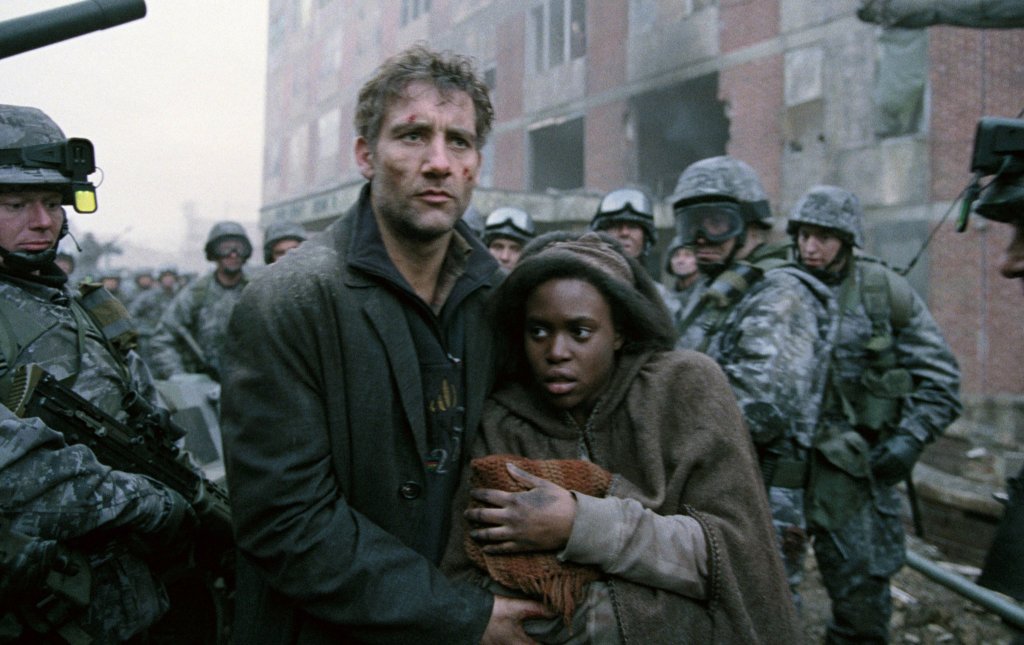
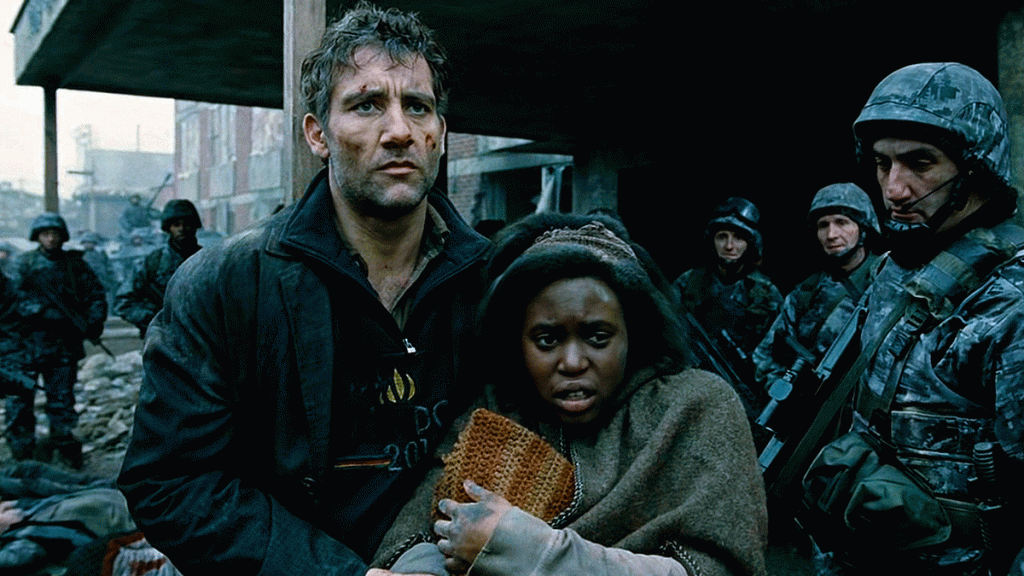
Alfonso Cuarón creates such an immersive and fully realized dystopia in his film, Children of Men. One of the most important elements of creating it is making sure the audience feels completely engulfed by it. The ability to see every detail of the world from the people around us, the graffiti, and the horrors makes this such an impressive feat of filmmaking and storytelling. The world of Cuarón’s film is one where humans have not given birth in almost two decades, but a miraculously pregnant young woman must be shepherded by a revolutionary turned bureaucrat who has little to live for anymore.
What makes the film so interesting compared to others like it is just how immersive it really is. You are walking the streets or looking out the window of a car at the world around you. Multiple sequences include long takes where you (the audience) cannot blink and avoid the world around you. You see people in cages on one street, and others with zoo animals in a park across town. You experience the horrors of the isolated areas for immigrants as it is slowly being torn apart and destroyed. Towards the end of the film, you are engulfed in war and chaos as Clive Owen’s protagonist tries to navigate the streets. There is even a moment where blood splatters on the camera lens and stays there for the duration of that long shot. This might seem like it would break the fourth wall and disturb the scene, but it only reinforces the disturbing world you are now trapped in. No blinking. No escape.
But the most impressive long take occurs earlier in the film, inside a car. What starts as a mundane drive with quieter character moments turns into a dangerous, bloody, and fatal chase. As the camera spins in the center of the car, you feel like you are just another passenger connecting with the characters. These shots are so intricate and evocative (especially considering maneuvering in a tight space, like a car) and Cuarón shows why challenges might be deeply worth the trouble to create something unique and special. Children of Men might be undervalued in the modern cinematic landscape, but it is certainly one of the greatest dystopias ever put to film. That is in no small part thanks to the dynamic and bold filmmaking choices made by Cuarón and his crew.
1917 (2019)
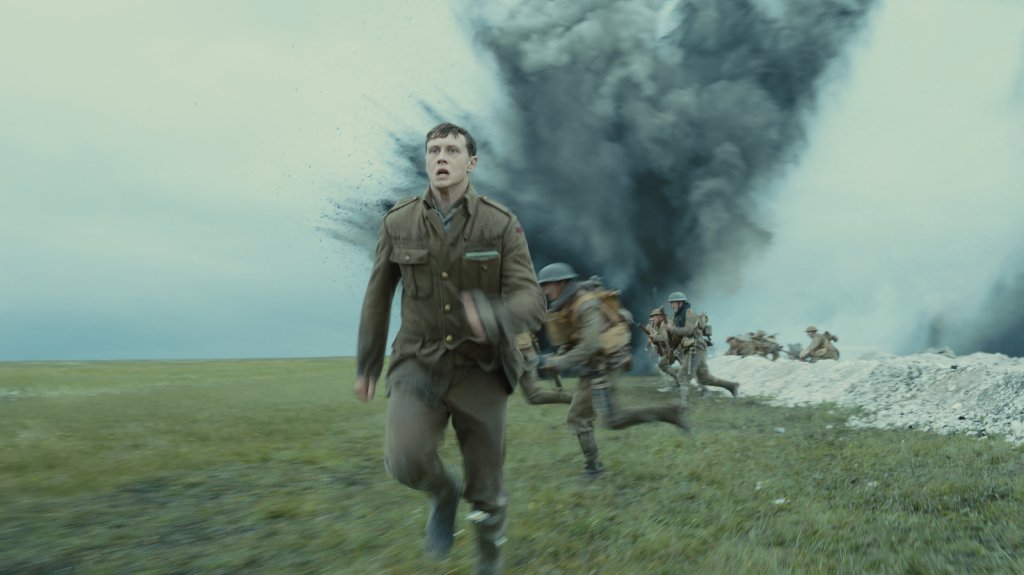
Wait…another film that feels like it is just a singular massive one-take. I could have easily included a contemporary piece in the form of Alejandro González Iñárritu’s Birdman for this slot, but there is something even more daring and challenging in what Sam Mendes and Roger Deakins were able to accomplish with 1917. This war film is similar to Rope in the idea that it tries to trick its audience into feeling like the film is just one shot. 1917 is a little bit more obvious when it cuts, but it is also a crazy feat to manage this story and maintain the illusion of a one-take.
Rope is in a singular space, while 1917 travels through a plentitude of different battlefields and towns. There are more cuts in there than you might notice to truly make this work, but the impressive long takes that create this whole film are incredible. Mendes got one of the greatest cinematographers of all time to make this bold concept come together. The power of the singular take for 1917 comes from the fact that this is a war film. There is no escape for our two young soldiers on this journey. They must keep pushing forward and cannot avoid the horrors of war.
Towards the beginning of the film, we witness our two protagonists navigate the remnants of a horrific battle. There are corpses everywhere. The camera does not cut from any of it, and the audience is forced to experience it all. There is no looking away, and the details are so impressive that you can almost smell the grotesque destruction that is left on the battlefield. But it is not just the engrossing production design. There is a level of tension and thrills that comes out of the long takes that Mendes incorporates into this film. The most dynamic and shocking one is the camera flying out a window into a flaming city that is filled with enemy soldiers ready to kill George Mackay’s character at any given moment. The tension is steadily rising and there is no escaping at all. It’s one of the most thrilling sequences in any war film ever.
But that is not to be outdone by the final battlefield sequence – Mackay runs as fast as he can toward the camera as mayhem ensues all around him. The camera moving backward and capturing this large battle full of artillery and charging men is quite impressive. Mendes and Deakins were able to create one of the most technically impressive films in recent memory, and its story is incredibly engrossing in ways that most just cannot be. When you cannot blink…you are forced to see it all.
Also see: Snake Eyes, Russian Ark, Boiling Point, Extraction, Sátántangó

 Knock on Wood
Leave a comment