
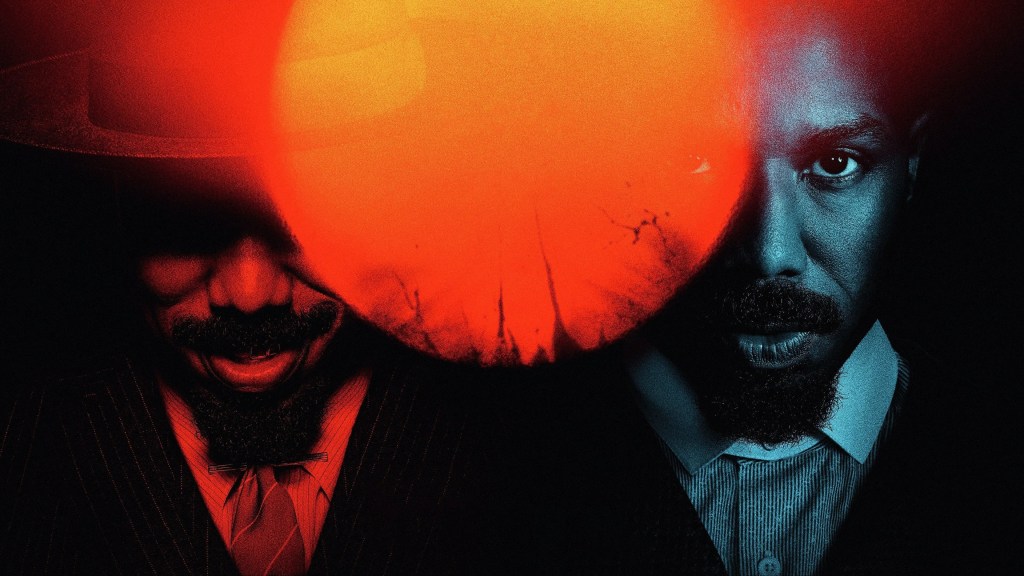
Today marks the midway point of both an unusually painful year and the most tumultuous decade in recent memory – so much so that the frivolities of the entertainment industry seem like small potatoes compared to the suffering of very real human beings. But we endure and we persist, and for many, the arts bring an incomparable solace. Today, we will be examining ten films released this year that our contributors connected with, and have so far taken their place as our Midyear Top 10 of 2025.

10. The Ugly Stepsister
The Ugly Stepsister is a disgustingly gnarly and raunchy flick, and that’s a compliment! To take the classic Cinderella story, rotate the center of attention to the older stepsister, turn it into a grotesque body horror that fully embraces its Grimm roots, have it operate as an analogy for contemporary beauty standards and industry practices, unpack patriarchal and misogynistic social norms, and add genuine directorial (debut!) flourish on top of it all, is a stroke of brilliance that makes this tired fable feel fresh and mesmerizing. It’s not body horror just for the sake of body horror. It’s body horror to serve a narrative purpose that elevates actual thematic messaging and tone. It’s truly excellent and totally gruesome, and I love it. (Heath Lynch)
Available to stream on Shudder.

9. Materialists
Us yearners, we take our thrills where we can. And it seems to me the romantic movie has survived by falling largely into three, perfectly valid camps: the Netflix contingency, the teen flicks, and the Judd Apatow-inspired. But Materialists is a unicorn for all those who fell in love with movies through ’90s rom-coms. The film taps into the thick air of romantic tension, and thanks to the eye of cinematographer Shabier Kirchner, who infuses inspired tracking shots and long takes, the pace is kept tantalizing and breezy. The screenplay is once again a standout from director Celine Song, her characters speaking with fascinating candor. Look elsewhere if you want misunderstandings driving the plot forward, since here, the characters must grapple internally, while keeping the business of New York City and their love from moving too far ahead. The film, like love (and what the main characters think of it), is both simple and complex. Money makes life easier is no revelation, nor is the lesson that in a relationship we give what we can, yet simply by being a mirror held up to the world of relationships, insights can be made on an individual level. That is the power of Materialists. (Ian Hubbard)

8. Thunderbolts*
I am honestly surprised to say that the Marvel Cinematic Universe has delivered a tactful, nuanced examination of depression and the healing strength of community in a way that amplifies the thematic depth and doesn’t feel heavy-handed (despite the rather obvious metaphor). It’s a step in the right direction for the MCU, especially after years of projects releasing out of order; now it finally seems like we are going somewhere…and there even seems to be a sort of self-awareness about just how unclear the trajectory of the universe has been recently, and it just so happens to be saddled with the best Avengers setup we’ve gotten in years. Thunderbolts* is also one of the most artistically distinct MCU films in a long time — you can feel an authorial voice instead of a committee behind it — and despite Sebastian Stan’s radiant star power, this is Florence Pugh’s movie, and thank god for that. Lewis Pullman is another standout, and a wonderful addition to the universe; it’s about time we had more complex characters to root for, and Thunderbolts* delivers them in spades. (Rowan Wood)
7. Freaky Tales
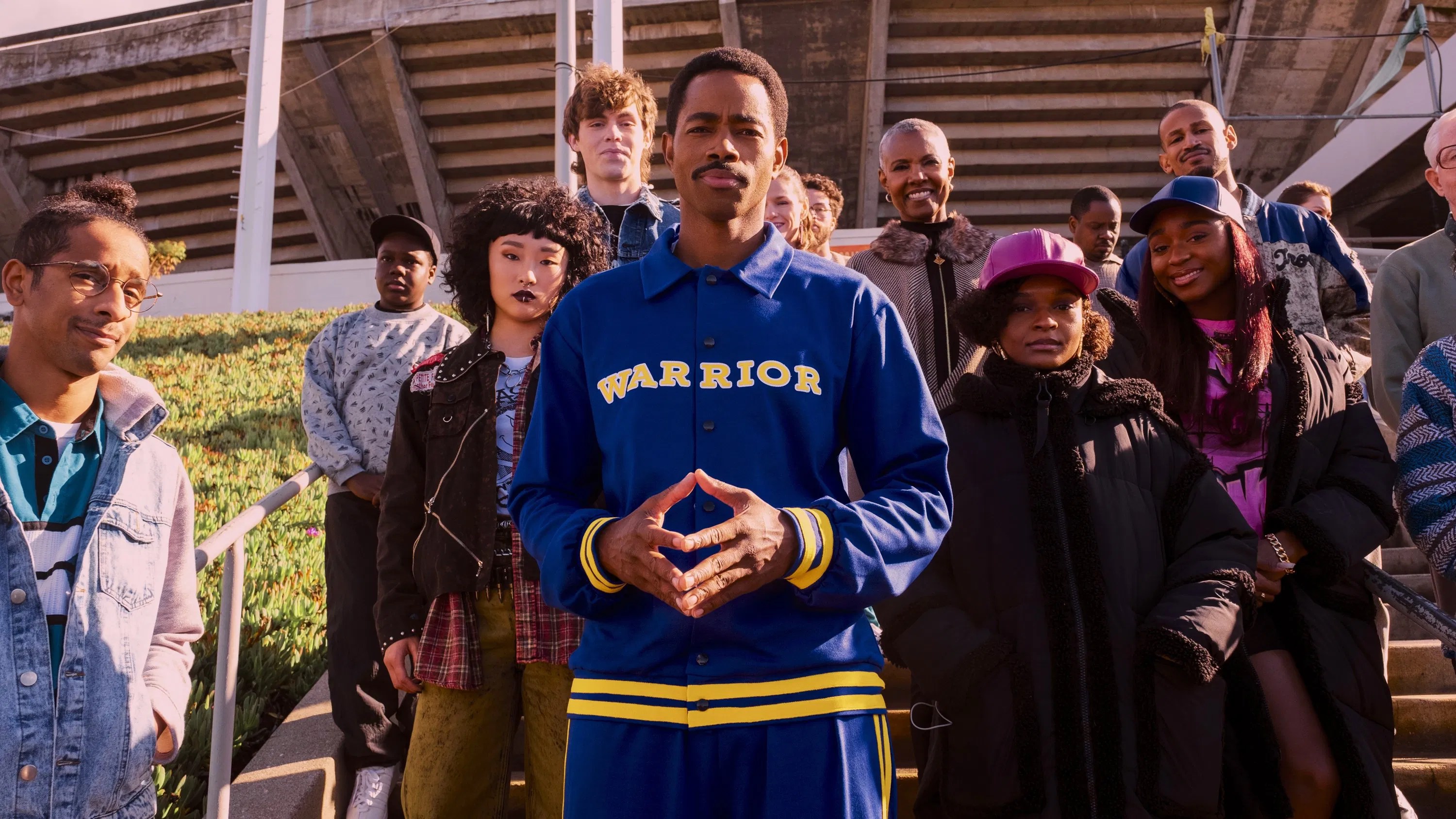
A trend for how the acclaimed directors of the 21st century progress their careers has emerged. It goes: Acclaimed short film, then indie-darling feature before, ultimately, the superhero film. So it is with directing pair Anna Boden and Ryan Fleck, who capped their journey with 2019’s Captain Marvel, the divisive yet wildly financially successful entry in the MCU. After such high-profile visibility, the duo was given the space to return to their roots. The result? A stylistically vibrant guide to political resistance and social justice, within this obvious love letter to Fleck’s native Oakland. Helmed by star turns from Pedro Pascal and Ben Mendelsohn, with an action-packed Tarantino-worthy performance by Jay Ellis, and an exciting debut by rapper Normani, each of the interconnected stories feel distinct, yet also form a cohesive picture that resonates as only history can. The film being both a snapshot of 1980s underground and counter-culture and today’s struggles never feels forced, and despite the occasionally heavy subject matter, Freaky Tales leaves the audience feeling refreshed. (Ian Hubbard)

6. 28 Years Later
28 Years Later (funnily enough, released only 23 years after the in-universe virus outbreak) is pure Danny Boyle, through and through. Rough, violent, and controversial, but hopeful and emotionally intelligent in a way I was not prepared for, but should have been. Alfie Williams is a terrific find and an incredibly competent lead, anchoring a movie that works very well despite all odds. It’s also a truly unique piece of filmmaking, thanks in part to Boyle’s infectious energy and his commitment to experimentation, the likes of which we haven’t yet seen with digital filmmaking in quite the same way. To make the finished product even more impressive, it’s a coming-of-age tale, and quite an emotional one — an exhilarating meditation (although it’s anything but quiet) on isolationism, the weight of maturity, and the perpetuation of toxic ideals. Plus, dong is hung on a level I have never seen it hung in a motion picture before. (Rowan Wood)
Read our review of 28 Years Later here!

5. Bring Her Back
It was always going to be an uphill battle for the Philippou brothers to write and direct a sophomore feature given the high expectations set by a debut as fresh and exciting as Talk to Me. Though their follow-up, Bring Her Back, may not have quite as flashy or marketable a premise, it might just be the better film. Sally Hawkins stars as a foster mother who welcomes two new children into her home, though her parenting may not be quite as benevolent as it initially seems. Bring Her Back is a straight-up scary film, brutal and visceral in a way that most horror movies can only dream of, while also containing some of the richest characters you’ll see in a film this year. (Foster Harlfinger)

4. Batman Ninja vs. Yakuza League
The first Batman Ninja did not make a very big splash in 2018 (despite being one of the more bizarre and visually diverse Batman animated films out there), but it was apparently big enough to warrant a sequel – one that takes place immediately after its predecessor, following the Caped Crusader and his Bat-Family as they navigate a changed world, where an alternate version of Tokyo has appeared in the sky and the Justice League have taken on criminal personas. Batman Ninja vs. Yakuza League is even more off the rails than the first Batman Ninja, and any movie with that title has more than enough creative license to basically do whatever the hell it wants. The sequel is bigger, better, and kookier, embracing the fantastical premise with a pointed confidence that serves the narrative extraordinarily well. Bizarrely enough, this was one of my most anticipated new releases of the year, and I’m grateful that it not only lived up to my own expectations, but it’s become a niche favorite of our contributors in the first half of this year. (Rowan Wood)

3. The Life of Chuck
Over the years, Mike Flanagan has proven himself to be deeply tuned in to Stephen King’s storytelling frequency. He’s shown on multiple occasions that he understands the balance of genre and humanity that King has made a career on. Flanagan is mostly known for his expert handling of the horror genre, but this time he approaches a beautiful King novella, The Life of Chuck. This adaptation is quite accurate (based on a recent reading of the novella) which is odd because of just how strange this story truly is. There is a strong sense of mystery in the opening (and final) part of King’s three-act tale of Charles “Chuck” Krantz. The non-linear storytelling is expertly leveraged to pull layers back on the life of Chuck and pure joy which shines through a life full of tragedy. What both King and Flanagan have to say about life is truly profound and beautiful. There are multitudes to each and every one of us, no matter what our life measures up to be (just look at the beautiful layers to a humble accountant’s life). An unexpected coming-of-age story with sprinkles of fantasy and apocalyptic beats, The Life of Chuck is one of the most unique cinematic experiences of the year filled with dynamic performances. Benjamin Pajak is an incredible standout and future star with a charming turn as a young Chuck. Jacob Tremblay and Tom Hiddleston also deliver as Chuck at different points of his life. This supporting cast is stacked with memorable and poignant performances (Mia Sara’s return to the screen as Chuck’s grandmother is a revelation). There will be no other films this year like Chuck, and few films will capture the emotion and poignancy of Flanagan’s work. (Shane Conto)
Read our review of The Life of Chuck here!

2. Friendship
There’s no official set of rules when it comes to making friends. At least, not one that could ever be written down or spoken aloud. But even if it’s impossible to define, it’s clear that there are right and wrong things to do in social settings – however, those boundaries for right and wrong can change depending on who exactly is present. Each group has their own understood system for classifying actions as funny and cool or classifying them as cringe and inappropriate. Tim Robinson, known for his sketch series I Think You Should Leave, feels like the obvious choice to lead a film exploring the frustrating and almost arbitrary rules of social interaction that cannot be articulated but clearly exist. Robinson’s comedy style lives in that gray area between funny and cringy that Friendship is interested in. Everyone is funny. Everyone is cringey. How exactly do we decide who is what at any given moment? Robinson’s heightened delivery is balanced out by Paul Rudd (The Great Gatsby) and Kate Mara (Schitt’s Creek – Rowan has informed me that I’m wrong about this one, but I’m sorry, she looks and sounds exactly like Stevie from Schitt’s Creek) in supporting roles, both of whom play everything completely straight. Friendship, in which Craig Waterson (Robinson) tries to befriend his neighbor, Austin (Rudd), is at least in part an absurd examination of the frustrations of the male loneliness epidemic. The male characters are always trying to impress each other. They’re trying to be cool and fit in. But they’re not talking about their relationships or their feelings or their fears. And while Craig is desperate for the approval of a group of guy friends, lamenting how the secret rules of social acceptance make no sense, he’s ignoring his wife who is telling him exactly what she needs from him (a bigger car). Craig feels isolated because no one will tell him what he’s supposed to do in order to connect with the men around him, but when the one woman in his life tells him explicitly how to be closer to her, he doesn’t bother listening. Friendship bottles those very real issues inside of a farce, playing to Tim Robinson’s comedic strengths while verbalizing the truths we all must live with. (Davis Mathis)
- Sinners
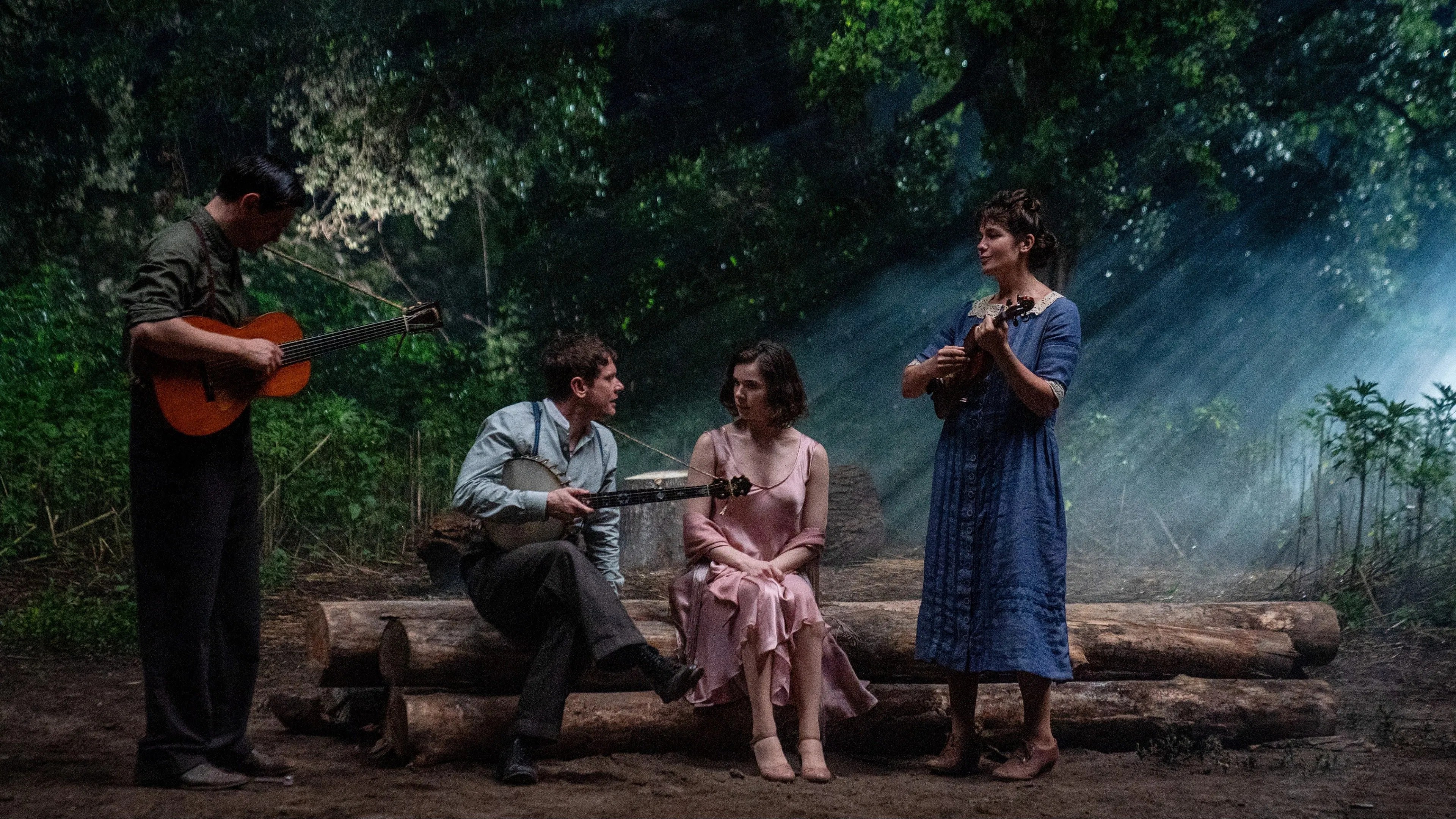
“There’s almost nothing more sexy than realized ambition, and this movie is dripping with it,” says contributor Heath Lynch on Ryan Coogler’s (current) magnum opus Sinners, which took the filmgoing world by storm just a few short months ago. It’s a shot in the arm of not just the genre scene, but film culture as a whole, proving that there is hope for sophisticated, elevated genre storytelling across the board. It’s a bluesy medley of passion, music, violence, electricity, hate, love, morality, temptation, community, and everything in between. It’s an anthem of hope, of life, of this broken world we are forced to call our home, laid out as dynamically as possible from a true master of cinema. It’s the kind of story that leaves you on a euphoric high, from both the excitement and the sheer competence at play thematically and visually. There are a lot of things that Sinners is, and the fact that it pulls everything off damn near flawlessly, with an unrivaled panache, is impressive on a level I see and feel so rarely from a theatrical experience. It’s the best movie of the year, and somehow I doubt that will change in the next six months. For the record, it was a nearly unanimous #1 pick, appearing near the top of nearly every contributor list. It’s the first time something like that has happened in the history of the site, at any point in the year. (Rowan Wood)
Available to stream on Max as of July 4.

 Knock on Wood
Leave a comment