
Welcome to class! My full-time job is working at a university, and I teach as well. One of my dreams has always been to teach a film class. Taking students through the world of cinema and helping them learn about the art form that I am so passionate about would be an amazing experience. But alas…I teach math. This series, “Lessons from the Wasteland,” is my opportunity to offer readers a curated watchlist to learn through doing (…watching movies). Each film on this list will highlight a filmmaker, sub-genre, filmmaking technique, or significant topic to broaden your cinematic horizons.
This month, we have…
3D Animation

Toy Story (1995)
It should be no surprise that a studio like Pixar was the trendsetter, even with their first feature film. Back in 1995, Disney Animation was having one of the most fruitful periods in its history with its 2D animated output. But on the heels of The Lion King, Pixar and director John Lasseter had a film that would charm that game in more ways than one. The obvious difference is the 3D element. It might seem so simple for audiences today, but seeing animated characters in full, realistic depth and dimension was groundbreaking. Seeing Woody and Buzz come to life in three dimensions is a wonder to see. Now, if you look at the human characters today, they leave a lot to be desired (and, honestly, they are kind of terrifying to look at). This is expected when breaking ground – not everything will be up to snuff. But the act of bringing characters to life in this manner was impressive enough.
The fact that most of the main characters are toys and made of plastic makes the leap a little easier, as they are not meant to look human-like. In context, seeing this whole world of Toy Story come to life is quite awe-inspiring. Lasseter delivers a film that is full of color (and sometimes darkly creative characters) that balances action beats, scary moments, and plenty of fun character work. Breaking free from the familiar “princess” story of so many Disney Animation efforts, Toy Story tells a fresh and engaging story that finds some natural conflict that speaks to a common human experience.
We all have moments where a new person comes into our lives and draws attention away from us. That natural jealousy and frustration are manifested so clearly in the presentation of Woody (Tom Hanks). This type of story has become a road map for so many other kids’ movies in the future (including The Secret Life of Pets, which fully rips off Toy Story’s premise). This first film in this beloved series does an amazing job of building a world for Pixar to explore. The 3D animation does a great job of bringing the toys to life in an authentic way that just feels as tangible as 2D animation will.
Part of the reason this iconic film is so beloved is that it is filled with so many lovable and memorable characters. Hanks’ performance as Woody is a balance of leader and frustrated child. Tim Allen is pitch-perfect in making Buzz Lightyear so strong yet so aloof, and oblivious that he is indeed a toy. There is a wonderful batch of voice performances from the likes of Don Rickles, Jim Varney, Annie Potts, and more. There are plenty of incredible moments, including the trip to Pizza Planet, the mental break of Buzz, the final confrontation with Sid, and the thrilling moving truck chase. Sprinkle in the beloved score and songs from Randy Newman, and this film becomes something purely special. This is the first of its kind, and it truly reshaped what would become popular in animation.

Dinosaur (2000)
Dinosaur is one of the many forgotten animated efforts from Disney Animation during the aughts. After such a fruitful ’90s, Disney had quite a few struggles during the early 2000s. The landscape of animation was certainly changing with Pixar delivering some impressive feats with a 3D approach. DreamWorks was dabbling in this realm as well, which put a lot of pressure on Disney Animation to shake things up.
Dinosaur is a bold venture. Being a mix of real-life photography for the landscapes and 3D animation for the characters, this was a wholly new approach to animation than Disney was used to. Narratively, this was outside of their recent comfort zone as they tackled a grand epic of prehistoric proportions. No princesses. No romance. No magic. This is a story about dinosaurs attempting to survive predators and catastrophe.
The ambition of this project needs to be appreciated. The detail in the dinosaurs’ rendering is quite impressive for the time, and brings them to life in a way that the audience can connect to. This is not a cartoonish approach, like Pixar’s The Good Dinosaur. The crew at Disney wanted to bring these animals to life in a way that had only been seen before in films like Jurassic Park.
The photography for the backgrounds and landscape work well for a film that is over 25 years old. The narrative is loose and might not be the most effective story from Disney’s long filmography, but it does have plenty that works. The action and thrills of this great journey certainly deliver some awe. The meteor showers are terrifying and instill a sense of danger for the audience. The protagonist is an orphan who is raised by an unexpected family (a group of early lemurs). The audience can invest in this search for a new home when all that they ever know is destroyed.
This era for Disney was experimental, and many of those risks unfortunately did not pay off. Dinosaur might not be a beloved classic for Disney, but films like Tangled, Wreck-It Ralph, Moana, and Zootopia would not exist without this first leap into 3D animation on a feature scale.

Shrek (2001)
DreamWorks had some films out in the late ’90s that garnered some attention, but nothing could match the grand blockbuster scale of Shrek. To put some perspective on this situation, Shrek was the tumultuous project that animators would be sent to work on as punishment. There were so many horrible setbacks, including the death of original star Chris Farley. This meta satire on the world of fairy tales turned out to be just what audiences needed back in 2001. Sarcastic, caustic, and full of attitude, yet Shrek never skimps on the heart either. For a film that is crude with its humor, the visuals match that vibe and atmosphere through the animation and the character designs. The film looked rough around the edges back in 2001, and looks even more so in 2026, but that is all part of Shrek’s charm.
No one could have expected Shrek to earn so much at the box office and to win the first-ever Academy Award for Best Animated Feature. But…it earned it. Andrew Adamson found the perfect balance between hilarious satire, raunchier comedy, and a moving story with strong themes. The music from Henry Gregson-Williams does a lot of heavy lifting with its rich emotion and swelling scale. The core story of an ogre finding friendship in a talking donkey and love in a princess is quite touching. The themes about acceptance and self-pride are very affecting. But this film is not all mushy elements, either, as it is endlessly quotable and hilarious. From fart jokes to sexual references to commentary on fairy tale tropes, Shrek is full of laughs from start to finish.
The opening storybook element is such a clever send-up of classic Disney. The opening credits paired with “All Star” by Smash Mouth are just epic (and the rest of the soundtrack is full of bangers as well). The bonding of the grumpy Shrek and annoying Donkey is full of charm, laughs, and heart. The chemistry between Shrek and Princess Fiona injects plenty of heart into the film, too. There are plenty of great gags, including the infinitely quotable interrogation of the Gingerbread Man. The voice cast is filled with excellent voice performers and some top-tier casting choices, like Mike Myers, Eddie Murphy, Cameron Diaz, and John Lithgow.
This film has become a modern classic of animation while leaping into the greater cultural zeitgeist. There is so much Shrek in modern culture, and the franchise has delivered excellent films beyond the original (including the impressive follow-up Shrek 2). DreamWorks had their massive win, and showed that Pixar wasn’t the only leader in 3D animation.

Spider-Man: Into the Spider-Verse (2018)
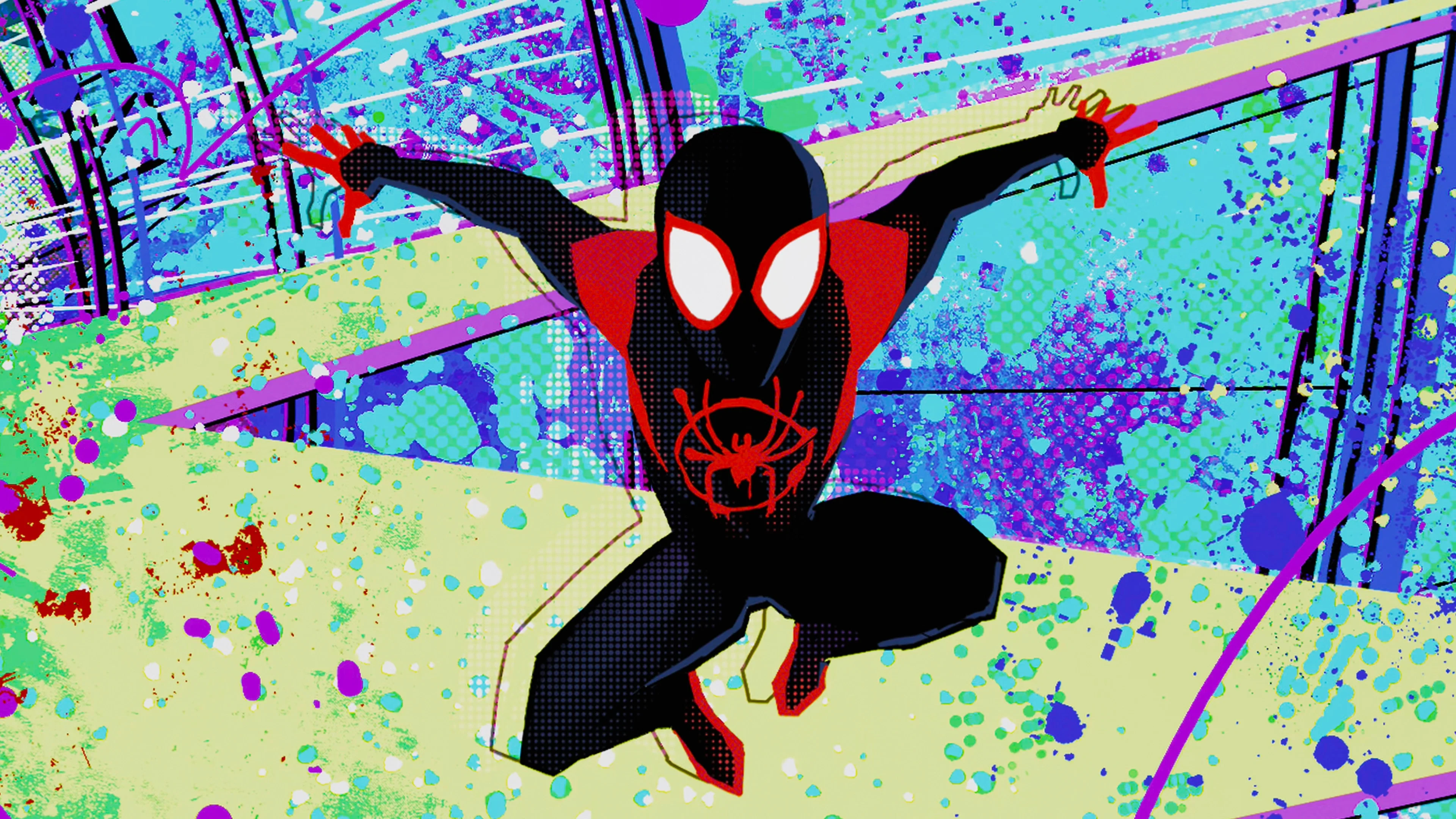
The lifetime of 3D animation has been significantly shorter than animation as a whole, and there are still plenty of creative places it could go. When it comes to exploring new visualizations of animation, Spider-Man: Into the Spider-Verse turned out to be one of the most gorgeous and bold films to come out of the recent wave. Narratively, thematically, emotionally, and visually dynamic, Sony Animation delivered something truly special. At the peak of comic book adaptations, Into the Spider-Verse delivered something quite special and fresh in this genre. The impressive effects of taking 2D comic book visuals mixed with 3D techniques make it such an engrossing and bold experience.
Shunning realistic elements, Spider-Verse is a truly creative visual experience that feels so fresh and exciting. The action is electric and thrilling, as it brings manipulated frame rates to give it a unique element of movement. The Daniel Pemberton score is dynamic and provides both rich personality and plenty of energy to the experience. The richness of color in the film makes Spider-Verse so deeply engrossing. The way each of the characters and worlds in the multiverse have their own animation style is bold, ambitious, and impressive. This approach only deepens the cinematic experience in a way few films like this can. Not enough comic book movies have unique visuals and voice, but Spider-Verse is able to accomplish something profoundly challenging and satisfying with so many unique and distinctive visuals.
But it is not just the unique worlds that stand out with Spider-Verse. A multiverse story has great potential and plenty of roadblocks. The idea can be overwhelming for an audience and can cause a lack of stakes as well as confusion. But the potential is through the roof with all the creative twists you can take on characters. Spider-Verse not only plays with this potential from a writing standpoint, but also a visual one. All the characters have such distinct and fresh renderings that give the audience brand new perspectives on characters. From the black-and-white Spider-Man Noir to a mountainous Kingpin to the Ultimate Goblin (a massive monster), there are so many fresh takes on comic characters, and they come to life with such flair in this film. The approach of showing so many different twists on Spider-Man is fascinating as well, with beloved character Miles Morales getting his chance to shine (coming from a very different background than Peter Parker). The vast voice cast does wonders, with Shameik Moore and Hailee Steinfeld leading the way with some top-notch support from the likes of Jake Johnson, Mahershala Ali, Brian Tyree Henry, Nicolas Cage, Kathryn Hahn, and Liev Schreiber.
Into the Spider-Verse feels like a comic book movie for a new generation that was ready for something different than what the past 20 years of adaptations had to offer. Through the magic of 3D animation, this team (led by Phil Lord & Chris Miller) is able to deliver a fresh new path for comic book adaptations and a new visual style for animation that has certainly left its mark.

Flow (2024)
Animation is a big studio game, isn’t it? For the longest time, studios were the big names in the realm of animation because each film is a daunting undertaking that takes massive teams to bring to life. Disney Animation. Pixar. DreamWorks. Illumination. Sony Animation. Warner Animation Group. Even the smaller animated films come from prestige labels like Laika, Cartoon Saloon, and Studio Ghibli. But animation saw something miraculous back in 2024 from one of the least likely of places. You would not expect an Oscar-winning animated feature to come from Latvia, but director Gints Zibalodis delivered one of the most impressive new animated films in a while…and it’s one that was created completely independently. This put the world of animation on notice, because the accessibility of technology has opened the Pandora’s Box of animation. With open-source technology, a small group out of Latvia was able to create a sprawling dystopia full of emotion, wonder, and adventure.
Inspired by the works of Jacques Tati, this film is filled with nothing but non-speaking characters, as a cat joins a crew of other animals on a boat during a massive flood in a mysterious dystopia. What Flow lacks in dynamic narrative beats and flashy dialogue, it makes up for in ambition, feeling, and artistry. For a film that was created fully in Blender, there is a beauty to the artistic vision. The animals do not need to talk to capture emotion and garner empathy from the audience. You fall in love with this black cat from the opening second, and Flow has you in the palm of its hand from there. The rendering of water (one of the hardest things to accomplish in animation) is impressive, as this liquid brings plenty of life and danger to the cat’s journey.
There are some bold, creative storytelling elements that reach out and “wow” you throughout. The world-building is unmatched, with this sunken and drowned world of human civilization mixed with some of the biggest natural landscapes ever put to animation. Don’t let the simplicity of the narrative fool you – this is a wondrous cinematic experience. Without dialogue, the animals’ reactions and expressions tell the story.
The animation in Flow rises to that challenge and allows for a rich and engaging cinematic experience. Flow is an achievement that opens the door for so many smaller creators and storytellers to leverage technology to bring their independent animated projects to life. That is a big win for independent filmmakers…but an even bigger win for audiences.
Also see: Finding Nemo, ParaNorman, Moana, The Polar Express

Leave a Reply